Contemporary Church History Quarterly
Volume 25, Number 2 (June 2019)
Review of Maria Anna Zumholz and Michael Hirschfeld, eds., Zwischen Seelsorge und Politik: Katholische Bischöfe in der NS-Zeit (Münster: Aschendorf Verlag, 2017), XII + 817 Pp., ISBN: 9783402132289.
By Lauren Faulkner Rossi, Simon Fraser University
This hefty tome, running past eight hundred pages, is a valuable contribution to the fields of German history, church history, and theological studies. Its inception was a conference held at the Catholic Academy Stapelfeld, in Cloppenburg in November 2016. Considering its subject – individual biographies of the Catholic bishops of Germany between 1933 and 1945 – its length is perhaps not surprising, though its editors caution us against treating it as exhaustive or comprehensive. For this reason, the reader may notice some sizeable gaps or curious omissions: Lorenz Jaeger, archbishop of Paderborn from 1941 into the postwar period, is not included (though his predecessor, Caspar Klein, is), nor are the bishops of Speyer, Aachen, Limburg, and Augsburg. Some chapters seem relatively cursory or incomplete: the chapter on Cardinal Michael von Faulhaber by Peter Pfister, director of the archdiocesan archive of Munich and Freising and an expert on this subject, runs a scant twelve pages, only six of which deal specifically with the Third Reich; similarly, the chapter on Clemens August Graf von Galen, bishop of Münster, focuses mostly on his pre-1939 biography.
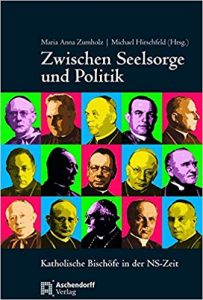 The editors, Maria Anna Zumholz and Michael Hirschfeld, discuss significant forthcoming works on both von Faulhaber and Jaeger to account partly for the brevity of the studies here (13). And while there is a detailed chapter by Raphael Hülsbömer on Vatican Secretary of State Eugenio Pacelli – later Pope Pius XII – and his relations with the German bishops, there is no attempt to integrate the episcopate into Vatican politics or consider the complicated, at times strained relationship between the wartime pope and the bishops as a collective. The editors justify this in part by referencing the closed archives covering the wartime pontificate of Pius XII; they could not have known that the year following this volume’s publication, the Vatican would finally announce the much-anticipated opening of these “secret archives” in 2020.[1]
Taken together, though, these gaps fail to significantly undermine what the volume brings to existing scholarship. Twenty-six German scholars, the majority with doctorates in history or theology (or both), several of whom direct diocesan archives or affiliated institutes, have produced twenty-one biographical chapters on twenty-three bishops.[2] Conscious that historical literature over the past seven decades has focused consistently on the political behaviour of the bishops, sometimes individually but more often as a group, and particularly on what the bishops failed or neglected to do – namely, explicitly condemn the Nazi regime’s human rights abuses and especially its persecution of the Jews – the contributors to this volume concentrate instead on studying the central purpose of the bishops: the exercise of their priestly, magisterial, and pastoral offices, which encompassed their zeal to preserve the teachings of the church and its values from distortion, and to immunize Germany’s Catholics against the Nazi world view.
In this, the contributors build on Antonia Leugers’ seminal 1996 study, which pointed to the bishops’ remarkably homogeneous backgrounds as a partial explanation for their lack of collective resistance to the regime’s policies during the war.[3] This volume goes further and acknowledges the distinctions not just between the bishops but also between their dioceses, exploring such diverse factors as age, health, the size of non-Catholic or non-German populations, the varied impact of industrialization and secularization, even the regional nature of German Catholicism, contrasting north versus south and centre versus periphery.
Despite these strong differences, the editors emphasize that the bishops remained united in thinking that the real lapse (Sündenfall) of Nazism was not its turn away from democracy, but its rejection of God and complete disregard for his commandments (11). They were not ignorant of the broader arena in which the Church was under attack by those intent on exterminating religion: events in Russia, Spain, and Mexico in the 1920s and 1930s urged the bishops to prepare for an existential battle within Germany up to the outbreak of war, a point made by Joachim Kuropka (to whom the volume is dedicated) in his introductory chapter.
This underscored the bishops’ commitment, at once individual and collective, to maintaining their office as pastoral care providers, even at the expense of becoming political actors. As pastors, they consistently identified their primary goal as confronting and limiting the insidious impact of Nazi ideology on German Catholics. They recognized Nazism, with its absolute political rule and its feverish attempts to claim universal jurisdiction over the construction of all worldly meaning, as a grave threat to the autonomy of the Church in Germany. They wielded an array of methods, from sermons to pastoral letters to a rigorous defense of the independence of Catholic youth organizations, to try to keep their flocks immunized against Nazism (die Immunisiering gegen die NS-Ideologie, 7). In this they were successful: there was no steep drop in the number of Germans identifying as Catholic throughout this period, to which the useful diocesan statistics in the appendix testify. Kuropka references Gestapo reports that describe a spiritual battle between the regime and German Catholics, which, he insists, the former lost (27).
Despite this uniform commitment to pastoral work, the bishops were not a uniform group, as their biographies emphasize. In his study of the two bishops of Fulda (Joseph Damian Schmitt and Johannes Baptist Dietz), Stefan Gerber argues that the most prominent members of the episcopate – Clemens von Galen, Michael von Faulhaber of Munich and Freising, Konrad von Preysing in Berlin, Joannes Baptista Sproll in Rottenburg – were in many ways exceptions and therefore are not helpful in reconstructing the self-perceptions, motives, expectations, and frictions of the “so-called second row” bishops (347). Indeed, von Galen, bishop of Münster, spoke publicly and forcefully against the regime’s euthanasia program in the summer of 1941 (Kuropka, the chapter’s author, gives this incident short shrift, more interested in other aspects of von Galen’s personality; he does not stress that von Galen spoke on his own, and not as a representative of the bishops), but he was the only Catholic bishop to do so. Other bishops designated assistants to spearhead efforts to help the victims of Nazism, particularly Catholics who had converted from Judaism and who were thus Catholic in the eyes of the Church, but Jewish in the eyes of the regime: Conrad Gröber in Freiburg, Cardinal Adolf Bertram in Breslau, and von Preysing in Berlin all took this route.
Other authors wrestle with source-based or historiographical problems. Thomas Flammer’s study of Joseph Godehard Machens, in the diaspora diocese of Hildesheim (its population in 1933 was less than 10% Catholic; the only diocese smaller than this, according to 1933 numbers, was Berlin) points to contradictory descriptions of the bishop’s personality: scholars have called him warmonger and Nazi and, according to his employees, he was both vain and humble, egotistical and shy, and “trusted very few people and counted even fewer among his friends.” (381) But upon his death in 1956, the Bundestag held a moment of silence, calling him a warrior against Nazism, and the Jewish community of Lower Saxony spoke of him as a friend and a great Catholic bishop.
Christoph Schmider wrestles with the legacy of Conrad Gröber, archbishop of Freiburg, which swings between the poles of “brown Conrad” (for his early openness to working with Hitler’s regime) and of “warrior of the resistance” (411). Schmider concedes ultimately that such a personality abjures a simple black-and-white characterization but instead requires “numerous gray tones so that, depending on the view of the observer, sometimes the gloomy and sometimes the brighter nuances prevail” (433).
Ulrich Helbach writes about how Cardinal Karl Joseph Schulte, the archbishop of Cologne who died during a bomb attack in 1941, has been consistently overshadowed in scholarship by his successor, Josef Frings, and his detailed analysis of Schulte centers on his personality, the challenges of leading one of Germany’s larger dioceses, and the impact of a serious heart attack (at the relatively young age of fifty-six, in 1927, six years into his tenure as archbishop) on his vocation and his reactions to Nazism. His observation about Schulte’s tendency towards compromise and conflict reduction (161), strengths which served him well in the 1920s, were a completely different matter under Nazism, and one that might be applied to other bishops as well.
All contributors treat diocese and region as integral to understanding the personality and behaviour of the bishop in question, and do not shy away from posing difficult historical and theological questions. In one of the longest chapters, Bernhard Schneider situates Bishop Franz Rudolf Bornewasser’s particular difficulties partly in the task of shepherding the peripheral diocese of Trier. So, on the one hand, Bornewasser was deeply involved in formulating a church-based approach to the pro-German campaign of the 1935 Saar plebiscite, a task for which his ardent love for the Fatherland (which he distinguished from “unchristian nationalism”) prepared him well and which seemingly put him in step with the regime (260). On the other hand, in September 1941 he preached about the prohibition against killing, referring to the T4 program and referencing other episcopal writings (including von Galen’s, indirectly), apparently willing to risk the wrath of the regime in doing so.
Andreas Hölscher writes of Jacobus von Hauck as decisive in shaping the archdiocese of Bamberg for the twentieth century; in 1933, when he was seventy-one, he was the second-oldest and second-longest serving of all the German bishops, having been archbishop since 1912. Since the 1990s his reputation has been shaped by accusations of accommodation with Nazism and a failure to speak out on behalf of human rights. But as Hölscher argues, these questions can, and should, be asked of all the bishops, and of the Church as a whole: what was, and is, the Church’s mission in connection to the defense of human rights? Does the Church have a clearly defined mission beyond the recognized and accepted ecclesiastical milieu (kirchliches Umfeld, 615)? Hölscher and other contributors address these issues, but mostly by way of concluding remarks, and do not attempt to wrestle with them at length. It should be noted that these questions have risen largely in hindsight, after 1945, and that it is far from clear that any of the German bishops at the time entertained them, either in the safety and security of their own minds or, with less security, in conversation with each other.
While the volume fails to tackle these questions directly, its contributors and editors might claim, with justification, that they lie beyond the scope of their objective, which is to consider each bishop in the context of his diocese. They have eschewed overly moral or hagiographic narratives in favour of critical historical analyses of how each bishop approached his office as pastor, and how this shaped his interactions to the Nazi regime, from accommodation to opposition. In some cases, this spectrum is apparent even within an individual case (the best example is Gröber). This is the real strength of the book as a whole: each chapter demonstrates the significance of background (birthplace, education, family history, friendships) and location in helping to determine the course of action a bishop took. Ultimately the image of the episcopate as a group that emerges is not simply one of collective silence in the face of murder and atrocity, as previous histories stress, but also of collective concern for the preservation of the Church in Germany, a concern that co-existed, sometimes with considerable tension, alongside individual hopes and fears, private dissent and frustrations, and physical and emotional limitations. United they may have been in presenting a unified front to Hitler, but behind this façade these men were individual humans, with myriad strengths and weaknesses.
The tendency throughout the volume is to rely on archival material, though the contributors and editors have also relayed relevant historiographical information, detailing shifting interpretations of episcopal actions and reactions across several decades. Michael Hirschfeld’s introductory essay is particularly illuminating in this regard, tracing the post-1945 history of the bishops under Nazism through three distinct phases that affected the broader narrative of the history of the Catholic Church under Nazism between the end of the war and twenty-first century. In this he echoes, though with far less detail, some of Mark Ruff’s findings in his recent book, The Battle for the Catholic Past in Germany, 1945-1980, which appeared in print a year before this volume. Hirschfeld does not cite Ruff (likely the book was not available in time), and the secondary literature included in the bibliographies is entirely in German. This reflects the state of the field, in which – predictably – German scholars have undertaken the great bulk of writing the history of their Church leaders.
This book is currently the most up-to-date collection of biographical chapters on the German Catholic bishops during the Third Reich. Its dedication to highlighting revelatory contextual information by plumbing their personal backgrounds and integrating them more fully into their diocesan environments is invaluable, and is rendered explicitly, as Hirschfeld tells us, to reflect a growing trend: the rejection of the easy, unambiguous understandings of historical figures that our contemporary information society peddles in order to “embrace the grey tones that make possible a nuanced image of the respective personalities of the bishops” (49-50). Many contributors acknowledge this trend as well, and reference research projects of various sizes that are underway, for example of Jaeger and Faulhaber, as already mentioned, but also of Machens and Sproll. Thus the volume will hardly be the final word on many of the individual histories. So too we must anticipate that the opening of Pope Pius XII’s “secret archives” next year will generate a new wave of questions and challenges about the Catholic Church’s leaders in Germany and their relationship with the Vatican during the war. Until then, Hirschfeld and Zumholz and their host of contributors have given those of us interested in the Catholic bishops and their historical legacy much to consider.
[1] “Pius XII: Vatican to Open Secret Holocaust-Era Archives,” BBC World News, https://www.bbc.com/news/world-europe-47444293, last accessed 30 May 2019.
[2] Hirschfeld and Zumholz define the German episcopate from 1933 to 1945 as consisting of 9 archbishops and 25 bishops, using the Altreich (1937) borders of Germany (pg. 2). The study therefore excludes the Austrian bishops and dioceses integrated into Germany following the 1938 Anschluss.
[3] Leugers, Gegen eine Mauer bischöflichen Schweigens : Der Ausschuß für Ordensangelegenheiten und seine Widerstandskonzeption 1941 bis 1945 (J. Knecht Verlag, 1996).

 Though these occurrences are notable in nature and unique in theological understanding, they share a supernatural commonality that O’Sullivan recounts as events of “miraculous faith” (4). O’Sullivan rightly argues that historians, even those who specialize in church history, have for too long neglected incidents of miraculous faith in their analysis of German history. In his fascinating study, O’Sullivan endeavors to fill this void. For him, miraculous faith events both reflect and intensify the institutional, political, cultural, and gender tensions within German Catholicism.
 The suppression of the Bruderhof in Nazi Germany was not unobserved in Britain: there were protests and interventions by figures as diverse as the eminent Anglican laymen Sir Wyndham Deedes and the Baptist internationalist J.H. Rushbrooke. Friends of all kinds now proved effective, particularly in practicalities. By May 1936, the Bruderhof could be found in a farm near Ashton Keynes in the Cotswolds where a new community comprised sixteen Germans, fourteen British friends, and one Austrian. At the height of its quiet prosperity there, in October 1939, the community included as many as 119 Germans, 116 British members, 30 Swiss, 17 Austrians, and stray individuals from the Netherlands, Czechoslovakia, France, Sweden, Italy, and Turkey. All came with their own stories and for their own reasons. All sought to be useful. A miner from the coalfields of Durham cycled three hundred miles to join them and was promptly set to work picking potatoes; another new arrival was a Lancashire poultry farmer who was also a Methodist lay preacher and admirer of the Indian Christian mystic Sundar Singh. In choosing the Cotswolds, a deeply rural area which possessed something of the character of an English arcadia, the community chose well. Birmingham, the second city of the country and a bastion of Quakerism and Free church life and worship, was not far away. Ashton Keynes also had a railway station. Visitors and longer-term guests could come and go as they chose – and they did.
 This sense of observing and interpreting like a guest whose eyes are being opened by degrees to something new and unexpected is certainly one of the strengths of the book. It makes Newell himself something of a tourist – in the best sense – and equally an attractive introducer to readers coming to the same questions afresh. The vital presence at the heart of the story is the pastor of the Nikolaikirche himself, Christian Führer, who in 1989 opened the doors of the church to all people – and, in particular, to many who were disaffected by the Communist state – so that they could meet together, light candles, share what was important to them all and find new ways to insist upon these things in a world of repression and intimidation.
 In Reading and Rebellion in Catholic Germany, Jeffrey Zalar likewise boldly challenges the existing historiography concerning the German Catholic milieu and its culture of reading, a topic that perhaps is less central to historians of modern Germany, but still important, nevertheless. For those who study religious history, especially that of the Catholic Church in Germany, Zalar’s findings have major implications for understanding the inner-workings of the Catholic milieu. For years, historians have portrayed the milieu as “an insular subculture, whose boundaries were policed by an authoritarian clergy” (8).
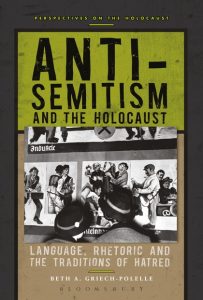 Griech-Polelle begins with the rise of religious antisemitism—rooted in the concept of Jews as “Christ-killers’’—in the biblical accounts of Jesus’ arrest, death, and resurrection. With the emergence of Christianity came the belief that the Early Church was the “New Israel” which replaced the Jews as God’s chosen people (10-11). Tracing the loss of Jewish rights in the late Roman Empire, the author shows how the Codex Theodosianus began to impose restrictions on Jews and to generate the segregating language that would shape the medieval era. Through the period of the crusades and on into the Middle Ages, Griech-Polelle explains important incidents in the history of Jewish persecution, but beyond that, she endeavours to outline the way a particular kind of antisemitic language emerged in, for example, tropes like the Wandering Jew or the blood libel. A short section on Thomas Aquinas shows how he built on Augustine’s notion of the preservation of the Jews as a witness to the truth of both the Hebrew scriptures and the Christian gospels, adding that the Jews were people with souls that needed to be saved. “Somehow, Jews were to be converted voluntarily—despite the persecutions and horrendous depictions of Jews as being in league with the devil, desecrating the Host, and reenacting the crucifixion of Jesus” (20). This chapter on the history of religious antisemitism continues with the medieval expulsions of Jews from various European countries and follows the story through the Renaissance and Reformation, the emergence of a substantial Jewish community in Poland, and the impact of the Enlightenment, French Revolution, modern nationalism, and post-1848 reactionary politics. It closes with the persecution faced by Jews in Tsarist Russia.
 With the excellent new book by Dirk Schuster, the scholarship reaches an important milestone. The apologetic tone is entirely absent and instead we have a work by a very thoughtful scholar who examines archival data, weighs and evaluates new evidence, and draws sharp and strong conclusions. Schuster represents a new generation of young German scholars seeking historical accuracy rather than defending the church or making excuses for individual theologians.
 A few key conceptions and realities are at the forefront of Junginger’s study, which is a translation of a revised version of the author’s Habilitation thesis. First, the author seeks to demonstrate that Nazi-era “Jew research,” which purported to pose scholarly answers to the “Jewish Question” but in fact aimed at supporting anti-Jewish policies – was carried out at German universities in a manner that mutually reinforced religious and racial antisemitism. Thus, the book focuses on the religious aspect of modern antisemitism – even while recognizing with great care that “religious stereotypes coalesce with a racial explanation of the world” (ix). Second, the University of Tübingen’s centuries-long role as “an intellectual stronghold against Judaism” (x) culminating in its essential function as a locus of Nazi Judenforschung, is emphasized. Finally, theoretical and practical antisemitism converged during the Holocaust, as typified here by Junginger’s examination of the biographies of roughly a dozen war criminals who, the author demonstrates, were responsible for the deaths of several hundred thousand European Jews during the Shoah.
 Commendably, the editors cover the various levels of complicity and resistance in their selection of biographical reconstructions. They do so systematically by dividing the volume into four parts. The first and longest part introduces the biographies of clergymen who embraced Nazi ideology and identified with the Deutsche Christen – the “German Christians,” a group within the Protestant parishes that saw no contradiction between Hitler and Luther, between Nazi ideology and church teachings (Knabe; Münnich; Coch; Fügner; Bohland; Axt). The second part covers four men belonging to the so-called “Mitte,” the center, who tried to walk a middle path between radicalized and Nazi-supporting clergy and those who opposed the Nazi takeover of church and society (Herz; Bruhns; Loesche; Gerber). The third and shortest part introduces two biographies of men of the Confessing Church (Bekennende Kirche), who prioritized faith in Christ over nationalist and völkisch ideologies and (partially) resisted the Nazi regime (von Kirchbach; Delekat). The last part documents the biographies of churchmen who were persecuted by the Nazis for political and racial reasons, including Protestant ministers who were classified as Jews (or mix-blooded) by the 1935 Nuremberg Laws (Stempel; Kaiser; Gottlieb; Starke; Grosse).
 Among the incompatibilities cited by the authors are the AfD’s denigration of vulnerable groups (especially migrants and Muslims), its insistence on a homogeneous German Leitkultur, its political strategy (deliberate provocations and insults, distortions and “alternative facts,” manufacturing or intensifying anxieties), and its invocation of Christianity as an element of national identity rather than a universal faith and system of values. Nevertheless, they recognize that individual Christians have played a key role as founders and leaders of the party (including Frauke Petry, Bernd Lucke, and Konrad Adam on the Protestant side and Jörg Meuthen on the Catholic side). The group “Christen in der AfD” is another indicator that the party has made inroads among Christians, though very few pastors and priests have endorsed the AfD and many have been outspoken in their opposition.
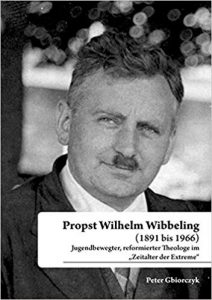 Wibbeling had just completed his theological examinations and practical training for the ministry when the First World War began. He fought, eventually becoming an officer, married shortly after the war ended, and was ordained in 1919. His subsequent career showed his lifelong commitment to the renewal and stability of his church as well as his own strong social-political convictions. His political leanings were socialist. He began his ministry as a youth pastor in the coal-mining town of Bochum in the Ruhr valley, where he reached out to working class, Catholic, socialist, and other youth organizations in the region, creating a coalition that focused especially on the problems of alcoholism among youth. A non-church colleague described him in those years as someone “who didn’t act like a pastor at all, avoided church language and was familiar with and understood the socialist movement.”
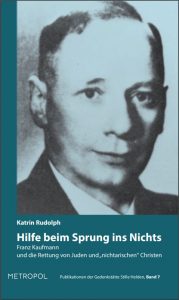 As Rudolph notes in her introduction, however, recent research has yielded new information about the group and important corrections to the earlier accounts (including those in my book), revealing a number of connections between Kaufmann and other people in Berlin who were attempting to help Jews. These findings have altered her understanding of how the Kaufmann group operated, and in this new edition she argues that there was not a distinct and independently operating “Kaufmann circle” but rather a wider network of “small alliances of helpers” who were loosely connected to Franz Kaufmann. This study therefore broadens our view of the group’s activities beyond the immediate circle around Kaufmann and explores the wider dynamics and patterns of assistance to Jews in wartime Berlin. Rudolph has also examined and corrected discrepancies in some of the postwar accounts, and her book serves as a critical study of how postwar narratives about rescue emerged.
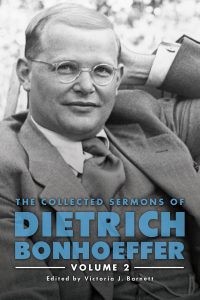 Three themes run through these sermons: the seriousness of Bonhoeffer’s Christianity, the insight of his responses to the social and political crises of the late Weimar and Nazi eras, and the resolution of his engagement in the Kirchenkampf (German Church Struggle).