Contemporary Church History Quarterly
Volume 28, Number 1/2 (Spring/Summer 2022)
Review of Manfred Gailus, Gläubige Zeiten. Religiosität im Dritten Reich (Freiburg: Herder 2021). 223 pages. ISBN 9783451033391.
By Sarah Thieme, University of Münster
With his monograph “Gläubige Zeiten”, Manfred Gailus, also one of the editors of this journal, succeeds in providing a compact synthesis of his many years of research on the history of religion during the National Socialist era and his thesis of a “religious revival” (p. 15) provides a convincing framework for his account. This well-executed study is rich in examples and quotations from contemporaneous actors that bring the story to life for the broader audience to whom he is presenting the current state of research on the “return of religiosity” (“Wiederkehr des Religiösen”) (p. 11) from 1933 to 1945. These years were marked by diverse faiths and a multitude of (often hybrid) creeds, an intensification of religious action, competition between religious actors and conflict over questions of faith.
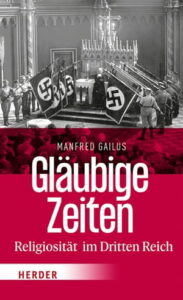 The book is divided into four main chapters – I. Christian Denominations and Nazism; II. New Faith Movement; III. Jews, Antisemitism and “Kristallnacht”; IV. War, Christians and the Holocaust – with varying numbers of sub-chapters. Instead of an introduction, Gailus precedes the chapters with a short section entitled “Concepts, Questions, Problems” in which he introduces his topic and the central question of his study: “What did the Germans believe in during the Hitler era?” (p. 8). Given it has been shown that 95% of Germans belonged to a Christian denomination during the Nazi regime and the “astonishing mixture of individual faiths” (p. 10) and “hybride Doppelgläubigkeiten” that Gailus has identified – in particular, those blending Christian faith and Nazi confession – the study sets out to analyse the traditional Christian characteristics in relation to the reshaping and partial new imprints of religiosity that occurred during the “Third Reich” and, thereby, offer an interpretation of the Nazi era in terms of the history of religion. The author proposes that the Nazi era was a “time of faith”, “Gläubige Zeiten” with a “high conjuncture” of faith and faithfulness (p. 11). Methodologically speaking, Gailus claims to look from above, from a “bird’s eyes view” (p. 11), though it should be noted that his altitude varies significantly throughout the book. Given his own extensive research, he flies in very close to Protestantism, while remaining more distant from Catholicism, the perspective on which is primarily literature-based and, therefore, more superficial. Gailus also flies particularly close to Berlin, the geographical focus of his own research and most of the examples he cites.
The first chapter on the two main Christian denominations is particularly compelling. Gailus convincingly develops the argument that there was a significant “religious experience” (p. 15) in 1933 that can be perceived as a turning point which raised hopes for a re-Christianisation, especially within Protestantism. As evidence of this shift, the author refers to a deluge of confessional publications and the mass marriages of Berlin stormtroopers, which, by being initiated by enthusiastic Protestant pastors, demonstrates that the Nazi state welcomed such confessional commitment, at least initially. Gailus tells the story of the so-called “Church Struggle” or “Kirchenkampf” as an internal Protestant conflict between the völkisch-antisemitic religious movement “Deutsche Christen”, which dominated many regional churches, and the internal church opposition to it, the “Bekennende Kirche”. The internal tension between these groups permeated all levels of the church, creating disputes amongst church leaders and intellectuals and local disputes within the parishes. The Apostle Church in Berlin provides a particularly vivid illustration, which included blockades of the church space, fights on the pulpit and loud counter-sermons.
Using the Protestants as a starting point, Gailus evaluates the “performance” of the Catholics, whom he suggests were “less moved” (p. 23) in 1933. It is noticeable that the author analyses Catholics in a more general way and provides fewer examples of local and regional actors. He focuses primarily on the Reichskonkordat, the treaty between the Nazi government and the Vatican made in the summer of 1933 and whose observance the Church and the Nazis struggled over in the following years. To summarise, Gailus emphasises that although Catholic religiosity and Nazi faith were not mutually exclusive, in comparison to the Protestants, who he considers as fairly open to National Socialism, he considers the Catholics, overall, as more reserved and sceptical and, thus, increasingly pushed out of the public eye by the National Socialists. A stronger appreciation of the internal-Catholic plurality and diversity of forms of behaviour would have been desirable. It would also have been preferable if the developments between 1933 and the start of the war had been examined more closely. Having said that, Gailus succeeds exceedingly well in his interpretation of Protestantism, which he vividly portrays as a divided “many-voiced and dissonant choir without a conductor” (p. 37-8).
In order to do justice to the breadth of the religious field, given the great competition over questions of faith and a multitude of religious confessions that occurred at the time, the second chapter covers the new faith movements in the “Third Reich”, i.e. the völkisch movements, the so-called “God-believers”/“Gottgläubige”, and religious factions within the NSDAP.
First, he uses the example of the heterogeneous “Deutsche Glaubensbewegung” and the “Ludendorff Movement” to show the dynamics of the new-religious awakening that occurred from 1933 onwards. The churches in particular saw the “neo-pagans”, whom they overestimated, as a great threat. However, the Nazi state, which initially allowed the völkisch faith movements to continue, wanted to prevent a religious division of the “Volksgemeinschaft” and increasingly undermined the new-religious groups from 1936 onwards as the new faith was to serve National Socialism. Young, fanatical National Socialists in particular – usually SS men, party functionaries and civil servants from industrial-urban regions, often from the fringes of Protestantism – saw the NSDAP and SS as their new religious community and called themselves “Gottgläubige”. From 1936 on, they were officially recognised as a third denomination despite not having an organisational context, an explicit programme of faith or a religious practice of their own.
Within the NSDAP, Gailus considers the “Gottgläubigen” among the “ideological rigorists”, one of three distinct religious-political factions within the party, although they did not express their religious-political conflicts openly. In addition to this group, with their radical anti-church and anti-Christian attitudes, there was a large group of “Christian National Socialists” in the middle and lower levels of the party hierarchy, who desired a synthesis of beliefs, and thirdly, the “centrists” who wanted to avoid the NSDAP’s break with the large Christian portion of the population because of the power politics. Thus, the NSDAP left the solution to the religious question open. Based on the membership statistics, however, the party remained a Christian one. Nevertheless, Gailus considers the religious dimension of the Nazi movement as an expression of the religious revival, which he exemplifies, inter alia, with the so-called “Lebensfeiern”.
The third chapter is less strongly oriented towards the thesis of the “religious revival”. In this chapter, Gailus explores the perspectives of religious actors on Jewish people and their behaviour during the November pogrom of 1938. He shows how Judaism was declared “evil” by Nazi salvation beliefs and how this added a religious dimension to racist antisemitism. Following Saul Friedländer, the author puts forward the thesis of “redemptive anti-semitism” unfortunately without explaining the concept in more detail. He also elucidates how both denominations supported racist exclusion by issuing so-called “Aryan certificates”. According to the author, the churches and the new Nazi faith conformed in their “Frontstellung” – against people of Jewish faith. Due to his statement that Jews “were not an independent player in… the religious field” (p. 89), they appear merely as objects in the depiction of this chapter.
With regard to his question about the national-socialist religious foundation of antisemitism, Gailus regrettably omits the perpetrators of the violence in his examination of the actors and reactions of Christians to the so-called “Kristallnacht”. He emphasises the silence of the churches as institutions and, at the same time, shows that many Christians, especially Protestants, agreed to the racist pogrom. A small number of individual clergymen spoke out against the events publicly in sermons. However, they themselves then had to reckon with attacks and arrests, as is demonstrated through several case studies. To explain the pogrom from the point of view of Nazi believers, the author monocausally refers to an “expulsion campaign” or “Austreibungsaktion” against the “evil” (p. 110).
The fourth and final chapter, containing the most sub-chapters, focuses on the relationship between the Second World War, Christians and the Shoa. Beginning with the observation that although there was some enthusiasm and support, especially from the “Deutsche Christen”, the mood at the start of the war was less euphoric than in 1914, Gailus traces expressions of joy, for example, in field post letters. He also discusses the official change in Nazi church policy at the beginning of the war, which was, in practice, still characterised by the fact that the Church’s religious practice was restricted and even attacked. The effects of the war also increasingly restricted religious life on the “home front”. Based on recent research by, for example, Olaf Blaschke and Thomas Brodie, the author emphasises that if we move beyond the dominant narrative according to which all Catholics were victims of National Socialism and suffering because of the war, Catholic Germans also approved of and participated in the war. With regard to the development of Nazi faith over the course of the war, Gailus argues that the trend towards “de-confessionalisation” was in sharp decline, as Nazi faith could not adequately explain the mass deaths, yet, at the same time, the “post-Christian utopias” (p. 145) of some Nazi leaders became even more radicalised.
The brief sub-chapter on the Shoa explores the attitudes of Protestants and Catholics towards the Holocaust. The author stresses that only individual theologians spoke out publicly against the persecution of the Jews and that the Church institutions remained publicly silent about the Shoa despite their knowledge – mediated, for example, through Wehrmacht soldiers. Instead, the Church hierarchy chose the path of less successful petitions to Nazi leaders. Overall, Gailus emphasises that “Christian silence” (p. 160) was widespread. In addition, there had been a “de-solidarization” (p. 160) against Jewish people in the ecclesiastical sphere and “non-Aryans” were excluded from congregational life. Moreover, Protestant theologians, in particular, were actively involved in the genocide. Thus, he ultimately concludes that the Holocaust was “performed out of a Christian society” (p. 163) in which only a few protested publicly.
In sum, Manfred Gailus convincingly presents his thesis that the years from 1933 to 1945 were “faith-filled times” characterised by religious revivals of not only the two Christian denominations but also the völkisch, “gottgläubige” and Nazi believers. He conveys his argument and the current state of research vividly to a broader audience, writing in a clear and richly pictorial manner, citing numerous examples and allowing contemporary source quotations to guide the narrative, which makes the volume a pleasure to read. Source classifications, research debates and comprehensive analyses are sometimes somewhat lacking; especially with regard to the target audience, some explanations of terms (e. g. “political religion”; “redemptive anti-semitism”; …) would have been helpful. Nevertheless, the sections on Protestantism and Nazi faith, which are based on the author’s own extensive studies, are particularly convincing.
The religions studied are analysed as imagined religions, that is, they are conceptualised in terms of their discourses, confessions, church official statements and theologies. Therefore, theologians, clergy and intellectual thinkers are the main actors encountered in this volume. The level of religious practice, the performance of worship and the everyday life of the Church are not brought as clearly into view. This is regrettable, especially because in this way the lived religiosity of women could have also been taken into account more effectively. Nevertheless, and in conclusion, I unreservedly recommend this generally comprehensible overview of the history of religion during the Nazi era as an introduction to the topic and the current debates in the scholarship.

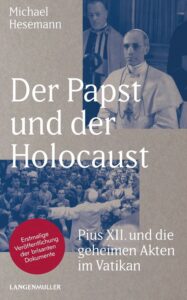 The most important contribution of Hesemann’s work is its exhaustive collection of all evidence and arguments that portray the pope’s record in a positive light. A frequently cited problem was the vague and diplomatic language used in the pope’s statements and writings; Hesemann points to contemporary sources that clearly understood the pope’s intent. Referring to Pius’ first encyclical, Summi Pontificatus, which includes a reminder about human fraternity and about the right of the victims of war and racism to human compassion, Hesemann points to the New York Times, which reported that the pope “condemned dictators, those who break international agreements, and racism.” Furthermore, the Times reported that while such a condemnation had been expected, “only few observers had expected the condemnation to be so clear and unequivocal” (104). Hesemann’s evidence suggests that Pius was not only not silent but that readers understood his guarded speech as he intended.
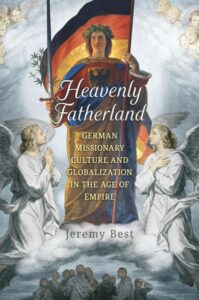 Best, a historian at Iowa State University, pleads for a careful analysis of historical documentation related to German Protestant missionary activities in the nineteenth century within the context of German religious and political culture. His study of “the vast corpus of texts produced by the German missionary movement…between 1860 and the First World War” (7) arrives at the insight that relations between Protestant missionaries and German secular colonial elites were tense and fractured. They did not see eye-to-eye with regards to the purpose of establishing colonies in Africa. German Protestant missionaries aimed for a global Christian community in which the indigenous population (the colonized subject) was given some agency. They recognized the value of indigenous subjectivity that, in their imagination, would blossom economically on local levels, thus protecting them from becoming objects of brutal exploitation in the interest of European nation states, including the late colonial aspirations of the Wilhelmine Empire. What indigenous Africans were missing, according to German Protestant missionaries, was education, and that meant, of course, Christian education.
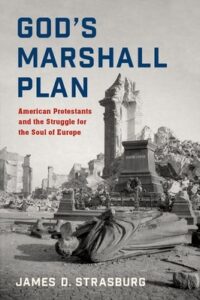 This is the starting point for James D. Strasburg’s fine study, God’s Marshall Plan: American Protestants and the Struggle for the Soul of Europe. It is the story of how, during and after the Second World War, leading US Protestants “identified Germany as the prime territory for creating a new Christian and democratic world order in the heart of Europe, one that could dispel any new totalitarian threat, whether spiritual or political” (2).
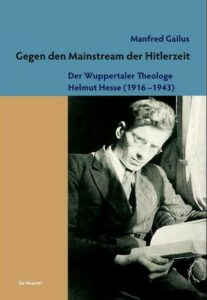 Yet, over the past few decades, scholars like Eberhard Röhm and Jörg Thierfelder, Manfred Gailus, and Gerhard Lindemann – whose body of work together generally affirms the consensus view that the German Protestant Church as a whole did very little to resist Nazism or to speak out publicly on behalf of the victims of the Shoah – have published works highlighting the exploits of individual Protestants who, to use Bonhoeffer’s phrase “[fell] into the spokes of the wheel.” These courageous Protestants include not only Niemöller and Bonhoeffer, but also
 Zoske worked for a long time as a practicing theologian and pastor in northern Germany. For obvious reasons, he is particularly interested in religious aspects in the biography of his protagonist, so that it seems almost appropriate to speak of the book as a biography of a young Protestant who is religiously searching. Sophie Scholl came from a Christian family: her mother Lina is described as a “cheerful Pietist” and her father as a “skeptical cultural Protestant.” Nonetheless, the Scholl siblings became enthusiastic about the Hitler movement in their teenage years. For many years, Sophie Scholl was a group leader in the League of German Girls (Bund Deutscher Mädel, or BDM) in addition to her church formation.
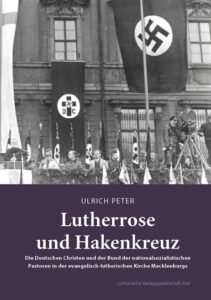 Above all, the work on the Thuringian German Christians, the dominant German-Christian movement in the “Third Reich” up to 1945 (Clemens Vollnhals), clearly shows how a large number of evangelical pastors–also far beyond Thuringia–dealt with National Socialism, perceiving it as connected to or at least instrumental in helping to build a “new Germany.” It is particularly striking, however, how many pastors–here again, beyond the Thuringian German Christians–welcomed the anti-Semitism of the National Socialists and even justified it theologically.
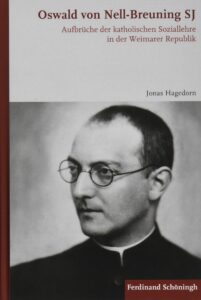 The introduction lasts the first seventy pages, and not until almost halfway through the volume does the discussion focus on Nell-Breuning. The previous pages explained the state of Christian solidarity in the 1920’s, describing Nell-Breuning’s definition of the term as post-liberal corporatist solidarity, but not fascist or reactionary. Hagedorn explains in detail the distinctions between the more romanticist-idealist Catholic thinkers in Vienna and the northern German approach to Catholic solidarity, which better reflected the economic realities of the 1920’s. Nell-Breuning was more comfortable with the “Kölner Richtlinien” of 1926, which explicitly accepted Catholic trade unions and much else in Catholic social teaching that would integrate Catholics in the broader economic and labor concerns of the times. For example, the Austrians denied any compatibility between capitalism and Christianity. At the same time, the commission established by Cardinal Schulte, Archbishop of Cologne, sought to find a way for Catholics, employers, employees, and others to function in the Weimar Republic’s economic conditions. Nell-Breuning also advocated ecclesiastical recognition of Christian trade unions and not just Catholic workers’ associations (katholische Arbeitervereine) led by priests.