Contemporary Church History Quarterly
Volume 25, Number 3 (September 2019)
“Understanding Twenty-first Century Christian Nationalism and Its Antecedents: A Scholarly Conversation”
By Victoria J. Barnett, United States Holocaust Memorial Museum (retired) and Robert P. Ericksen, Pacific Lutheran University (retired)
The following is a scholarly conversation concerning the interpretation of Christian nationalism at the time of the Nazi seizure of power in 1933 and, more recently, in the wake of U.S. President Donald J. Trump’s surprising electoral victory in 2016. The exchange of views begins with a review essay and commentary by Victoria J. Barnett, who analyzes Robert P. Ericksen’s recent article “Devotion, Protestant Voters, and Religious Prejudice: 1930s Germany and Today’s America.” This is followed by Ericksen’s response to Barnett’s review and commentary.
Review Essay and Commentary of Robert P. Ericksen. “Devotion, Protestant Voters, and Religious Prejudice: 1930s Germany and Today’s America,” Kirchliche Zeitgeschichte 31, no. 2 (2018): 427-440.
By Victoria J. Barnett, United States Holocaust Memorial Museum (retired)
Robert P. Ericksen’s 1985 book, Theologians under Hitler: Gerhard Kittel, Paul Althaus and Emanuel Hirsch (New Haven: Yale University Press), was a ground-breaking work that marked a turning point in the field of Holocaust studies. A critical examination of Luther scholar Paul Althaus, theologian and philosopher Emanuel Hirsch, and biblical scholar Gerhard Kittel, the most disturbing but significant aspect of the book is Ericksen’s well-documented argument that these theologians supported National Socialism as Christians. As Ericksen himself notes in the article under review, his book appeared at a time when the notion that Christians could embrace Nazism was still a strange and uncomfortable one. By giving a deep account of the thought and actions of these theologians, Ericksen established that this phenomenon was an important aspect of the history of Nazi Germany.
Althaus, Hirsch, and Kittel were brilliant, world-renowned theologians and biblical scholars who not only knew their stuff, but considered themselves (and were regarded as) serious and faithful Christians. Nonetheless they viewed Adolf Hitler as a leader sent by God in Germany’s hour of crisis and a statesman who would defend “Christendom” against the forces of Communism and modernity. They went on to support and cooperate with Nazi policies, including the antisemitic measures that culminated in the genocide of European Jews.
When Theologians under Hitler appeared I happened to be working on my first book, a collection of oral histories of Germans who had been members of the Confessing Church.[1] As Ericksen notes about his own work, I began my research with the naïve assumption that Christians in Nazi Germany—particularly the people I was studying—had been outspoken opponents of National Socialism, but soon realized that the historical record was more complex. Most Confessing Christians, like other German Protestants, were nationalistic and antisemitic. Their fight against the heresies of the explicitly pro-Nazi Deutsche Christen was driven by opposition to the latter’s ideologically-driven distortions of Christian doctrine as well as the idolization of the Führer and Nazi state. But even within those parameters there was a wide range of political views and a great deal of caution and cowardice. The Confessing Christians who explicitly grounded their political opposition to National Socialism in their Christian faith remained a minority within German Protestantism.
Over the decades Ericksen, I, and many of the editors of this journal have continued to explore critically the role of the Protestant, Catholic, and Orthodox churches during the Nazi era. This history offers troubling insights into the nature and different manifestations of “Christian nationalism.” It is worth noting that in the early twentieth century Christian nationalism was not only a German phenomenon. I helped organize a 2017 conference, “Religion and Ethno-Nationalism in the Era of the World Wars,” jointly sponsored by the University of Toronto and the United States Holocaust Memorial Museum, that explored the numerous Christian ethno-nationalist and fascist movements across Europe during the interwar period. During the same period there was a surge in right-wing Christian groups in the United States, as well as growing polarization between liberal Protestants and evangelical and fundamentalist Christians as the fundamentalism wars of the 1920s sharpened the political divide.
For many of us whose scholarship has focused on these issues, our present historical moment has disturbing echoes of the history we’ve studied for decades. Then and now, there are groups in Europe and North America that define themselves by “Christian nationalism.” Some of these groups are identifiably part of the Christian spectrum—that is, they emerge from recognizable Christian communities. Others, I would argue, use “Christian” more ideologically to embrace “western culture” and nativism (Hannah Strømmen at the University of Chichester in the UK has done valuable work on this). All of them, however, embrace different forms of nationalism, nativism, white supremacy and other ideologies, promoting absolutist and sometimes violent political agendas using the language of “faith.” For all the significant historical differences between the 1930s and today, there are some haunting similarities when one looks at the present landscape.
Does the German example offer insights here? Are there parallels between the ethno-nationalist versions of Christianity during the first half of the twentieth century and the similar movements we see today? This is the subject of Ericksen’s article, “Devotion, Protestant Voters, and Religious Prejudice,” in which he compares the religiosity of figures like Gerhard Kittel and that of conservative evangelicals who support the current U.S. administration.
Ericksen has chosen to emphasize the role of “piety” and “devotion” by exploring “the relationship between pious religious beliefs within the Protestant Christian tradition and political stances that seem to defy those beliefs.” (The essay was written for a conference on “Devotion and Memory.”) In the first section of his essay Ericksen offers a detailed overview of Kittel’s behavior and his convictions, reminding us yet again of the inconvenient truth that people like Kittel practiced their faith seriously, praying and reading daily scriptural devotions. Not only did Kittel see no contradiction between his Christian faith and National Socialism, he actually viewed Adolf Hitler as a leader who would restore Christian values that were under attack by various forces such as modernity, Enlightenment values, and, of course, “the Jews.”
I would challenge the extent to which Kittel, Althaus, and Hirsch were actually faithful to the teachings of Christianity, but there’s no doubt that they viewed themselves as such. They were joined in their views by most fellow Protestants, who voted overwhelmingly in the November 1932 elections for the Nazi Party (which received about 32 percent of the vote in those elections). The German population in 1933 was 98 percent Christian (Protestants comprising about 60 percent). Referring to electoral maps of those 1932 elections, Ericksen notes that the “brownest” areas—those regions where support for the Nazi Party was strongest—were “the most pious Protestant regions.” I’ve seen these maps, and the most striking aspect to me was that the support for National Socialism ran regionally along the lines of German religious demographics. Regions in which the population was predominantly Catholic voted overwhelmingly for the Catholic Center Party.
The question is how to interpret such a map. Do the “brown” parts of the map signify “piety” or “Protestantism,” and is there a useful distinction between the two? Catholics voted differently than Protestants for a number of historical and more immediate political reasons, but I doubt that those maps reflect a different degree of “devotion” when it came to Catholic seriousness in matters of faith. In other words, these maps may not reflect the sincerity or depth of Christian devotion or piety so much as give us a portrait of German Protestantism at the time. That, I would contend, is what the November 1932 voting maps show: the almost complete convergence of nationalism and religion in the Protestant regions of Germany. This convergence had deep historical and cultural roots in post-Reformation history.
Ericksen’s underlying assumption seems to be that the more “religious” someone is—as measured by “piety” and “devotion” (regular practices like daily bible reading, prayer, and church attendance), the more likely they are to hold extreme nationalist views. Ericksen writes for example of the relationship “between Christian beliefs, ethno-nationalism, and the democratic values of freedom of speech, freedom of the press, freedom of belief, and political equality.”
This brings me to my primary problem with Ericksen’s analysis, although I agree with many of his historical points and I also agree with his conclusion that the history of people like Kittel offers some insights for the present moment. Having read his article several times, I wish that he had focused not on difficult-to-define religious attributes like “piety” and “devotion” but on the complex intersections of religious and national identity and how these, in turn, shape political and religious attitudes. That, I suspect, is the instructive parallel between what happened across Europe in the early twentieth century and the rise of Christian nationalism today.
In the German case the “Christian beliefs” that I believe Ericksen is describing—as reflected in the 1932 election maps—reflected a centuries-in-the-making synthesis of Christianity, nationalism, antisemitism and understandings of church and state, which in turn certainly helped spawn German Protestant support for Nazism. As one foreign visitor noted in the late nineteenth century, for most German Protestant clergy their “belief in Christianity was so closely intertwined with a strong nationalism that it was difficult even for themselves to say where the one began and the other ended.” Around the same time historian Heinrich von Treitschke wrote, “…we Germans are a Christian nation… Christianity is entwined with every fiber of the German character” and added that Judaism was the “national religion of a tribe which was originally alien to us.”
German Protestantism’s understanding of the relationship between church and state authority, the extent to which this understanding became both nationalized and ethnicized during the late nineteenth century, and the radicalizing effects of the period after 1918 produced a very particular kind of Christianity. Among other things it laid the foundation for the widespread assumptions that Jews—even converted Jews—could never really be “German.” One of the accounts I gave in my book on the Confessing Church was of a late nineteenth-century debate in a Protestant newspaper about whether Christian baptism could render a Jew fully “German.”
The Christian world is not a monolithic entity, however, and the synthesis of Christianity, fascism, and nationalism provoked alarm among other Christians, particularly among Protestant ecumenists who condemned these developments as “political” or (notably) even as “secular” forms of religion. In 1933 the Swiss ecumenist Adolf Keller wrote of “the new power” of “the religion of nationalism and a new mysticism of the State”; in 1935 the American interfaith leader Everett Clinchy described these developments as “tribal lunacies.” In 1938 the Danish ecumenist Hal Koch warned that across the globe “nationalism has assumed a religious character.”
The issue of the internal battle over such issues within German Protestantism is another factor that I think deserves serious study. As Ericksen notes, in the early postwar period a hagiographical portrait emerged about Protestant opposition to the Nazis that over-emphasized the numbers involved and the courage and clarity of such opposition. For all its shortcomings, however, the Confessing Church was based upon a theological critique that repudiated the views of people like Kittel and Althaus, and I would argue that the Church Struggle was perhaps the most significant event since the Reformation itself in terms of the issues at stake. The Barmen Declaration was an explicit theological rejection of the notions that Hitler’s leadership could be understood as divine will and that the Nazi state placed claims on Christians that surpassed those of scripture and church teachings. The 1936 Confessing Church memorandum to Hitler went further, explicitly repudiating the antisemitism of the Nazis.
All religious traditions (not just Christianity) offer the capacity for revision and self-criticism, and indeed the history of such moments of religious fanaticism and extremism has often led to serious changes within a tradition. This became evident after 1945 in the emergence of post-Holocaust Christianity, in which theologians and some church bodies (the Vatican, in Nostra Aetate, for example, and the Evangelical Lutheran Church in America in its repudiation of Martin Luther’s antisemitic texts) officially repudiated the Christian anti-Jewish teachings that had led to the widely embedded antisemitism in western culture that culminated in the Holocaust. But even before 1945 such opposing voices existed in the Confessing Church itself—particularly in figures like Elisabeth Schmitz and Dietrich Bonhoeffer, who became engaged in political opposition. Outside Nazi Germany, the strongest condemnations of Nazi anti-Jewish policies and of the failures of the German Protestant churches emerged from Protestants like Archbishop of Canterbury William Temple, various ecumenical leaders, and theologians like Reinhold Niebuhr and Paul Tillich. All of these figures, I would note, were devout Protestants who took their faith seriously.
This brings me to Ericksen’s analysis of the ca. 80 percent of American evangelical voters who voted for Donald J. Trump. Here again, his emphasis is on the “devotion” and “piety” that finds its expression in “Christian nationalism.” As in his examination of the German history, he notes several key political issues and historical factors that have shaped the political convictions of these religious voters. Since the 1970s (when the U.S. Supreme Court affirmed the right to abortion in the Roe vs. Wade decision) the abortion issue has been the most decisive issue for many evangelical and Catholic voters. There is also much to suggest that the long and terrible U.S. history of racism, slavery, and white supremacy continues to shape, challenge and divide not only whites and people of color but the different sectors of U.S. Christianity. In the past two years, this has re-emerged as a bitterly divisive issue across the political and religious landscape, particularly given the open advocacy of white supremacy by some groups. Similarly to the centuries-long dynamics by which antisemitism became embedded in European culture, racism and white supremacy are embedded in U.S. culture.
Reducing all this to which group shows more signs of “devotion” misses the point, I think. The U.S. religious landscape is complex, and while certain groups may claim to be “more Christian” than others, it’s not that easy. According to the most recent surveys conducted by the Pew Research Center on Religion and Public Life, 70.8 percent of the U.S. population is Christian. Of that percentage, the largest groups are evangelical Protestants (25.4 percent) and “non-affiliated” (“nones”) at 22.8 percent (Catholics are third, at 20.8 percent). Non-Christian faiths are currently around 6 percent. Another recent major survey, the General Social Survey at the University of Chicago, shows evangelical Protestants, Catholics, and “nones” as statistically tied. Pew also measures religious attitudes in terms of political affiliation, and in patterns of “devotion” as measured by questions on the importance of religion, belief in God, and frequency of church attendance and prayer, Republicans measure higher but not exclusively so on most issues (for example, 62 percent of Republicans pray daily as compared to 50 percent of Democrats). Belief in God is high across the board (84 percent of Democrats; 93 percent of Republicans; even 27 percent of “nones” say they believe in God). And other variables come into play: African-American Protestants and Roman Catholics measure highly in terms of “devotion”-related questions but vote quite differently on some issues.
Moreover, there are growing generational differences in polls among evangelicals, and there has been a strong and explicitly Protestant backlash in the United States against Christian forms of nationalism, white supremacy, and related ideologies, much of it articulated by critical evangelicals like Michael Gerson, David Gushee, Guthrie Graves-Fitzsimmons and others.
There is another important difference between the immensely diverse U.S. Protestant denominational landscape and that of the German Protestant Church—one that was noted by Dietrich Bonhoeffer in his important 1939 essay on “Protestantism without Reformation.” Because none of the American churches “can dare to make the claim to be the one church,” he wrote, they stake their claims and fight their battles over social, cultural, and political issues, and those battles take place in the public sphere. This echoes an observation made by Alexis de Tocqueville one hundred years previously when he wrote that “Religion in America … must be regarded as the foremost of the political institutions of that country.” To the extent that the leaders of the German Church Struggle of the 1930s addressed broader political issues, they did so internally within institutional Protestantism. In the United States, in contrast, such battles are openly political and the result is that (in Bonhoeffer’s words) “The church claims the right for itself to address almost any topic in public life and to act since only in this way the kingdom of God can be built.”
Any analysis of the parallels between the German Protestantism of the 1930s and the current manifestations of Christian nationalism on the U.S. religious landscape must take such differences into account, as well as the respective histories of cultural, political, and religious intersections in these two cases. For that reason, I think the analysis of Kittel as a case study in “devotion” is too narrow to explain contemporary Christian nationalism. The German example can shed some insight into this, but only if we avoid essentializing or reducing the role of “religion” to belief or “devotion.” To be fair, in his books Theologians under Hitler and his subsequent Complicity in the Holocaust: Churches and Universities in Nazi Germany (Cambridge: Cambridge University Press, 2012), Ericksen actually does offer a broader and more nuanced discussion of these issues, putting Kittel and his colleagues in the larger context that shaped them.
Bob Ericksen and I have spent our respective careers looking at different pieces of this historical puzzle, and I suspect to some extent this explains our different approaches. (I also have a Master of Divinity degree, so I tend to look below the surface of theo-political claims and give more weight to the internal church and theological debates) So I write this critical review with deep regard for my colleague and gratitude for our long-time conversation, which I continue here.
Response to Victoria J. Barnett’s “Review Essay and Commentary”
By Robert P. Ericksen, Pacific Lutheran University (retired)
I deeply appreciate Victoria Barnett’s willingness to review my recent article in Kirchliche Zeitgeschichte, “Devotion, Protestant Voters, and Religious Prejudice: 1930s Germany and Today’s America.” As readers of this issue of CCHQ will notice, I am an admirer of Barnett’s remarkable three-part career—as a scholar of the German Church Struggle, as an expert on Dietrich Bonhoeffer, and as an important, recently retired administrator at the United States Holocaust Memorial Museum. I also appreciate not just Barnett’s willingness to review my article, but also the questions she raises about my work.
Barnett is quite right in asserting that “piety” and “devotion” are not adequate measures or predictors of political stance among Protestant Christians, or Christians as a whole, whether in 1930s Germany or today’s America. In my defense, I originally gave this paper at a conference on “Devotion and Memory.” However, I also do think that self-assessments as well as outward markers of “piety” and “devotion” have some relevance. Not all professors of theology in 1930s Germany were as pious in their behavior as Gerhard Kittel and Paul Althaus (and possibly even Emanuel Hirsch). Though I have never lived in the American South, I believe things I have read, such as the question to newcomers: “Which church will you attend?” I also recognize the importance to some believers of offering a table prayer before eating in a public restaurant, and I do think these behaviors manifest themselves in today’s America more frequently in the Bible Belt, and perhaps especially in the South.
My starting point with this paper on devotion, of course, combined my recognition that Protestantism stands out in 1932 as a marker of votes for Hitler, along with the widely publicized 80-percent figure of self-identified evangelical voters in the United States who voted for and mostly continue to support Donald Trump. I am struck by these voting indicators, first of all, since neither Hitler nor Trump appears to have had any significant relationship to the Christian faith. Secondly, neither is known for political policies embodying any portion of the Sermon on the Mount. I fully agree when Barnett notes that devotion can be found among critics of Hitler, especially including Elisabeth Schmitz and Dietrich Bonhoeffer. I also admire the public critique of Donald Trump expressed by Michael Gerson, and I am especially impressed by the critique raised by David Gushee and others. I receive at least daily emails from FaithfulAmerica.org, an organization rallying Christians who oppose Trumpism, and I have been an admirer for years of Sojourners as an expression of Christian values.
The difficulty for me has long been how best to understand the actual correlation between Christian faith and Christian nationalism, between Christian faith and Christian rightwing, nationalistic, and occasionally brutal politics. I certainly recognize Christians I admire who acted in the manner Vicki Barnett describes. This includes some leading members of the Confessing Church, including those who composed the memorandum to Hitler in 1936, and it includes the Christian (and Jewish) leaders Barnett has been researching in the 1930s ecumenical movement. I agree with her that the German Church Struggle is very important and might even be the most important event in Protestantism since the Reformation. However, some years ago I discovered Wilhelm Niemöller’s estimate that the Confessing Church amounted to about 20 percent of the German Protestant Church. And even with that 20 percent figure, I am not sure that they all “explicitly grounded their political opposition to National Socialism in their Christian faith.” I think that members of the Confessing Church grounded their opposition to the Deutsche Christen (“German Christian Movement”) in their Christian faith, but not all opposed all aspects of National Socialism or gave up their appreciation of Hitler. These are the results of my first work on Kittel, Althaus and Hirsch, along with various projects undertaken since. As for Catholics in Germany, I do think their unwillingness to vote for Hitler in 1932 was admirable, but based very largely on the existence of the Catholic Center Party and its hold upon Catholic voters since the Bismarck era. After Center Party delegates gave the votes need to pass the Enabling Act in March 1933, Catholic loyalty to the Nazi state seems not entirely different from that found among Protestants. As Barnett notes, of course, all these matters are in need of additional interrogation.
I do acknowledge that I used a broad brush to merge Nazi voters in the 1930s with Trump voters in 2016. I tried to avoid any claim that these are the same phenomena, since I do not mean to diminish the level of horror implemented by Adolf Hitler. I only was struck by the one surprising element in each case, the willingness of a fairly large number of self-identified Christians to support politicians and politics that seem to me to violate important Christian norms.
[1] For The Soul of the People: Protestant Protest against Hitler (Oxford University Press, 1992).

 Hanebrink’s work has been influenced by the approach taken by Israeli historian Shulamit Volkov whose work on nineteenth-century Germany explained the rise of antisemitic language as part of a response to the many unsettling experiences caused by the late unification of Germany. No matter how quickly economic modernization, rapid urbanization, and cultural changes were dislocating people in Germany, Volkov argued that the use of antisemitic rhetoric and tropes about Jews were part of a “cultural code.” By addressing the “Jewish Question” an individual could then respond with solutions to the so-called problem. This often allowed many people to believe that the problems they were experiencing in their daily lives could be explained by one, all-powerful disruptor: the Jew. Hanebrink explores the use of the “Judeo-Bolshevik myth” over the course of different time periods and across various countries in Europe and the United States, allowing the reader to track how this destructive myth about Jews varied over the course of the twentieth century and to ponder why the myth continues to persist so powerfully into the twenty-first.
 Hummel and Kißener have divided their volume into four sections: Overview, Controversies and Debates, Images of History, and Bibliography, the latter including insightful maps of the voting behavior of the German Catholic population in Germany during the crucial years of 1932 and 1933. In the Overview section, Michael Kißener, University Professor for Contemporary History at the Johannes Gutenberg-University in Mainz, introduces the volume by providing a historical chronological summary of German Catholics in Nazi Germany. According to Kißener, two approaches may be taken to evaluate the choices of Catholics and the Catholic Church under Hitler. The first approach proposes making a judgment about the moral conduct or “guilt” of the Church under National Socialism, which he recognizes as legitimate, but ultimately not historically sound. Instead, Kißener favors an approach that focuses on “understanding” by analyzing the “causal factors” and establishing “theories of developmental process.” The latter, he believes, allows us “to understand the time…on its own terms, rather than to ‘condemn’” (14). Kißener points out that in 1933, Catholics in Germany represented only one-third of the population. The influence of their tradition ended in a “grey zone” of intersection between religion and politics in which the Church was overly cautious to intervene. As other contributors to this volume emphasize, Catholicism “did not require its believers to choose martyrdom” and therefore should not be compared to religious bodies such as the Jehovah Witnesses (15). At the same time, despite the hierarchical nature of Catholicism, the Catholic Church in Germany faced numerous obstacles preventing it from forming a unified approach toward the Nazi state. For example, the Freising and Fulda Bishops’ Conferences were only consolidated into one joint conference in 1933 and, as a result, had not yet perfected its operational rules. Resolutions made by the united conference were “not yet binding for individual bishops” (16). Kißener places significant responsibility for the lack of a more aggressive stance toward National Socialism on Adolf Bertram, Cardinal Archbishop of Breslau and leader of the Fulda Bishops’ Conference, who, he admits, too swiftly accommodated the National Socialists. Kißener describes Bertam’s Eingabenpolitik (policy of petition) as “legitimate,” but ultimately “anachronistic and futile” as the Nazis solidified their power over the government (23). Regarding the persecution of German Jews, especially during Reichskristallnacht, Kißener asks, “Did [the bishops] fear that standing up for the Jews in the existing situation would provoke more violence against them? Or did they believe they were unable to help because it was assumed that, after the Jews, the Catholics would be the next target of Nazi attacks?” (26) Kißener finds the bishops’ reaction or lack thereof “difficult to explain” but assures the reader that it was “not the product of any racially based anti-Semitism adapted by the Church” (27). Throughout his essay, Kißener has adopted a tone that is protective of the Church and its shortcomings in the years of Hitler’s rule. Regarding resistance, he quotes a historian equally defensive, Hans Maier, who wrote, “‘one has to look at it soberly: that a church as a whole would join the resistance is not very realistic’” (34).
 The anticlerical policies of the prewar era provide an important backdrop for understanding the mentalities and motivations of French priests, bishops and members of religious orders during the war itself. From the 1870s forward, French political leaders feared that Catholic clergy and institutions “did not form patriots but rather encouraged loyalty to monarchical government and to an international organization, the Catholic Church, based in Rome” (16). They responded by dissolving the Jesuits and other religious orders, abolishing the military chaplaincy, and ending priests’ exemption from military service. The Catholic Church’s dubious role in the Dreyfus Affair provided the pretext for further anticlerical measures, including the abolition of church schools and the formal separation of church and state. The government’s open hostility to the Catholic Church was accompanied by a long, steady decline in religious observance, especially among people of the working class, and among men of all classes.
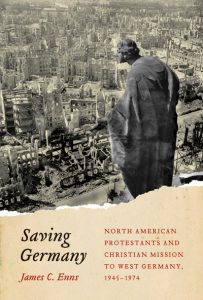 Enns examines a range of Protestant missionary responses to postwar Germany and divides his subjects into three broad categories. Ecumenical missionaries were mainline Protestants who worked primarily through the Religious Affairs Section of the American Military Government in Germany, the World Council of Churches (WCC), and the Church World Service. They were invested primarily in relief and reconstruction, particularly helping to rebuild the Evangelische Kirche Deutschland (the main Protestant church) as a pillar of German society. Denominational missionaries represent the second approach, and here Enns focuses on the Baptists and Mennonites. These denominations used pre-existing ties to their German counterparts and sought to build up these communities and their standing in German society. The third category is conservative evangelical missionaries who worked through independent mission organizations of a mid-century fundamentalist bent. The impact of organizations like Youth for Christ and Janz Team Ministries is not well known and the author does a good job integrating these organizations in the larger narrative.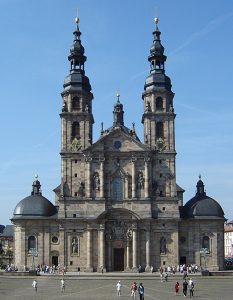
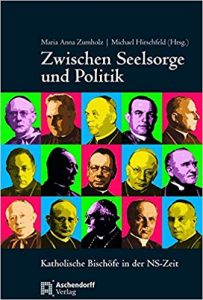 The editors, Maria Anna Zumholz and Michael Hirschfeld, discuss significant forthcoming works on both von Faulhaber and Jaeger to account partly for the brevity of the studies here (13). And while there is a detailed chapter by Raphael Hülsbömer on Vatican Secretary of State Eugenio Pacelli – later Pope Pius XII – and his relations with the German bishops, there is no attempt to integrate the episcopate into Vatican politics or consider the complicated, at times strained relationship between the wartime pope and the bishops as a collective. The editors justify this in part by referencing the closed archives covering the wartime pontificate of Pius XII; they could not have known that the year following this volume’s publication, the Vatican would finally announce the much-anticipated opening of these “secret archives” in 2020.