Review of Wolfgang Thielmann, ed., Alternative für Christen? Die AfD und ihr gespaltenes Verhältnis zur Religion

Contemporary Church History Quarterly

Volume 24, Number 3 (September 2018)

Review of Wolfgang Thielmann, ed., Alternative für Christen? Die AfD und ihr gespaltenes Verhältnis zur Religion (Neukirchen-Vluyn: Neukirchener Verlag, 2017). Pp. 192. ISBN: 978-3-7615-6439-4.

By Heath Spencer, Seattle University

This book is a collection of short chapters by Protestant clergy, lay leaders, journalists and public intellectuals on the fraught relationship between Christianity and Alternative for Germany (AfD), a right-wing populist party that has gained significant momentum in state and national elections since its founding in 2013. The editor and most contributors argue that the AfD and Christianity are fundamentally incompatible, though they also recognize that church members are attracted to the party and its program to roughly the same extent as the broader population. For this reason, they recommend dialogue with AfD supporters and sympathizers, though always with the goal of limiting its impact in church and society.

Among the incompatibilities cited by the authors are the AfD’s denigration of vulnerable groups (especially migrants and Muslims), its insistence on a homogeneous German Leitkultur, its political strategy (deliberate provocations and insults, distortions and “alternative facts,” manufacturing or intensifying anxieties), and its invocation of Christianity as an element of national identity rather than a universal faith and system of values. Nevertheless, they recognize that individual Christians have played a key role as founders and leaders of the party (including Frauke Petry, Bernd Lucke, and Konrad Adam on the Protestant side and Jörg Meuthen on the Catholic side). The group “Christen in der AfD” is another indicator that the party has made inroads among Christians, though very few pastors and priests have endorsed the AfD and many have been outspoken in their opposition.

The contributors’ calls for dialogue take different forms. Pastor Ulrich Kasparick of Hetzdorf (Uckerland) stresses the need for outreach to rural parishioners who rely on the internet and social media for much of their information about the wider world. Pastors and church councils must use those same channels to counter AfD positions and explain where they transgress Christian norms. Pastor Sven Petry (formerly married to Frauke Petry) argues that church leaders should listen to the concerns of Germany’s Wutbürger (enraged citizens) even as they challenge the misconceptions and scapegoating promoted by the AfD. Christina Aus der Au defends the decision to invite Anette Schultner (leader of the group “Christen in der AfD”) to participate in a panel discussion at the Protestant Kirchentag in Berlin and Wittenberg in 2017. Aus der Au, who served as president of the Kirchentag that year, appeals to the example of Dietrich Bonhoeffer, for whom the highest priority was not looking heroic, but the survival of the coming generation. It would be better, she argues, for Christians “to get their hands dirty than to wash them in innocence” (83).

Of course, dialogue does not mean moral relativism, nor does it mean that an opponent’s views will go unchallenged. Superintendent Ilka Federschmidt (Wuppertal) welcomes a clear “no” to the AfD on the part of the churches, but like Kasparick she sees a need for ongoing dialogue and active engagement with church members who lean toward the AfD and its agenda. Law professor Jacob Joussen, an elder at the Bonhoeffer-Gemeinde in Düsseldorf, weighs the options available to lay leaders if a member of a church council declares allegiance to the AfD (as Hartmut Beucker did in Wuppertal in 2017). Joussen could find no legal justification for excluding or removing an elder based on party affiliation but argued that non-AfD parish leaders had an obligation to wage a vigorous and public campaign against the ideas of their wayward colleague if such a case were to arise.

The book also makes room for two prominent AfD voices via Hartmut Beucker’s essay “Warum ich für die AfD kandidiere” and a partial transcript from the 2017 Kirchentag, in which Anette Schultner squared off against Bishop Markus Dröge (Berlin-Brandenburg-Schlesische Oberlausitz) and journalist Liane Bednarz. Both Beucker and Schultner are fairly predictable in their opposition to “uncontrolled” migration, “Islamization,” abortion, and gender mainstreaming as well as their promotion of tighter restrictions on immigration, defense of the “Jewish-Christian foundations” of German culture, and “traditional” families. Equally noteworthy is their invocation of the fifth thesis of the Barmen Declaration to argue that the churches should steer clear of politics (i.e., criticism of the AfD), along with their strategy of representing themselves and their party as the true victims of intolerance, hatred and hysteria. When asked to comment on those who feared the AfD because its proposals threatened to restrict their rights, Schultner avoided answering directly and instead accused those who were frustrated over the existence of the AfD of being “undemocratic” (187).

Among the limitations of the book are its lack of historical depth and its minimal engagement with a growing body of research on populism, far-right political parties, and their points of connection with religious communities and identities. Also regrettable is the lack of Catholic contributors and the tendency of several of the Protestant authors to congratulate themselves for wading into the morass of dialogue, unlike their principled but risk-averse coreligionists who had refused to give AfD members access to the podium at the 2016 Katholikentag in Leipzig. A third issue, though admittedly unavoidable in such a work, is that some of the information it relays is quickly outdated. For example, Anette Schultner abandoned the AfD in October 2017, only a few months after defending it at the Kirchentag, because in her view extremists had taken over the party. In May 2018, AfD representative Volker Münz was allowed to speak at the 101st Katholikentag in Münster.

Despite these drawbacks, the book is a fascinating source for contemporary church historians in that it shows German Protestants (in the larger regional churches as well as the smaller free churches) reflecting on and responding to right-wing populism in real time. Though the players and the circumstances are different in many respects, one cannot help but contrast the nearly unanimous opposition of church leaders to the AfD with the collaboration or complicity of church leaders during the Nazi era. Equally important are the ways in which that earlier history serves as a reference point for contemporary antagonists as they frame the debate and define their positions within it.

Share

Review of Peter Gbiorczyk, Probst Wilhelm Wibbeling (1891-1966): Jugendbewegter, reformierte Theologe im “Zeitalter der Extreme”

Contemporary Church History Quarterly

Volume 24, Number 3 (September 2018)

Review of Peter Gbiorczyk, Probst Wilhelm Wibbeling (1891-1966): Jugendbewegter, reformierte Theologe im “Zeitalter der Extreme” (Aachen: Shaker Verlag, 2016). Pp. 769. ISBN 978-3-8440-4772-1.

By Victoria J. Barnett, United States Holocaust Memorial Museum*

This is a biography of a little-known figure in the German church, Pastor Wilhelm Wibbeling, a Reformed pastor and church leader in the church of eastern Hesse. Wibbeling’s life and career spanned what the title accurately describes as “the age of the extreme,” and author Peter Gbiorczyk relates this life story on the much larger stage of the theological, political, and ideological movements, divisions, and debates that shaped twentieth century German church history.

Wibbeling had just completed his theological examinations and practical training for the ministry when the First World War began. He fought, eventually becoming an officer, married shortly after the war ended, and was ordained in 1919. His subsequent career showed his lifelong commitment to the renewal and stability of his church as well as his own strong social-political convictions. His political leanings were socialist. He began his ministry as a youth pastor in the coal-mining town of Bochum in the Ruhr valley, where he reached out to working class, Catholic, socialist, and other youth organizations in the region, creating a coalition that focused especially on the problems of alcoholism among youth. A non-church colleague described him in those years as someone “who didn’t act like a pastor at all, avoided church language and was familiar with and understood the socialist movement.”

By the early 1920s Wibbeling had become part of the Neuwerk Bewegung, which he later described as a movement emerging from the “stormy aftermath of the First World War,” the goal of which “was a decisive breakthrough … toward a reshaping of our entire life.” The focus was social renewal and church reconciliation; the context was the Protestant church. Early leading figures in the movement included pacifists like Eberhard Arnold, who went on to found the Bruderhof movement. The Neuwerk group was one of many church, social, and political movements in interwar Germany, and this book gives an in-depth portrait of Protestant engagement in these different groups and the role played by theologians like Karl Barth, Günther Dehn, and Paul Tillich.

Wibbeling served several small parishes during the 1920s, working with a population that was working class and decidedly anti-church (a member of his church council warned him that “if Jesus himself were to preach, there still wouldn’t be anyone coming to church.”) In the village of Hellstein, where he served from 1928 to 1932, the population’s politics were evident in the Reichstag elections of September 1930, in which over 40 percent of the vote went to the Communist party (with ca. 12 percent going for the Nazi party and 35 percent for the Social Democrats). From 1932 to 1945 he served in Langendiebach, a village of around 1000 people near the town of Hanau. The political demographics were similar to those of his previous parish: 51 percent of the population voted for the Social Democrats in the March 5, 1933, Reichstag elections (as compared to 18 percent nationally) and 15 percent for the Communists (compared to 12 percent nationally). The Nazi party received 28 percent of the local vote. Despite the fact that Wibbeling fit right in as a Social Democrat, his application for the pastorate initially met with resistance from the parish council itself, indicating the gap between the political demographics within the church and those of the broader populace. On March 23, 1933, the Social Democrat mayor of Langendiebach was ousted and replaced by a Nazi. Shortly thereafter, Pastor Wibbeling joined in the wider church struggle in the German Protestant church. A local chapter of the Deutsche Christen formed, and the national battles about the church Aryan Paragraph and the Reich bishop election began to unfold on the local level. In November 1934 Wibbeling led his parish to join the Confessing Church and became a member of the regional Confessing Bruderrat.

Wibbeling became drawn into the ongoing battles of the church struggle about youth work, pulpit proclamations, and church governance. Although he came under Gestapo surveillance for his Confessing Church activities, he doesn’t seem to have become more broadly engaged politically, and there was a marked contrast between his more outspoken statements and his actual record. The chapter on the persecution of the Jewish citizens and political opponents (including the arrests and imprisonment of prominent Social Democrats) in Langendiebach is a scant nine pages, and while it thoroughly documents what happened in the village there doesn’t seem to be any record of Wibbeling’s taking a public stand. In 1936 he was visited by Elisabeth Schmitz, who gave him a copy of her memorandum about the persecution of the Jews; in 1947, in fact, it was Wibbeling who signed the affidavit that she was indeed the author of the memorandum. At the time Schmitz was trying to mobilize the Confessing Church to protest the anti-Jewish measures, yet there is no indication that Wibbeling brought the matter before the regional Bruderrat. Similarly, there’s no record of Wibbeling being directly engaged on behalf of the 39 Jewish residents of Langendiebach, most of whom emigrated. After 1939, a heart condition kept Wibbeling out of active military duty and he spent most of the war focused on church youth work and regional Confessing Church politics.

After the defeat of Nazi Germany Wibbeling was soon drawn into the debates about denazification. He was outspoken on the issue: after a June 1945 memorandum to the pastors of the Kurhessen-Waldeck regional church announced the need to eradicate the “National Socialist remnants” from the church, Wibbeling responded caustically that many of those still serving in the church leadership, including its president, had been Nazi party members and had signed the 1939 Godesberg Declaration, which sought to “de-Judaize” the church and create separate congregations for Christians of Jewish descent. “Whoever was co-responsible for these decisions is among the remnants that now should be eradicated,” he wrote, and he argued that anyone who had been a member of the Nazi party or the German Christians should be removed from the ministry.

Wibbeling’s stand became part of the wider postwar debate among Protestant leaders about denazification, and this section is certainly one of the most detailed and interesting accounts in the book. Wibbeling became provost of the church district in 1946 and chaired the Hanau denazification commission for church employees (including not only clergy but deacons, organists, and religious educators). Clergy who had been party members (and those sympathetic to them) argued that only those who had failed to fulfil their pastoral obligations and “acted against scripture and confession” could be removed—i.e., that their political views per se were no criteria for removal from office. (This of course undermined the very purpose of denazification.) A striking number of those who came up before the Hanau denazification board had been members of the German Christian movement before joining the Confessing Church.

Most of the clergy who came before the Hanau denazification commission were pushed into early retirement but were able to retire with their pensions; the outcomes of denazification were more severe for non-clergy church employees, many of whom were suspended or fired. The case of Pastor Bruno Adelsberger illustrates the church’s passivity on the matter. Adelsberger was an early Nazi party member and avid German Christian who was described as a “notoriously zealous agitator” for Nazism who supported the “dejudaization” of the church. Unrepentant before the denazification board, Adelsberger was told that he could not remain in his parish but would have to apply to another parish for a position “independently,” and the matter of any further disciplinary action was turned over to the bishop. The bishop decided not to pursue the case, Adelsburger found a parish willing to give him a position, and so he remained in the ministry until he retired in 1967.

The remainder of the book chronicles Wibbeling’s postwar career until his retirement. Like others on the Protestant political left he became involved in the debates about the Cold War and the antinuclear movement. He also spearheaded local initiatives to address the Nazi past, and in 1961 led efforts to create and dedicate a memorial site where the Jewish synagogue in Hanau had stood, joining with the rabbi of Hesse, Isaak Emil Lichtigfeld. Wibbeling received the Bundesverdienstkreuz, Germany’s highest civilian honor, in 1961 and died in 1967.

Only about 200 pages of this book are devoted to the Nazi era, and while Wibbeling emerges as an intriguing and often outspoken figure, in much of the book he is treated almost as a minor player over against the major historical events of his times. In contrast, there are extensive descriptions of the Neuwerk movement and the political debates of the 1920s such as the 1926 plebiscite calling for the expropriation of property belonging to the former ruling nobility, which drew much support in the working class regions where Wibbeling worked. The result is a remarkably exhaustive portrait of working class Germany and of Protestant church life in such circles, giving an unusual vantage point for the events of the interwar period and the German church struggle between 1933 and 1945. The treatment of the postwar political issues and the debates of the 1950s is equally thorough. This book’s real value may be in its wealth of detail about this sector of German life and society during the first six decades of the turbulent twentieth century, as a backdrop for understanding the events in the Protestant churches.

* The views expressed are those of the author and do not necessarily represent those of the United States Holocaust Memorial Museum.

Share

Review of Katrin Rudolph, Hilfe beim Sprung ins Nichts: Franz Kaufmann und die Rettung von Juden und “nichtarischen” Christen

Contemporary Church History Quarterly

Volume 24, Number 3 (September 2018)

Review of Katrin Rudolph, Hilfe beim Sprung ins Nichts: Franz Kaufmann und die Rettung von Juden und “nichtarischen” Christen. Publikationen der Gedenkstätte Helden. Band 7 (Berlin: Metropol Verlag, 2017). Pp. 392. ISBN 978-3-86331-351-7.

By Victoria J. Barnett, United States Holocaust Memorial Museum*

This is a revised and expanded edition of Katrin Rudolph’s study of Franz Kaufmann and the “Kaufman Circle” that first appeared in 2004. The Kaufmann Circle was a small resistance group in the early 1940s with ties to Martin Niemoeller’s Confessing parish in Dahlem. Its primary members were Kaufmann, Helene Jacobs, Gertrud Staewen, and a Jewish artist, Cioma Schönhaus, who forged documents such as identity papers and food ration cards that helped Jews live underground in Berlin throughout the war. Kaufmann came from a Jewish family but was a baptized Protestant in a “privileged” marriage. When the Gestapo uncovered the group’s activities in 1943 Kaufmann and Jacobs were arrested (Staewen avoided arrest), and Kaufmann was murdered in Sachsenhausen in 1944. Schönhaus made his way to safety in Switzerland, later publishing an account of the group’s activities, published in English as The Forger. Jacobs and Staewen both published short postwar accounts and gave numerous interviews. (I conducted interviews with both women and wrote about the group in my first book, For the Soul of the People.)

As Rudolph notes in her introduction, however, recent research has yielded new information about the group and important corrections to the earlier accounts (including those in my book), revealing a number of connections between Kaufmann and other people in Berlin who were attempting to help Jews. These findings have altered her understanding of how the Kaufmann group operated, and in this new edition she argues that there was not a distinct and independently operating “Kaufmann circle” but rather a wider network of “small alliances of helpers” who were loosely connected to Franz Kaufmann. This study therefore broadens our view of the group’s activities beyond the immediate circle around Kaufmann and explores the wider dynamics and patterns of assistance to Jews in wartime Berlin. Rudolph has also examined and corrected discrepancies in some of the postwar accounts, and her book serves as a critical study of how postwar narratives about rescue emerged.

Rudolph begins by tracing the emotional and social effect of Nazi anti-Jewish legislation on the people of Berlin beginning in 1933, including the initial bewilderment and denial among the highly assimilated Jewish population in suburbs like Dahlem, as well as the shamefully quick compromises of the vast majority of Germans, who turned on even longstanding Jewish friends and colleagues. A significant percentage of those considered “non-Aryan” under Nazi racial laws—perhaps as many of 300,000 of the 800,000 affected by these laws—had Jewish family background but were either secular or had “assimilated” through conversion (i.e., baptized Christians), and about two-thirds of this population was Protestant. The Protestant debates about the applicability of the “Aryan Laws” to church members was the issue that launched the church struggle in 1933, and Rudolph helpfully traces the context of the wartime rescue initiatives back to these early beginnings.

Many of the Confessing Christians who became most politically active in helping those affected by the Nazi racial laws came out of the early radical “Dahlemite” wing of the church struggle, and the Dahlem parish was a quiet center of connection and communication about other developments. While baptized Christians and people in privileged marriages initially remained more sheltered from the worst of the Nazi anti-Jewish measures, their situation grew more precarious over the course of the 1930s, particularly after the November 1938 pogroms; during this same period, Confessing Church leaders showed a growing reluctance to stand up for them. In 1938, with the approval of the Nazi regime, an office was established by Pastor Heinrich Grüber to assist the emigration of “non-Aryan Christians”; Grüber and his co-worked helped between 1500 and 2000 people emigrate before the regime shut the office down in 1940. The situation intensified dramatically in October 1941, when all further Jewish emigration was banned. All Germans affected by the Nazi racial laws had to wear a yellow star in public and the deportations of Jews from Berlin began.

Franz Kaufmann was among those affected. He had been a lawyer in the finance ministry until his dismissal in 1935, after the Nuremberg Laws. After that he lived on a modest pension and sought to emigrate, applying to the Quakers for help in reaching the United States and to ecumenical contacts in hopes that he could go to Switzerland. Tragically, both avenues failed him, and his ties to the Dahlem parish deepened in the early years of the war. As the plight of Jews in Berlin worsened, Kaufmann decided to use every means and connection he possessed to help them. He reached out to old contacts who were still in the government or whom he thought might be able to offer financial support for rescue efforts, in the process taking risks that may have exposed others. After his arrest he told his interrogators that “perhaps out of an inflated sense of responsibility, I felt called to help people who turned to me in need, fear and despair and, as it turned out, to help them with unreliable means.”

It is difficult to know whether such risks were what eventually led to the denunciations that led the Gestapo to Kaufmann and the others, but it’s clear that his initiative and his efforts made him the center point for a wide-ranging network of people in Berlin who were trying to help Jews, and in the aftermath many of them defined their connection to the underground resistance in terms of their relationship to Kaufmann. In addition to a few individuals who had worked with Grüber office and members of the Dahlem church like Jacobs and Staewen, this network included several individual Confessing pastors in Berlin whose parsonages and parishes became places of assistance: Catholics like Max Josef Metzger and Margarete Sommer, members of the Solf resistance circle, and a broader network of parsonages in Berlin and the Württemberg Confessing Church (Kirchliche Sozietät) that began to serve as an underground railroad for Jews trying to reach Switzerland (related most famously Max Krakauer’s account of his own rescue, Lichter im Dunkel). Included as well are more ambiguous figures who assisted in rescue but for ulterior motives or for payment. Rudolph has concluded that Kaufmann was involved in four distinct rescue groupings, only one of which was the Dahlem circle that has been associated with him to date, making him “synonymous with illegal assistance for those persecuted.”

There is much new material in this book not only about the different members of the resistance but the identities and fates of those who were helped. The wealth of detail, corrections to previous accounts, and focus on the intersections between the different communities is sometimes difficult to follow, but by situating the story of the Kaufmann circle in the larger context of the Confessing Church debates and the different Berlin rescue networks and individuals, Rudolph has provided a real service for those of us who seek to understand this period in its full complexity, and some important new insights into this history as it unfolded in wartime Berlin.

* The views expressed are those of the author and do not necessarily represent those of the United States Holocaust Memorial Museum.

Share

Review of Victoria J. Barnett, ed., The Collected Sermons of Dietrich Bonhoeffer, Volume 2

Contemporary Church History Quarterly

Volume 24, Number 3 (September 2018)

Review of Victoria J. Barnett, ed., The Collected Sermons of Dietrich Bonhoeffer, Volume 2 (Minneapolis: Fortress Press, 2017). Pp. xvi + 253. ISBN: 978-1-5064-3336-3.

By Kyle Jantzen, Ambrose University

Victoria Barnett, general editor of the Dietrich Bonhoeffer Works, English edition, has ably selected, edited, and introduced 28 Bonhoeffer messages in this the second volume of his collected sermons. Bonhoeffer’s martyrdom has made him famous as a theologian and member of the German Resistance, but as Barnett points out, he was educated for careers in both academia and ministry. Indeed, one of the consistent features of Bonhoeffer’s “fragmentary life” was the writing and preaching of sermons (xi-xii). This collection of sermons and meditations, written between 1926 and 1944, certainly touch on many of the theological themes for which he is known in works like Discipleship, Life Together, Ethics, and Letters and Papers from Prison. More importantly, however, they demonstrate Bonhoeffer’s warm pastoral heart and deep personal piety. As Barnett observes, Bonhoeffer followed the lectionary, convinced that “Scripture, preached correctly, revealed the word of God to the listener” (xiii). At the same time, he believed that preaching should speak to the contemporary world. What is perhaps most interesting, though, is the way that these sermons open up a window into Bonhoeffer’s own inner life.

Three themes run through these sermons: the seriousness of Bonhoeffer’s Christianity, the insight of his responses to the social and political crises of the late Weimar and Nazi eras, and the resolution of his engagement in the Kirchenkampf (German Church Struggle).

From the beginning of his preaching career, Bonhoeffer proclaimed an uncompromising brand of Christianity. In “A Sermon for His Contemporaries” (1926), he describes God as “absolute holiness and absolute duty,” and declares that “God’s word always commands the fulfilling of this absolute duty” (5). Indeed, God’s authority overshadowed all others: “When we do not recognize all earthly authorities as being dependent on that one authority, we make them our idols, be they state, church, reason, or genius” (6). Paradoxically, it is in obedience to God that the Christian finds freedom: “when you are bound to God in obedience, then you have become truly free. You are free from everything from which you should be free; free from people and powers, because you are bound to God” (8).

The authority of Christ is echoed in “Seeing the World through the Eyes of Christ” (1927/8), in which Bonhoeffer pronounces:

Jesus Christ is looking for lodging. He is looking for entrance into our spirits and our hearts. Do we really understand what this means? Jesus Christ is a controlling, willful guest. He wants our hearts completely. He will not tolerate competition, even if the competition only wants to dispute Jesus’s right to the least bit of his possession. Jesus Christ is a discomforting, imperious guest. He will rule whoever invites him in, and whoever invites Jesus in must serve him. (19-20)

Typical of the “both-and” way of Bonhoeffer’s thinking, however, he goes on to proclaim that Jesus comes not to destroy but to comfort, promising to give sight and to bring love into the life of the Christian. In the end, all these ideas come together: “The act of Christian love is to manifest Jesus not as a religious genius, an ethical thinker, or a philosopher, but as the Lord of death and of life; as the Word of God made flesh, for whom command and promise are the same” (22).

Dependence on God’s grace emerges time and again in Bonhoeffer’s preaching. In “The Human Yearning for God,” he asserts that the way to God is through purity of heart, even though it is impossible to attain:

The most distressing realization in the life of every Christian is that we cannot remain pure, that day by day we fall down anew and night by night must cry out to God anew: Lord, I cannot do it alone; if you make me pure, then I am pure. May God create in me a pure heart. I want so much to be pure. I want so much to behold God. (46)

Bonhoeffer’s piety manifests itself once more in “Approaching the Day in Faith: Morning Devotions” (1935), written as a reflection on his experience with his Finkenwalde seminary students. “Each new morning,” he begins, “is a new beginning for our lives. … It is long enough to find or to lose God, to keep faith or to fall into sin and disgrace” (154). Each day is created by God. Each day is an opportunity to find new mercy. In each day, we require our daily bread. Bonhoeffer goes on to describe the practice of the Finkenwalde community—their habit of beginning each day with private and communal devotions. As Bonhoeffer put it, “One hour must be put aside each morning for quiet prayer and worship together. Truly, this is not wasted time. How else are we to face the tasks, tribulations, and temptations of the day?” (155).

The seriousness of Bonhoeffer’s Christianity is matched by the thoughtfulness of his responses to the rapid social change and political turbulence of his day. In this, his preaching is a model of pastoral care in times of trial. For example, “The Soul’s Silence before God” (1928) asks hard questions which speak not only to Bonhoeffer’s day but to ours:

Is there still something like the soul in an age such as ours, an age of machines, of economic competition, of the dominance of fashion and sports; is this nothing more than a cherished childhood memory, like so much else? It just sounds so strange and peculiar amid the confusion and loud voices extolling themselves, this little word “soul.” It speaks such a gentle, quiet language that we hardly hear it anymore amid the tumult and chaos inside us. Yet it speaks a language full of the greatest responsibility and of profound seriousness: you, human being, have a soul; beware, lest you lose it, lest you awaken one day amid the frenzy of life—in both work and private life—and find that inwardly you have become empty, a plaything of events, a leaf before the wind, driven to and fro and blown away—that you have lost your soul. (33)

His answer is to cultivate silence: “My soul becomes silent before God, who helps me. God’s hours are hours of succor and comfort. God has an answer for every distress of our soul, and this answer is always one and the same … the enticing words: I love you” (35-36).

Other sermons illustrate Bonhoeffer’s ability to take the long view in the midst of upheaval. In “At the Turning Point: Waiting for God” (1931), he references the instability and chaos of the late Weimar era. In an age of clashing world views, the popular expectation is that the human being should “hold his own,” “remain master of the world, master of the future” (61). Bonhoeffer notes the way in which the Bible sets out a different response to the future—a posture of waiting on God. The sermon closes with a prayer: “God, come into our waiting. God, we are waiting for your salvation, your judgment, for your love and your peace” (66). Similarly, in “Following Christ through the World to the Cross” (1932), Bonhoeffer explains how Christ rejected the temptation to be king of the world, forsaking worldly power in obedience to God. Christ’s path was the path of love for humans, the path of the cross. “And we walk with him, as individuals and also as the church. We are the church under the cross … our kingdom is not of this world” (70). Perhaps the most powerful sermon in this vein is “Staying Grounded in Turbulent Times” (1932). In the midst of (again) instability and competing world views, Bonhoeffer takes up the prayer of 2 Chronicles 20:12: “We do not know what to do, but our eyes are on you” (74). As is so often the case, Bonhoeffer’s preaching points to the mercy of God expressed in Christ’s saving death on the cross.

One of the surprising elements of these sermons is Bonhoeffer’s ability to find hope in the midst of trial. For instance, in a Christmas meditation written in 1940, Bonhoeffer explores the jubilant prophecy in Isaiah 9, detailing the wisdom, power, authority, love, and justice of Jesus and his kingdom. Concluding with the words of Isaiah: “The zeal of the Lord of hosts will do this,” Bonhoeffer proclaims:

The holy zeal of God for this divine kingdom guarantees that this kingdom will remain for eternity and will reach its final fulfillment despite all human guilt, all resistance. It will not depend on whether we participate. God brings his plans to fruition with or despite us. But God desires for us to be with him. Not for God’s own sake but for our sake. God with us—Immanuel—Jesus—that is the mystery of this Holy Night. But we cry out with joy: “For a child has been born for us, a son given to us.” I believe that Jesus Christ—a true human being, born of the Virgin Mary, and true God, begotten of the Father in eternity—is my Lord. (208)

A few of the sermons in this volume reference more directly the state and church politics of the late 1920s and early 1930s. The most forceful of these is “… In the Eleventh Hour of Our Church” (1932), which Bonhoeffer preached in Trinity Church, Berlin, on Reformation Sunday, just after the November 1932 Reich election. Here Bonhoeffer contrasts the triumphal celebration of the Protestant Reformation and the noisy invocation of Luther with the actual state of the church, which he argues is losing its way.

We … keep saying over and over those same self-confident words with all their pathos, “Here I stand—I can do no other.” We fail to see that this is no longer Luther’s church, that Luther was distressed and agitated, pushed all the way to the wall by the devil and in fear of God when he said, “Here I stand,” and that these are hardly suitable words for us to speak. It is simply untruthful, or unforgivable heedlessness and arrogance, for us to take refuge behind these words. (93)

Again and again in the sermon, Bonhoeffer repeats the words of the Scripture text from Revelation chapter 2: “But I have this against you, that you have abandoned the love you had at first” (92). As he unmasks the crisis of German Protestantism, he declares:

Let us lay the dead Luther to rest at long last, and instead listen to the gospel, reading his Bible, hearing God’s own word in it. At the last judgment God is certainly going to ask us not, “Have you celebrated Reformation Day properly?” but rather, “Have you heard my world and kept it?” (95).

Bonhoeffer dissects the lack of prayer, love, grace, and devotion in his church, calling on his hearers to repent. His closing words?

And now, when you leave the church, don’t think about whether this was a fine or a poor Reformation service, but let us go soberly and do the works that came first. God be our help. Amen” (100).

Two sermons bring together these three themes of serious Christianity, timely advice for troubled times, and decisive engagement with the political and church-political issues of his day.

The first of these is “Of Priests and Prophets in the New Germany” (May 1933). In the context of the dismantling of democracy, the rise of the pro-Nazi German Christian Movement, and the early signs of what would develop into the Church Struggle, Bonhoeffer preached a sermon based on Exodus 32, the story of the High Priest Aaron and the impatient Israelites building the Golden Calf—an idol—rather than waiting for their prophetic leader Moses to return from his meeting with God on Mount Sinai. Applying the text to his own day, Bonhoeffer complains that “The church of the world, the church of the priests, wants something it can see. It doesn’t want to wait any longer. It wants to go ahead and do something itself, take action itself, since God and the prophet aren’t doing so” (110). Later, Bonhoeffer describes this “worldly church” as a church,

which doesn’t want to wait, which doesn’t want to live by something unseen; as a church that makes its own gods, that wants to have a god that pleases it rather than asking itself whether or not it is itself pleasing to God; as a church that is ready to make any sacrifice for the sake of idolatry, the glorification of human ideas and values—as a church that presumes divine authority for itself through its priesthood—it is as such a church that we come again and again to worship. And it is a church whose idol lies shattered to pieces on the floor, as a church that has to hear anew, “I am the Lord your God.” (112-113)

The cross, Bonhoeffer declares, will put an end to all idolatry. We encounter the God who will tolerate no other gods, but also the God who meets us “in boundless forgiveness” (113).

The second, and the last sermon examined in this review, is “The Peace of God in Affliction” (1938), printed and sent out to the now scattered Finkenwalde seminary students for their encouragement. Based on Romans chapter 5 and the Apostle Paul’s message of peace with God through Jesus Christ, the sermon contains Bonhoeffer’s reflections on suffering: “Whether we have truly found the peace of God will be proven by the way we deal with the afflictions that come upon us” (188). He continues:

Whoever hates affliction, renunciation, crisis, slander, and imprisonment in his life might otherwise talk about the cross with big words, but nonetheless he hates the cross of Jesus and has no peace with God. But whoever loves the cross of Jesus Christ, whoever has found peace in his cross, also begins to love the affliction in his life. And finally he will be able to speak with Scripture: “but we also boast in our afflictions.” (189)

For Bonhoeffer, “Affliction produces patience, then experience, then hope. Whoever avoids affliction discards along with that God’s greatest gifts for his creatures” (190). Through affliction comes hope, and the love of God “poured into our heart” (192).

The sermons and meditations chosen by Victoria Barnett for The Collected Sermons of Dietrich Bonhoeffer, Volume 2 ably demonstrate both the pastoral heart and spiritual depth of Bonhoeffer in ways that readers of his more famous works would do well to discover.

Share

Article Note: Johannes Due Enstad, “Prayers and Patriotism in Nazi-Occupied Russia: The Pskov Orthodox Mission and Religious Revival, 1941-1944″

Contemporary Church History Quarterly

Volume 24, Number 3 (September 2018)

Article Note: Johannes Due Enstad, “Prayers and Patriotism in Nazi-Occupied Russia: The Pskov Orthodox Mission and Religious Revival, 1941-1944,” Slavonic and East European Review 94, no 3 (2016): 468-96.

By Doris L. Bergen, University of Toronto

In this illuminating article, Johannes Due Enstad, a postdoctoral fellow in the Department of Literature, Area Studies and European Languages at the University of Oslo, demonstrates the value of integrating religion into analyses of war and occupation. At the same time, he shows how profoundly religion and religious practice are affected by political and military factors.

Enstad’s focus is the Pskov Mission, an initiative involving about 500 Russian Orthodox priests and other staff that, with permission and support from the Wehrmacht, offered spiritual services to the people, most of them peasants, of northwest Russia under German occupation. As Enstad points out, although important articles by Karel Berkhoff (2000) and Leonid Rein (2005) explored the fate of the churches in occupied Ukraine and Belarus, almost no scholarship exists on Christianity in Russia proper in the years 1941-1944.

Using German and Russian sources—notably Wehrmacht and Security Service reports generated at the time and postwar memoirs by some of the priests involved—Enstad makes a three-part argument. First, he shows that the Mission was not just a German puppet organization. The priests exercised agency, to varying degrees under intensely unstable circumstances, and in their way promoted an anti-Bolshevik strand of Russian patriotism. Second, overall, the Germans in charge were pleased with the Mission, and its efforts helped legitimate the occupation. The Russian Orthodox priests involved prayed for German victory and encouraged their congregants to cooperate with German demands. Third, the Mission had a significant impact at the time and also in the decades that followed. According to Enstad, priests associated with the Pskov Mission opened some 200 churches and provided extensive charitable care for orphans and Soviet prisoners of war. A number of those churches remained open after the war, and although many of the priests went into exile and some were imprisoned and killed, quite a few remained in place under the restored Soviet rule.

At one level, Enstad’s narrative confirms Nazi German claims to have revived Christianity in occupied Soviet territory. But his insightful analysis challenges any simplistic conclusions. The numerous Russian memoirs he examined, so detailed in their descriptions of contact with local populations, say almost nothing about the persecution and murder of Jews and Roma in the region. Enstad attributes this silence to antisemitism, which priests imbibed from their religion and its myth of Jews as Christ-killers, and from their politics, with its related myth of Jews as Bolsheviks. Russian Orthodox priests, Enstad notes, had a vested interest in exaggerating the local support they enjoyed, because after the war, that support was their best defense against charges of collaboration. He makes effective use of German accounts to corroborate the priests’ impact, although it bears mentioning that Germans too benefited from a version of events that presented them as liberators and saviors rather than tyrants and killers.

Enstad succeeds in integrating a wide range of sources and perspectives into an account that is both empathetic and methodologically sophisticated. This fascinating article breaks new ground in the transnational history of Christianity in World War II and the Holocaust. It also alerts readers keen to learn more to the existence of Enstad’s brand-new book: Soviet Russians under Nazi Occupation: Fragile Loyalties in World War II (Cambridge University Press, 2018).

Share

Letter from the Editors (June 2018)

Contemporary Church History Quarterly

Volume 24, Number 2 (June 2018)

Letter from the Editors (June 2018)

By Kyle Jantzen, Ambrose University

Dear Friends,

As summer begins, the editors are pleased to publish a new issue of Contemporary Church History Quarterly. This issue contains an insightful article by Manfred Gailus and a combination of powerful book and film reviews, article notes, and conference reports assessing new research in German and European religious history.

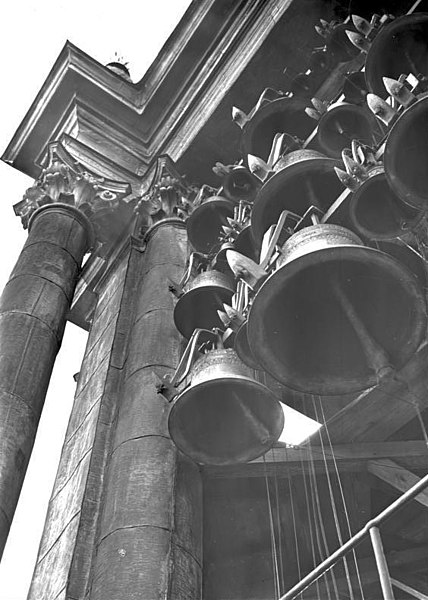
Church Bells at the Potsdam Garrison Church. Bundesarchiv, Bild 170-123 / Max Baur / CC-BY-SA 3.0. Source: Wikimedia Commons, https://commons.wikimedia.org/wiki/File:Bundesarchiv_Bild_170-123,_Potsdam,_Glockenspiel_der_Garnisonkirche.jpg.

Gailus writes about the ongoing issue of Nazi-era church bells in German parish churches. Controversy has emerged in a number of locations (and perhaps should emerge in others) over church bells dedicated to Adolf Hitler and/or emblazoned with swastikas. Gailus explains the current state of the issue.

Robert P. Ericksen has contributed a detailed review of a new study by Manfred Gailus and Clemens Vollnhals, containing sixteen examples of German Protestant theologians who promoted an “an artgemäss theology, claiming the necessity of certain racial and cultural qualities for any Germans claiming faith in Jesus and the Christian God.” This review lays out the depth and breadth of Protestant theological participation in Nazi racial ideology.

Doris L. Bergen praises Matthias Grünzig’s new book on the ongoing saga of the Potsdam Garrison Church–the church used by Hitler to open his first parliament and symbolically launch his government. Already a centre of Nazi activity in the Weimar era, the church served as a hotbed of Nazi Christianity in the Third Reich, and its rebuilding today reopens the controversy surrounding its place in the Christian collaboration with Nazism.

Other reviews in this issue include Dirk Schuster’s assessment of Joachim Krause’s documentation of the roots of the German Christian Church Movement in the parishes of the Wieratal, and Kyle Jantzen’s reviews of the powerful new edition of Dietrich Bonhoeffer’s “After Ten Years” essay, with an introduction by Victoria J. Barnett, and of a new film about Bonhoeffer entitled Come Before Winter.

Finally, Doris Bergen writes a fascinating conference report about a recent Bethel College conference on Mennonites and the Holocaust, and Rebecca Carter-Chand highlights a new article on the 1975 West German Catholic post-Holocaust statement “Our Hope: A Confession of Faith for Our Time.”

We trust you will find these contributions interesting and enlightening, and we wish you a fine summer ahead.

On behalf of the editors,

Kyle Jantzen, Ambrose University

Share

Shrill Bell Ringing

Contemporary Church History Quarterly

Volume 24, Number 2 (June 2018)

Shrill Bell Ringing

With “Hitler Bells,” Protestant churches backed the “Führer.” Many still ring today.

By Manfred Gailus, Technical University of Berlin; translated by Kyle Jantzen, Ambrose University

This article was originally published in Der Tagesspiegel, Nr. 23425, Wednesday, March 28, 2018. It is reprinted here with the kind permission of the publisher. You can view the original German article with images here.

How many “Hitler bells” still ring on German church towers and when will they stop? For almost a year, the idyllic wine village Herxheim am Berg (Rhineland-Palatinate) has experienced an unprecedented media hype: since 1934, in St. Jacob’s Church, a so-called “Hitler bell” has been ringing, on which a swastika is emblazoned, along with the political slogan “All for the Fatherland – Adolf Hitler.” Newspaper reporters, TV journalists, and onlookers have been visiting the community on the romantic wine route since summer 2017. Also, ring-wing political party members interested themselves in this bell and a village in which it could ring freely until September 2017. The mayor, an electrical engineer, was reduced to making awkward and somewhat questionable comments which forced him to resign.

Since December 2017, Herxheim has a new mayor—a retired pastor—but his statements are questionable too. Since then, there has been a dispute in the village and in the region: the bell must go, say some; the bell should stay, say others. Startled by the battle of Herxheim, other parishes began looking more closely at their church towers. In the meantime, five problematic bells from the Hitler era have been discovered in the Protestant Church of the Palatinate alone. And elsewhere, too, there were “Hitler bells”: one in the Saarland, two in Lower Saxony, and, amazingly, two more in the oh-so politically correct city of Berlin.

A large swastika—not easy to miss.

It is already a bit much that church bells with swastikas and corresponding Nazi slogans could even remain in use up to 2017. In Essingen (Rhineland-Palatinate), until September 2017 there rang a bell consecrated in 1936 with the inscription: “As Adolf Hitler gave sword and freedom to the German country. Cast by the Master Pfeifer, Kaiserslautern.” From the tower of the Church of the Cross in Schweringen (Lower Saxony) a bell with an oversized 35-by-35-inch swastika has rung for worship since 1934. This cannot be easily overlooked. The inscription on the bell is stamped on: “Germany has awakened out of misery and out of night – This cross gave success, helped to conquer discord – Thanks be to God.” Since September 2017, this bell has been silent. In the face of public agitation, the mayor professed he knew nothing about it.

In the Wichern Chapel in Berlin-Spandau, in October 1934, Rev. Johannes Rehse consecrated a bell bearing a Christian cross and a swastika, as well as the Bible verse (1 John 5. 4): “Our faith is the victory, which has overcome the world.” It is obvious that this creed was conceived differently in 1934 at the consecration ceremony designed by Nazi pastors. After the confirmands chanted “Under the flag we walk,” the bell consecration closed with a triple “Sieg-Heil” to Hitler and the singing of the German national anthem and the Horst Wessel song. The Spandau bell, the existence of which was acknowledged from time to time in the post-war period by the parish as well as by the church leadership in Berlin-Brandenburg, fell silent in November 2017 and has now been replaced by a new bell.

The Protestant milieu was comparatively far more infused with the Nazi zeitgeist than the Catholic Church.

In total, about a dozen bells were discovered in the 2017 Reformation commemoration year with dedications and symbols from the Nazi era that ranged from politically questionable to completely unacceptable. In all cases, these are Protestant churches. Currently, there is no Catholic Church involved, which would be similarly affected. An accident? Or perhaps Catholics have not yet looked closely at their church towers? No, no coincidence. Rather, in this finding we see an echo of the historical fact—a confirmation of the thesis that, in the “Third Reich,” the Protestant milieu was comparatively far more infused with the Nazi zeitgeist than the Catholic Church.

As a tightly centralized church and part of a global church governed by Rome, German Catholicism was less susceptible to the völkisch ideology of the era. In the Catholic Church, there was no inner-church mass movement led by theologians like the Protestant “German Christians” (DC). This is the most striking difference from the Protestants, where the German Christian Movement, which was as Christian-völkisch as it was antisemitic, conquered many of the 28 regional churches completely, and many others, like the large Prussian regional church, to a considerable extent. Certainly, there were also Catholic “brown priests” who were party members or who took up Nazi ideology. However, they accounted for less than one percent of all priests. As a number of recent studies have shown, on average, about 15 to 20 percent of the pastors in Protestant state churches belonged to the NSDAP. Of the more than 400 Protestant parish clergy in the capital, about 20 percent had joined the Hitler party and more than 40 percent were involved (at times) in the “Faith Movement” of the German Christians.

Alongside Christian motifs, diverse Nazi symbols.

Therefore, it is not surprising that church bells that are still in use today are discovered to be relics from a past, when many Protestant churches “turned brown.” Inspired by German Christian pastors, Nazi ideas, images, and symbols found their way into churches, parish halls, and permeated sermons and church newspapers. The swastika was omnipresent: on flags, firmly carved in stone on church buildings, and stamped hard into the metal on church bells. The Tempelhof Faith Church, which was renovated in 1933, bore a large swastika hewn in stone on a main pillar in the interior. The “Fatherland Bell” of the newly built Charlottenburg Gustav Adolf Church, which bore the dedication “For Our Fatherland” in addition to the Nazi symbol, may well be considered the first “swastika bell” installed in Berlin. In the entrance hall of the Mariendorf Martin Luther Memorial Church, visitors were greeted by relief portraits of Hindenburg and Hitler, and in the church itself various Nazi symbols adorned a mighty triumphal arch alongside Christian motifs. On the Mariendorf “Fatherland Bell,” consecrated in 1935, were emblazoned a swastika and the Hitler quote “May God take our work in his grace, make our will right, and bless our insight!” Swastika and Christian cross, as the Friedenau German Christian pastor Bruno Marquardt and many of his pastor colleagues said in 1934, were not opposites: “As the cross of Christ expresses our Christian convictions, so the swastika adds to our completely German-völkisch attitude.”

How to deal with the “Hitler bells” today? The reactions in Herxheim am Berg and elsewhere revealed astonishing uncertainties and at times much worse. Many “citizens” thought the bell could stay in operation. Not everything was bad back then—that too was heard. And the bells—you cannot see them when they ring. The new mayor of Herxheim, a retired pastor, ultimately argued that the bell could also be understood as a memorial and so continue to operate. His statement [about the ringing bell – Ed.] during a TV interview—”I hear the victims: these were German citizens, too, not just Jews”—aroused a considerable sensation.

At the request of an indignant Jewish citizen, the District Court of Bad Dürkheim ruled on February 6, 2018, that Mayor Welker was not allowed to repeat this statement. At the end of February 2018, the village council of Herxheim, which was responsible for the bell, decided to leave the “Hitler bell” in the church tower. Josef Schuster, President of the Central Council of Jews in Germany, responded that this decision stunned him and testified to a deep disrespect of all victims of National Socialism: “How a church bell dedicated to one of the greatest criminals in human history is compatible with Christianity is a mystery to me.”

The regional churches most affected by the bell affair, in the Palatinate and in Hanover, should not idly observe the unacceptable events on the ground for too long. And the “Hitler bells” of today also affect the Protestant Church in Germany (EKD) somewhat, in light of its many assurances about a Protestant “history of learning” during the 500th anniversary of the Reformation. Significant damage to the church’s image has already occurred and more damage still could follow. The relevant church authorities have signalled a willingness to remove the contaminated bells and replace them with new ones. That would certainly be the minimum and needs to happen immediately.

And, above all, more attention is required to the church’s coming to terms with the past locally. As current events illustrate, even 70 years after the Nazi disaster, things are often in disarray. In the affected Spandau parish, on the occasion of the 2017 (re)discovery of a “Hitler bell,” a working group was formed immediately to come to terms with the past.

Postscript, May 2018: According to recent press reports, so-called “Hitler bells” have now been discovered in 21 Protestant churches and one Catholic church. In the area of the Protestant Church of Central Germany alone (Thuringia and Saxony-Anhalt) there are still six problematic bells in the church towers.

Share

Review of Manfred Gailus and Clemens Vollnhals, eds., Für ein artgemässes Christentum der Tat: Völkische Theologen im “Dritten Reich”

Contemporary Church History Quarterly

Volume 24, Number 2 (June 2018)

Review of Manfred Gailus and Clemens Vollnhals, eds., Für ein artgemässes Christentum der Tat: Völkische Theologen im “Dritten Reich”, Vandenhoek & Ruprecht, Göttingen, 2016, 329 pp.

By Robert P. Ericksen, Pacific Lutheran University

This book, as indicated in its title, deals with what must be the most crucial flaw within German Protestant theology in the lead-up to the Nazi era, perhaps a “sickness unto death,” to borrow a phrase from Kierkegaard. This flaw involves a völkisch theology, emphasizing the tight bond between Christian belief and the German people. It involves an artgemäss theology, claiming the necessity of certain racial and cultural qualities for any Germans claiming faith in Jesus and the Christian God. And, though it does not appear in the book title, this flaw involves an “orders of creation” theology, in which certain cultural, political, and racial qualities of the German Volk, as celebrated by Adolf Hitler and National Socialism, could be seen as a binding revelation from God. After an introduction to the topic, fifteen chapters of this book deal with sixteen individuals who help us better understand the complicity of Protestant Christians in the crimes of the Nazi state.
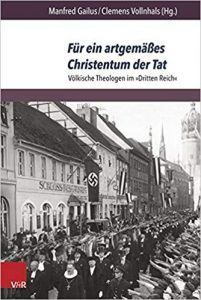
One of the editors of this volume, Manfred Gailus (a member of the editorial board of CCHQ), is a historian known to many or most of us as a prolific author and editor of books on Protestant churches in Nazi Germany. These include his Protestantismus und Nationalsozialismus: Studien zur Nationalsozialistischen Durchdringung des Sozialmilieus Berlin (Berlin, 2001), plus books such as Mir aber zerriss es das Herz: Der stille Widerstand der Elisabeth Schmitz (Göttingen, 2010), and Friedrich Weissler: Ein Jurist und bekennender Christ im Widerstand gegen Hitler (Göttingen, 2017). He also has co-edited books with colleagues, such as Nationalprotestantische Mentalitäten in Deutschland—1870-1970 (Göttingen, 2005), co-edited with Harmut Lehmann; Zerstrittene “Volksgemeinschaft:” Glaube, Konfession und Religion im Nationalsozialismus (Göttingen, 2011), co-edited with Armin Nolzen; as well as this volume co-edited with Clemens Vollnhals.

The second editor, Vollnhals, also has a career full of important contributions to our understanding of churches in Nazi Germany, beginning with his early study on denazification, Evangelische Kirche und Entnazifizierung, 1945-1949: Die Last der nationalsozialistische Vergangenheit (Munich, 1989). He too has been prolific in co-edited projects, including Mit Herz und Verstand—Protestantische Frauen im Widerstand gegen die NS-Rassenpolitik (Munich, 2013), co-edited with Manfred Gailus; and Die völkisch-religiöse Bewegung im Nationalsozialismus: Eine Beziehungs- und Konfliktgeschichte (Göttingen, 2012), with Uwe Puschner; plus more than a dozen additional edited volumes. Taken together, the work of Gailus and Vollnhals could be the stuff of several seminars on the response of Protestants in Germany to the Nazi state, including analyses of some of the heroes, but especially with an attempt to understand those who found the Nazi state so very attractive. This volume, with its depiction of sixteen völkisch theologians, explores the attraction of Adolf Hitler and National Socialism for German Protestants. It takes us deeply into that Christian stance which, post-1945, strikes so many as so counter to an appropriate understanding of the teachings of Jesus.

All the theologians in this volume had some sort of relationship to the Deutsche Christen, of course, that group of German Protestants who welcomed and cheered the rise of Hitler, waved the Swastika, often wore brown uniforms in church, and tried to disguise or even remove all Jewish elements within the Christian tradition. Some of these stories are well known. Oliver Arnhold writes on Walter Grundmann and his “Institute for the Study and Eradication of Jewish Influence on German Church Life,” a topic also described for us in the work of Susannah Heschel, The Aryan Jesus: Christian Theologians and the Bible in Nazi Germany (Princeton, 2008). Grundmann and his so-called “Dejudaization Institute,” supported by the German Protestant Church and its notorious “Godesberg Declaration,” included a large number of seemingly reputable theologians in his project to deny the Jewish origins of Christianity, and even the Jewish origins of Jesus.

A chapter by Dirk Schuster describes Johannes Leipoldt, a professor of New Testament who, after stints at Kiel and Münster, arrived at Leipzig in 1916. Schuster emphasizes in his chapter title Leipoldt’s effort to deny Jesus’ Jewishness, including the quote, “Jesus is far removed from any sort of Jewishness” (189).[1] Leipoldt worked closely with Walter Grundmann, a former student, and became one of the most active co-workers in Grundmann’s Dejudaization Institute, especially influencing the argument—important within the Nazi world—that Jesus could not really have been of Jewish blood. Despite this antisemitic activity, Leipoldt sailed through the transition of 1945. The fact that he never actually joined the Deutsche Christen or the NSDAP allowed him to be fully exonerated by the denazification process, with no attention placed on the heavily antisemitic elements in his scholarship (197). He remained at Leipzig until his retirement in 1954 (190). With his ongoing position at Leipzig and his national and international reputation, including for translations and for work on original sources, Leipoldt’s many antisemitic stereotypes, assumptions, and arguments remained fully “citationable” into the 1980s (201).

We also get a chapter by Hansjörg Buss on Gerhard Meyer. He was a simple pastor in Lübeck, rather than a theologian with a university position; but Buss shows us how completely Meyer was able to develop a church in Lübeck, the Martin Luther Parish, into a place where Germanness counted for far more than received tradition. Catholics had no place in a German church, according to Meyer, nor did Protestants who quarreled over doctrine. Jews had no place whatsoever, whether within the Christian tradition or within Germany. This all grew out of the idea of a “Deutschkirche,” advocated by the antisemitic Bund für Deutsche Kirche (League for a German Church), founded in 1921, which had an especially strong following in Lübeck and Schleswig-Holstein. Meyer, born in Lübeck in 1907, was ordained in 1932 and received his appointment in the Martin Luther Parish in September 1933. Soon he was baptizing with these words, “The Meaning of Baptism is this: Bestowed by the mother’s womb of the world, bound with God from the beginning, this child shall stride as a man of God over German soil” (131). He celebrated a group of confirmands in March 1939, alongside Reichbishop Ludwig Müller, with a similar theology: “We believe that Germany, the land and the community of German brothers and sisters, represents the order of life to which we alone are bound by body and soul” (130). Some months later, in September, shortly before his wedding, this 31-year-old pastor and enthusiast for Hitler and the Nazi ideal, recently called up for military service, died in the invasion of Poland (131).

Stephan Linck describes another pastor from Schleswig-Holstein, Ernst Szymanowski, who quickly gravitated toward the Deutschkirche and its overtly German, racist, and antisemitic concept of Christianity. Born in 1899 and after one year of active duty during World War I, he completed his theological training, was ordained in 1924, and joined the NSDAP already in 1926. He then sought to work his way up within the church, including an attempt to be selected as bishop of Lübeck in 1934, though this effort failed (242-45). Pastor Szymanowski is now better known to us as Ernst Biberstein. This is the name he legally acquired only in 1941, as a way to jettison his Slavic name and solidify his German credentials, which he claimed extended back one thousand years (250). The name-change came after he had joined the SS in 1936, and after he withdrew from church membership in 1938 (248-49), but Biberstein is the name by which he became famous after 1945.

Among Biberstein’s activities during wartime, working under Reinhard Heydrich in the RSHA, Biberstein spent several months as leader of Einsatzkommando 6, murdering thousands of Jews. When placed on trial at Nuremberg in 1948, he explained that he joined the SS because he thought it the most idealistic Nazi organization. When asked about the killing by his Einsatzkommando 6, he said, “Due to my theological development, I found it not only extremely unpleasant, but almost unreasonable, that death sentences should be ordered and enforced under my command.” Did he offer the victims “spiritual assistance,” he was asked, as they were being murdered? No, these victims were Bolsheviks, he said, who advocated godlessness. It was not his role to try to convert them: “One should not throw pearls before swine” (252).

Amidst a great deal of press interest in this pastor/murderer, who acknowledged that at least 2000-3000 victims were shot or gassed to death under his authority, Biberstein was sentenced to death (253). As often happened, that sentence gradually got reduced to incarceration at Landsberg Prison. Working for his release from prison, by 1956 Biberstein denied his own admission at Nuremberg about the thousands of deaths under his command. He also claimed to a representative from the Protestant Church in Neumünster that, despite his having left the church in 1938, “he had always felt himself to be and handled himself as a Christian and a theologian.” Furthermore, “He said . . . simply as his own inner conviction, that it would be good if every pastor’s personal attitude in life would be as decent as his had been” (256). Linck makes clear that the interlocutor reporting on the state of Biberstein’s conscience had been a fellow member of the Nazi Party and an advocate for the Deutsche Christen back in Schleswig-Holstein in the 1930s. Biberstein failed to get his hoped-for permanent return to a clergy position; however, he did gain his release from Landsberg in 1958 and had an opportunity to live outside prison another twenty-eight years before his death in 1986. Linck then quotes Raul Hilberg on Biberstein, “For Biberstein moral boundaries were like the receding horizon. He went toward them but never reached them” (259).

The sixteen chapters in this volume contain many additional examples of völkisch Protestant theologians and clergy who followed the path of German nationalism, racism, and an increasingly aggressive attack upon the Jewish place within the Christian tradition, or even within Germany itself. Rainer Hering describes Franz Tügel, the Bishop of Hamburg, who joined the Nazi Party in 1931, after a careful reading of Nazi documents, including Mein Kampf. In 1932 he expressed hope for a “rebirth of the German nation” under Hitler’s leadership. As for the projected harsh treatment of Jews, he saw no reason for the church to criticize Nazi intentions, describing Jews as a “pestilence” and “the great danger” for Germany (141-42).

Gerhard Lindemann describes a parallel example, Martin Sasse, the Bishop of Thuringia. Born in 1890, Sasse fought in World War I from 1914-1918. Then, after the war, he joined in Freikorp battles against communists and revolutionaries. After these years in uniform, Sasse returned to his theological studies and received an appointment and ordination in 1921. In March 1930 he joined the NSDAP and that fall he accepted a pastorate in Thuringia, a very brown region with an especially strong cohort of Deutsche Christen. By January 1934 Sasse had risen to Bishop of the Thuringian Church (156). From this position he gave full support to the Nazi state and Nazi ideology. This included, for example, praise for the November 1938 Pogrom as a necessary measure and part of the “world historical struggle against the Volk-destroying spirit of the Jews” (161). He was among those bishops who signed the Godesberg Declaration of 1939, which led to the creation of Walter Frank’s Dejudaization Institute. Sasse supported the radical Thuringian Deutsche Christen, even agreeing with their claim that the Jewish Old Testament had no place in the Christian Bible (163). As for the Holocaust, by August 1941 Sasse’s office produced a public announcement describing this as the “moment in which God’s hand reaches out to destroy precisely this people” (167), apparently blaming the murder of Jews on God, rather than Germans. Sasse held his position as bishop until his death in 1942, an early demise caused by problems with his heart.

Dagmar Pöpping tells the complex story of Herman Wolfgang Beyer, born in 1898, who “grew up” serving in World War I from 1916-1918 and watching all his friends die. He returned to Germany a pacifist and idealist, with high hopes for the Weimar Republic and a peaceful future. Then began a series of lurches to the right and left. The Versailles Treaty cost him his pacifism and his support of Weimar, but, while studying theology, he first stood on the left with a group who designated themselves “readers” of Die Christliche Welt, a liberal Protestant journal. He completed his theological training, however, with Karl Holl in Berlin, the founder of a “Luther Renaissance” and teacher of many of the most völkisch of the next generation of Protestant theologians, men such as Emanuel Hirsch and Paul Althaus. Beyer befriended both men by the mid-1920s, a useful step in his career, and by the age of twenty-eight, he secured a professorship in church history at Greifswald (262-65). In 1933 he greeted the rise of Hitler with an enthusiasm as exuberant as that of his two mentors, beginning and ending every future lecture with “Heil Hitler.” As for the Protestant Kirchenkampf (Church Struggle), Beyer joined the Deutsche Christen in the spring of 1933, and also joined the SA (Nazi Stormtroopers) that fall. Surprisingly, though, Beyer became disillusioned with the harsh tactics of the DC under Reichbishop Müller in 1934 and switched his allegiance to the Confessing Church, which he maintained also when he moved to a chair at Leipzig in 1936. Throughout these changes in his church politics, he remained loyal to the Nazi state, a position not entirely uncommon among his fellow members of the Confessing Church.

When World War II broke out, Beyer volunteered to serve as a chaplain. He is interesting to us at least in part because he kept a detailed diary of his experiences on the Eastern Front. This included his personal observation of the murder of innocents, whether the shooting of 400 disabled residents of a hospital for convenience sake, or the murder of thousands and thousands of Jews. Pöpping reports on Beyer’s efforts to explain and justify these murders. Regarding the 400 disabled people dispatched by bullet, he writes, “I understand that the poor guys must be killed. One cannot simply let them run free. They would then only perish, naturally” (272). As for the mass murder of Jews, he comments, “The struggle against Jews must occur. But it has assumed a terribly hard shape…. The curse under which these people live is being fulfilled in a horrible manner” (273). Despite the horrors, Beyer taught his troops that killing Russians and Jews was necessary. He blamed the Enlightenment as a root cause, with its emphasis on equality and human rights, which finally led to Bolshevism and atheism. “We see it on the dull, staring, expiring faces of the Soviet prisoners of war who pass us by. The human being in this world has stopped being truly human” (270). True to the most hateful antisemitism of the early twentieth century, especially in its Nazi version, Beyer then made the connection to Jews, the most intensively victimized group being murdered by German forces. He explained to his troops that Jews had invented Bolshevism and, without attachment to the Christian God, both Jews and Bolsheviks had lost their souls, were no longer human. Pöpping then summarizes Beyer’s conclusion: “A human without a soul is no longer required to be treated as human” (271).

This self-description by Beyer of his work as a Protestant chaplain at the center of the Eastern Front, which was also the center of the Holocaust, could be understood simply as the rather ugly final result of völkisch theology, a theology which elevated Germany’s wounded and intense self-identity above prior Christian norms and ideals that had developed over two millennia. I appreciate Pöpping’s work on this man. I do wonder, however, whether her stance at the start of this chapter is too gentle, too understanding of the man under her gaze. She cites two historians, Doris Bergen and Felix Römer, who she accuses of describing chaplains “as ‘propagandists’ and ‘accomplices’ of the Vernichtungskrieg.”[2] In Pöpping’s view, “That would be too simple, to be content only with exposing what is morally unacceptable from today’s point of view” (261). She also cites the work of Antonia Leugers and Martin Röw for presentations of this softer approach, authors who raise the possibility of Catholics and chaplains staying moral within an immoral war.[3] These are hardly simple issues, but I am left wondering what could be seen as deficient in a “morality of today” that suggests murder and genocide are immoral. Was Beyer’s complete commitment to Adolf Hitler and the Nazi state a good decision? Should we approve of his extra effort to encourage troops not to shrink from their task? Is it wrong to connect the dots in his complicated development as a theologian and suggest that something has gone dreadfully wrong when his loyalty to Germany and to Hitler have him defending the murders perpetrated and/or viewed by troops under his spiritual guidance?

This brings me to two of the most prominent theologians dealt with in this volume, Paul Althaus and Emanuel Hirsch, theologians who befriended Hermann Wolfgang Beyer and may well have inspired his virtually complete loyalty to Hitler and the Nazi state. I am familiar with Althaus and Hirsch, since I focused on these two plus Gerhard Kittel in my Theologians under Hitler more than thirty years ago.[4] Tanja Hetzer’s chapter on Paul Althaus is based on her 2009 book him.[5] She begins with one of my favorite quotations from Althaus, at least in terms of its importance: his notable claim that Protestant churches in Germany “greeted the turning point of 1933 as a gift and miracle from God” (69). He published that statement in 1933 and it certainly guided his overall response to the rise of Hitler and National Socialism. Hetzer argues that Althaus’s völkisch nationalism, a central aspect of his theology, was heavily influenced by his experience as a wartime pastor in Lodz during World War I, as well as his marriage to Dorothea Zielke, born in Warsaw to a German family long-settled in Poland. Of course, Althaus also was influenced by his bitterness over Germany’s loss in that First World War. During the war and throughout the 1920s, Althaus preached a love for the Fatherland and a claim that the Protestant church should speak to the bond between Germans, the German Lutheran tradition, and the beleaguered German nation. Hetzer does a very nice job of showing that Althaus’s “Orders of Creation” theology and his emphasis on “Order” and “Authority”—all developed in the early years of his career—made him ready to proclaim Hitler a “gift and miracle from God” and to give mostly enthusiastic support to the regime.[6] Hetzer shows that this stance was rooted in his völkisch obsession: “With Althaus it is vital to observe how the concept of the Volk became a new ethical reference point for theology” (76).

As for Althaus’s view of Jews, Hetzer points out that he often spoke in “cultural codes” and avoided the crudest expressions of antisemitism; but she effectively shows that a harsh antagonism toward Jews lay deeply embedded within his work.[7] During Weimar he apparently had no personal connection to important figures, such as Martin Buber and Franz Rosenzweig, but he spoke of them like a “schoolmaster” and without respect (76). Hetzer effectively shows that Althaus’s “Orders of Creation” theology lays the groundwork for antisemism in its insistence that God created the various “orders” in existence, including nations and races. So it is no surprise that in the opening battles of the Church Struggle in 1933, when Deutsche Christen demanded the application of the Aryan Paragraph within the Protestant church, Paul Althaus and Werner Elert, his colleague at Erlangen, agreed that Germans had every right to include race among the requirements for clergy in the German Protestant Church (85-88). Althaus and Elert then co-authored the Ansbacher Ratschlag, an attack against the Barmen Declaration that was enthusiastically greeted by Deutsche Christen.

Hetzer concludes her chapter by pointing out that a “loyalty of the second generation” remains in place, giving Althaus a softer treatment than he deserves. This includes Walter Sparn, a systematic theologian, who claims “Althaus without doubt was never a National Socialist,” though he may have been a “political romantic” who advocated a “revolution from the right.”[8] Such a view gives little weight to Althaus’s assessment of Hitler as “a gift and miracle from God.” Hetzer also critiques the recent biographer of Althaus, Gotthard Jasper of Erlangen University.[9] The subtitle of his 2013 book, “Professor, Prediger und Patriot seiner Zeit,” certainly buries Althaus’s enthusiastic and very public support of Hitler and National Socialism with that innocuous use of “patriot,” as does Jasper’s treatment of Althaus in general. Hetzer credits Jasper with his presentation of much material, “without, however, considering problematic statements by Althaus according to his actual words or requiring of Althaus posthumous responsibility for what he actually wrote and said” (95).

I quite agree with Hetzer’s conclusion that, despite his clear political stance, “Althaus was viewed in the history of theology after 1945 not as a participant in history, but as a victim of his own ideas, above all when it involved his antisemitic undertakings” (95). I would only mention that my book from 1985 on Althaus, Hirsch and Kittel gets but one footnote in this chapter, and that is to substantiate Althaus’s “reputation as a mediator” and the fact that he is “viewed still today as a theologian with a self-chosen stance in the middle” (70). I do use the term “mediator,” and I describe him as less radical in his support of Nazi politics than either Emanuel Hirsch or Gerhard Kittel. However, this by no means hides my criticism of his very important and enthusiastic place in support of Hitler and Nazism. A large number of the quotations used by Hetzer in this chapter also appear in my book. Furthermore, Hetzer does show Althaus as a moderate of sorts, at least for his place and time. He tended to use coded and vague language. Many or most could see his attack on Jews, but he was not as outspoken or blatant as many others treated in this volume by Gailus and Vollnhals. I appreciate Hetzer’s analysis of Althaus’s work, which I think takes an important step forward in recognizing the antisemitic foundations of his scholarship. I also agree that Sparn from 1997 and Jasper from 2013 are too apologetic in their treatment of Althaus, but I remain a bit disappointed that my work in 1985 is not clearly separated from those two.

Heinrich Assel writes about Emanuel Hirsch, who was one of the main figures in his 1994 book on the Luther Renaissance from 1994.[10] This chapter also builds upon Assel’s very thorough reading of appropriate additional sources and documents to which he has gained access, even though Hirsch’s own Nachlass has been carefully restricted from public view or scholarly use. In particular, Assel has accessed a massive correspondence between Hirsch and the right-wing publicist, Wilhelm Stapel, which extended from 1931 until Stapel’s death in 1954 (47). In my view, Assel rightly places Hirsch at the very center of the völkisch theology that is at the heart of Gailus and Vollnhals’ book, and which drew Hirsch to his enthusiastic public support of Hitler by April 1932.

Hirsch became the leading theological advisor to and supporter of the Deutsche Christen and Reichbishop Ludwig Müller in 1933. He then openly designated himself a “political theologian” by 1934, taking the side of Ludwig Müller’s church government. As the Müller phase of church politics proved ineffective, Hirsch worked to support the “Gleichschaltungspolitik” of the Nazi state, privileging Hitler’s totalitarian rule over his two other loyalties, those to church and state (44). As for the Nazi stance on Jews, Hirsch moved from his earlier prejudice against Jews, which was primarily religious and cultural, to “an openly racist antisemitism.” Though others blanched at the destructiveness of the November Pogrom in 1938, he was “passionately in favor,” welcoming it as a way to push Jews toward emigration. As the murderous nature of the war in Eastern Europe and the specific annihilation of Jews developed, Hirsch was kept informed by his contacts in the Nazi Party and the SS. His response was to “give unlimited support to this politics of annihilation” (56).

Assel’s access to the Hirsch/Stapel correspondence, often comprising several letters per week and sometimes more than one letter per day, illustrates for us the overwhelming confidence placed by Hirsch and Stapel in the German Volk and the Nazi state, a convergence designed to bring Germany back to its rightful place in the world. We also learn about their harsh antisemitism. However, we do see Wilhelm Stapel losing at least some of his nerve in the last, more brutal years of the Nazi regime, while Hirsch remained firm. After the failed July 20, 1944 attempt on Hitler’s life, Stapel wrote of his sympathy for the plotters. Hirsch wrote back with ten full pages, expressing unapologetic approval of Nazi church politics, Nazi foreign policy, and also the harsh judgments of the People’s Court against the conspirators. He speculated in that letter, written in the bleak summer of 1944, on two possible outcomes of the war: a German victory, leading to a healthy nation and national church, or a German defeat and the collapse of Christianity in Germany (60-64).

In an attempt to understand the uncompromising persistence of Hirsch’s stance, Assel points out one very important factor in his life, poured out in this long letter to Stapel. That is his deep grief over his son, Peter, fallen in 1941. Assel places this in the context of a “Myth of the Fallen,” the belief that only a German victory would justify the many deaths spread over the two costly wars in Hirsch’s lifetime (63-64). In my work on Hirsch, I point to his medical deferment in August 1914 at the start of World War I. This embarrassed or even haunted him, and I speculate that it might help explain the aggressive nationalism and militarism in his work.[11] The World War II loss of his son would only have multiplied that psychological impact, of course. Even though Stapel and Hirsch each lost some of their influence during the last years of the Nazi regime, Stapel more so than Hirsch, we learn from their letters that Hirsch refused to blame Hitler or the Nazi state, even after 1945, and even after the horrors of the Nazi regime had been condemned by most of the world. In my work on Hirsch, I quoted colleagues who said he never changed his politics after 1945 or admitted that he had been mistaken.[12] I was criticized for this by some friends of Hirsch. Assel’s chance to read portions of Hirsch’s correspondence now confirm I was right on that score (49).

Before leaving Assel’s treatment of Hirsch, I will once again mention my Theologians under Hitler from 1985, which dealt extensively with Hirsch. I also wrote about Hirsch in my chapter on the Göttingen Theological Faculty, first published in Die Universität Göttingen unter dem Nationalsozialismus in 1987.[13] Neither is cited by Assel. This is obviously a minor complaint. In one instance, however, I believe that Assel’s treatment of Hirsch’s postwar circumstances would benefit from my work. In May 1945, Hirsch grabbed the chance of a medical retirement, justified by his failing eyesight, in order to avoid removal for his pro-Nazi stance. This meant he circumvented his essentially certain dismissal by the English occupiers, without pay, followed by a denazification process of uncertain outcome. Instead, besides avoiding the humiliation of being thrown out of his university, he also secured a life-long pension, even if reduced by his choice of an early medical retirement, and he secured the right to stay in his beautiful, large home on the Schiller Meadow. Assel refers to a brief postwar period when the Hirsch family did not receive funds as a “bureaucratic mistake,” which is probably true. But then he adds, “Without having to go through a denazification process, Hirsch was rehabilitated as emeritus” (57).

This version of Hirsch’s postwar transition slides past an experience that was traumatic for many university professors whose politics had been enthusiastically pro-Nazi, and especially so for Hirsch. It also ignores my extensive treatment of the actual, bitter process that ensued. His medical retirement left him without any connection to his university. At the age of fifty-seven, he was not ready to retire. As he had been nearly blind since the 1920s, he clearly hoped to reverse the convenient medical excuse used in May 1945 and resume his career. Furthermore, the eventual return of most Nazi-tinged professors to their positions would have encouraged his hopes. However, despite his own efforts and energetic attempts by a few of his friends, he never could bring himself back into the good graces of Göttingen University or its Theological Faculty. From May 1945 until his death in 1972, Hirsch was never rehabilitated. He never received emeritus status, he never received announcements of events or invitations, his name was never included in university publications, and he had no formal connection whatsoever with his former faculty.[14] (He also never received the blue plaque on his home, marking the place where very important university scholars, such as his rival, Karl Barth, had lived.) This postwar result placed Hirsch among the very few, most heavily implicated Nazis not able to return to their positions at Göttingen, part of a similar pattern at other universities as well. The only students with whom Hirsch came in contact in those postwar years met with him in his home for regular meetings of an irregular, unofficial, private seminar. Some within that informal coterie became known as the “Hirsch Circle.” This group long hoped to resurrect Hirsch’s reputation as a theologian from his loss of respect in the postwar era, but largely without success. Was the postwar denial of honor or respect appropriate? Assel’s work goes a long way toward establishing that Hirsch’s devotion to Adolf Hitler was thoroughgoing. If we do not approve of Hitler’s judgment, ideas and politics, it is difficult to approve of Hirsch’s. Furthermore, the völkisch nature of the Protestant theology at the center of Hirsch’s work made his politics far more than a side issue in his career.

In the context of the Hirsch-Stapel correspondence, I will also mention Clemens Vollnhals’ chapter on Wilhelm Stapel. During the Weimar Republic, Stapel edited and wrote prolifically in the right-wing, nationalistic journal, Deutsches Volkstum. He also rose to leadership within the Hanseatic Verlag, the publisher of Deutsches Volkstum and later the publisher of the Völkischer Beobachter and other Nazi publications. Though Stapel never had an academic career, he and Hirsch were natural allies in their commitment to a völkisch Protestant theology and a nationalistic, right-wing revolution against the Weimar Republic. In 1933 Stapel greeted the rise of Hitler with Die Kirche Christi und der Staat Hitlers (“Christ’s Church and Hitler’s State”).[15] He supported the Deutsche Christen, even after the Sports Palace Scandal of November, 1933, in which 20,000 enthusiasts applauded the removal of the Old Testament and other proposed steps into open heresy (110). All of this fit into Stapel’s understanding of a special law, a Volksnomos, given by God to every nation, and, in the German case, God’s creation of a leading nation among nations, ready to build a new European empire in the manner of ancient Rome (101-04). There was no place for Jews in this venture. Stapel praised the May 1933 burning of Jewish books. He accepted the total separation of Jews from the German nation, even before the Nuremberg Laws of 1935. In 1938 he wrote, “Jews in the German Reich are inferior. Their place in Germany is a result of the stance they have taken against us in our struggle for German honor” (113-14). Stapel also worked within Grundmann’s Dejudaization Institute. Vollnhals does show that Stapel’s stomach for harsh measures had its limits. He regretted the disorderly broken glass of November 1938. In a letter to Paul Althaus in January 1942, as deportations of Jews had begun, he admitted that what was happening to Jews was horrible. Despite the horrors, however, even in 1942 he stood by his earlier, harsh assessment of the Jewish question, “so that later it is not lost … why the symbiosis pushed for by the Jews was impossible” (114). Both Hirsch and Stapel represented the radical vision of a special place for the German Volk within God’s plan, along with a willingness to bind the resulting völkisch Protestant theology to the brutal, totalitarian regime created by Adolf Hitler.

Für ein artgemässses Christentum der Tat is a very useful book. Besides the chapters described above, it includes an excellent introductory chapter by Gailus and Vollnhals, plus additional treatments of men like Reinhold Seeberg, described by Stefan Dietzel as an important professor at Berlin in the age of Harnack, who lived into the first two years of the Nazi state and gave both eugenics and the NS racial ideology his support. Andre Postert offers us a chapter on Wolf Meyer-Erlach, the famously antisemitic and under-qualified professor who became Rektor at the University of Jena and later worked in Grundmann’s Dejudaization Institute. Ulrich Peter writes about Walter Schultz and Heinrich Schwartze, two Protestant pastors, the latter also a bishop, who negotiated complicated transitions from their support of National Socialism to their place in the postwar German Democratic Republic. Isabella Bozsa describes the career of Eugen Mattiat, a small-town pastor awarded for his political reliability with a professorship at Göttingen University. Remarkably under-qualified, he quickly lost that position under denazification, but eventually became once again a small-town pastor. Manfred Gailus gives us a final chapter, describing Walter Hoff, an enthusiastic pro-Nazi pastor in Berlin. After volunteering at nearly fifty to serve in his second World War, he returned on leave to brag about his exploits. Then, responding angrily to an “unwarlike” circular letter sent to Berlin pastors in 1943, he emphasized the need to fight against “World Jewry and its evil representatives,” uninhibited by any soft Christian ideal of “mercy.” He added that in Soviet Russia he himself had “helped liquidate” hundreds of Jews (311).

Not all stories in this volume include Protestant pastors bragging about murdering Jews! All of the stories, however, provide examples of Protestants who idolized the German Volk, gave their heart to Adolf Hitler, and both accepted and promoted the antisemitism of the Nazi state. From our present perspective, these stories give us good reason to rethink our understanding of the Christian relationship to Jews, to nation, to race, and to the compassionate side of Jesus’ ethic. Gailus and Vollnhals have assembled a useful and convincing treatment of the problems that arise when Christians think someone like Adolf Hitler is on their side.


[1] Please note that all translations are by the author of this review.

[2] Pöpping cites as representatives of this point of view, Doris Bergen, “’Germany is our Mission – Christ is our Strength!’ The Wehrmacht Chaplaincy and the ‘German Christian’ Movement,” in Church History: Studies in Christianity and Culture, 66 (1997), 522-36; and Felix Römer, Der Kommissarbefehl: Wehrmacht und NS-Verbrechen an der Ostfront 1941-42, Paderborn, 2008, 510 ff.

[3] See Antonia Leugers, “Opfer für eine grosse und heilige Sache: Katholisches Kriegserleben im nationalsozialistischen Eroberungs- und Vernichtungskrieg,” in Friedhelm Boll, ed., Volksreligiosität und Kriegserleben, Münster, 1997, 157-74; and Martin Röw, Militärseelsorge unter dem Hakenkreuz. Die Katholische Feldpastoral 1939-1945, Paderborn (2014), who, according to Pöpping, suggests (p. 448) that chaplains were “unwilling instruments” in the war of extermination.

[4] Robert P Ericksen, Theologians under Hitler: Gerhard Kittel, Paul Althaus and Emanuel Hirsch, New Haven, 1985.

[5] Tanja Hetzer, “Deutsche Stunde.” Volksgemeinschaft und Antisemitismus in der politischen Theologie bei Paul Althaus, Munich, 2009. It should be noted that most of the chapters in this book by Gailus and Vollnhals are based on book-length treatments by the authors, so that this volume becomes a useful distillation of a broad range of work.

[6] Hetzer does not mention my treatment of a possible change of heart in Althaus by 1938. His blatantly political publications cease after 1937 and family stories suggest some disillusionment. Althaus’s son Gerhard, born in 1935, told me of a family memory according to which Althaus at the dinner table denounced the November 1938 Pogrom. Gerhard himself remembered a conversation on holiday at Tegernsee in August 1943, when an officer returned from the Soviet front came back with the family from a Sunday service. As an eight-year-old boy, he overheard a story of camps at which civilians, women and children, and unarmed Soviet prisoners were shot. Afterwards, according to Gerhard, his father no longer spoke of winning the war, but of “bloodguilt,” including toward Jews. See Ericksen, 94-98.

[7] In the above-mentioned interview, Gerhard Althaus, who studied theology with his father and became a pastor, told me he questioned his father in the 1950s about the antisemitism rife in Nazi Germany. His father simply responded, “You have not experienced the Jews.” See Ericksen, 109.

[8] See Walter Sparn, “Paul Althaus,” in Wolf-Dieter Hauschild, ed., Profile des Luthertums, Gütersloh 1997, 1-26.

[9] Gotthard Jasper, Paul Althaus (1888-1996). Professor, Prediger und Patriot seiner Zeit, Göttingen, 2013.

[10] Heinrich Assel, Die Lutherrenaissance – Urspringe, Aporien und Wege: Karl Holl, Emanuel Hirsch, Rudolf Hermann (1910-1935), Göttingen, 1994.

[11] See Ericksen, 127.

[12] See Ericksen, 193.

[13] See Robert P. Ericksen, “Die Göttinger Theologische Fakultät im Dritten Reich,” in Heinrich Becker, Hans-Joachim Dahms, and Cornelia Wegeler, eds., Die Universität Göttingen unter dem Nationalsozialismus, Munich, 1987 and 1998, 75-101.

[14] See Ericksen, Theologians, 191-93. See also Ericksen, “Die Göttinger Theologische Fakultät im Dritten Reich,” 90-93.

[15] Wilhelm Stapel, Die Kirche Christi und der Staat Hitlers, Hamburg, 1933.

Share

Review of Matthias Grünzig, Für Deutschtum und Vaterland. Die Potsdamer Garnisonkirche im 20. Jahrhundert

Contemporary Church History Quarterly

Volume 24, Number 2 (June 2018)

Review of Matthias Grünzig, Für Deutschtum und Vaterland. Die Potsdamer Garnisonkirche im 20. Jahrhundert (Berlin: Metropol, 2017). Pp. 383. ISBN: 978-3-86331-296-1.

By Doris L. Bergen, University of Toronto

Für Deutschtum und Vaterland is an unusual and unusually important book. Its author, Matthias Grünzig, is a journalist, but the meticulous and resourceful research makes the book a significant contribution to historical scholarship. Its topic is the past—specifically the history of the Garrison Church in Potsdam from the end of World War I to its final demolition in Walter Ulbricht’s German Democratic Republic—but it constitutes a major intervention into recent debates over plans to rebuild the Garrison Church. As an activist effort, the book cannot be judged a success: Grünzig’s introduction is dated “March 2017,” and construction at the site officially began at the end of October 2017. But as a work of scholarship—if the goal of “scholarship” is to inform, enlighten, surprise, and inspire critical reflection—it succeeds brilliantly. Anyone who cares about the history of Christianity, the German past, church-military relations, the architecture of Potsdam, or the politics of public memory should read this book.

Grünzig’s central question is about a building. What was the place of Potsdam’s Garrison Church in twentieth-century Germany? His answer is striking and sobering. Over a fifty-year period, the Garrison Church was the site of nationalist, National Socialist, military, and militaristic activity. Members of the congregation from Imperial Germany to the last days of Hitler’s regime loudly supported those causes, and the Protestant clergy, many of them military chaplains or veterans, promoted them from the pulpit. The church building was the site of memorials, rallies, processions, and ceremonies—to commemorate the Battle of Sedan, to mourn ten years since the signing of the Treaty of Versailles, to honor the anniversary of the death of Friedrich II, and to bless the banners of the Hitler Youth. It was both a symbol of an aggressive Fatherland and itself a force in creating and empowering that version of Germany.
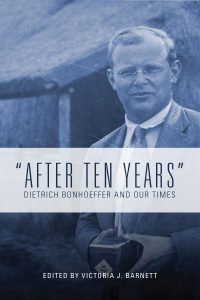
Grünzig’s book is organized in three main sections: the Garrison Church in the Weimar Republic, the Garrison Church in the Nazi Era, and the Garrison Church after 1945. Between the first two parts, a pivotal segment explores “The Day of Potsdam,” March 21, 1933. Each section is illuminating—every reader, whether an expert on the German churches or a novice in the field, will learn something new—and each section also brings surprises.

Among the shocks in the discussion of the Weimar Republic is the extent to which the Garrison Church was a hotbed of support not only for the DNVP (German National People’s Party) but for the NSDAP (National Socialist German Workers Party). Military chaplains, left over from World War I, stirred up trouble, and anti-democratic activists intimidated members of the congregation who did not share their views. In April 1932, even before Hitler became Chancellor, the church opened its doors, or at least its doorway, to a torchlight parade of SS, Stormtroopers, and Nazi Party members.

Anyone with even superficial knowledge of Hitler’s rise to power is familiar with the photograph of the Chancellor bowing over the hand of President Hindenburg in front of the Garrison Church. Grünzig’s presentation of the so-called Day of Potsdam shows much more. He reveals an astonishing amount of stage managing, not only by Goebbels, as one would expect, but by General Superintendent Otto Dibelius, who actively lobbied for the Garrison Church to play a key role in legitimating the new regime. No detail was too minor to merit lavish attention. The Garrison Church earned the dubious distinction of being the only Protestant church where Hitler himself spoke from the pulpit.

That inauspicious beginning set the tone for the Nazi period. After rearmament in 1935, Wehrmacht chaplains enjoyed a prominent place in the life of the church. Also notable was the appeal of the Garrison Church as a pilgrimage site both for Germans and for international visitors. Italian dignitaries were frequent visitors, and friendly luminaries also showed up from Hungary, Slovakia, and Japan, along with humbler travellers, including representatives of the League of German Girls from Romania. Grünzig provides a tantalizing list of concerts at the venue: works by Verdi, Bach, Brahms, Haydn, and others were performed there, as was Mozart’s Requiem in November 1944, all part of the ways Christianity and “culture” worked together at the church to legitimate Nazi rule and support Nazi German warfare. A Sunday service with a special performance by the Music Corps of Military District III was scheduled for April 15, 1945, but Royal Air Force bombs the evening before put an end to that.

Yet even in the form of ruins, and long after defeat and division of Germany, the Garrison Church remained a troublesome site. The final section of Grünzig’s book surveys the decades after the war, with an emphasis on the 1960s. He focuses in particular on one question: did East German leader Walter Ulbricht order the building torn down? Although widely accepted, this claim, Grünzig demonstrates, is false. He does not develop the implications of that finding, but it certainly weakens one of the arguments advanced or implied by some advocates of rebuilding: that restoring the prominent place of the historic Garrison Church, with its 90-meter steeple, to the Potsdam city-scape represents the triumph of re-Christianization after destruction of East German Communism.

The straightforward, unadorned style of Grünzig’s book is contrasted by the ostentatious website of the Wiederaufbau Garnison Kirche Potsdam (Reconstruction of the German Church in Potsdam). “We create space to remember history,” the Guiding Idea promises. Visitors can track progress of reconstruction on a webcam or make a donation to restore a building described as “national silverware.” The historian Manfred Gailus, one of the editors of this journal, has suggested calling the church something else. If it must be rebuilt, he wants it named after Friedrich Weißler. Beaten to death by a guard at Sachsenhausen in 1936, Weißler has become known as the “first martyr of the Confessing Church.” He was not killed because of his church politics, however, but because he was born Jewish. Grünzig does not address Gailus’s suggestion, nor does he directly engage the contemporary debate at all. Nevertheless, his patient, detailed, and relentless account speaks for itself: any efforts toward peace and reconciliation associated with the building, the site, or the name of the Potsdamer Garnisonkirche will carry the indelible stain of its history. Honoring Friedrich Weißler’s memory would not erase that stain but, like Grünzig’s book, it would be a meaningful acknowledgment.

Share

Review of Victoria J. Barnett, ed., “After Ten Years”: Dietrich Bonhoeffer and Our Times

Contemporary Church History Quarterly

Volume 24, Number 2 (June 2018)

Review of Victoria J. Barnett, ed., “After Ten Years”: Dietrich Bonhoeffer and Our Times (Minneapolis: Fortress Press, 2017). Pp. 48. ISBN: 9781506433387.

By Kyle Jantzen, Ambrose University

In this slim volume, Victoria J. Barnett, general editor (2004-2014) of the celebrated Dietrich Bonhoeffer Works English Edition (DBWE), has contextualized one of Bonhoeffer’s most famous writings and applied it to our tumultuous contemporary political environment. The book is comprised of two parts: Barnett’s introduction, entitled “Reading Bonhoeffer’s ‘After Ten Years’ in Our Times,” and the English translation of Bonhoeffer’s “After Ten Years: An Account at the Turn of the Year 1942-1943” produced by Martin and Barbara Rumscheidt for the DBWE Letters and Papers from Prison, published in 2009 (to which Barnett has introduced a few slight revisions).

In her introductory chapter, Barnett begins with three italicized paragraphs in which she locates her reading of Bonhoeffer’s “After Ten Years.” On the one hand, she notes, “one must be cautious about drawing simplistic historical analogies,” especially with respect to Hitler, Nazism, and the Holocaust. “Nationalism, antisemitism, ethnocentrism, and populism have played a role in different historical periods and national contexts” (1). The grievances and resentments associated with these political movements always emerge out of specific social and cultural contexts. What is left unwritten is that the United States—indeed, the wider Western world—is currently threatened by the resurgence of just these sorts of antagonisms. Barnett continues, noting how important it is that citizens and institutions respond to such threats. Toleration of or compromise with ideologies of hatred will undermine and even destroy Western liberal political cultures. She suggests that this is a very real danger, given the fragility of ethical veneers and social conventions. Living in a time when accepted values and political norms are upended creates crises for individuals, religious bodies, and institutions of civil society, all of which struggle to adapt to or resist to these challenges. Barnett explains that these are the themes Bonhoeffer was addressing in his famous essay. As she writes, “his observations about what happens to human decency and courage when a political culture disintegrates continue to resonate around the world today” (2). This “introduction to the introduction” is very important, because it connects Bonhoeffer’s reflections about Nazi Germany to the upheaval of contemporary politics in the Age of Trump, even as it recognizes that this connection must take place in thoughtful, nuanced ways.
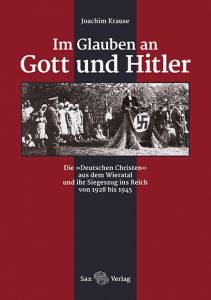
The balance of the introductory chapter considers the historical context of “After Ten Years,” Dietrich Bonhoeffer’s own history, and the main ideas of his important essay. Here Barnett brings her considerable expertise to bear, writing efficiently about Bonhoeffer’s family influences, his early criticisms of the Nazi regime, his experiences in England and the United States, his return to Germany in 1939 and his connection to leading members of the German Resistance. She explains how Bonhoeffer wrote “After Ten Years” to his brother-in-law, Hans Dohnanyi, his close friend Eberhard Bethge, and his military associate in the Resistance, Major General Hans Oster, as a synthesis of themes he had been thinking and talking about for some time, during a period in which the Nazi conduct of war was growing increasingly destructive and prospects for an overthrow of Hitler were becoming increasingly bleak. “After Ten Years,” Barnett notes, “was not so much an assessment of where they stood in 1942 but of how they had gotten there” (5).

She then delves more deeply into Bonhoeffer’s responses to Nazism, beginning with his February 1933 essay “The Führer and the Individual in the Younger Generation” and his April 1933 essay “The Church and the Jewish Question.” Bonhoeffer was quickly critical of the Nazi regime, not least because of its persecution of Jews. Even as Bonhoeffer urged the church to stand with persecuted Jews, however, he maintained elements of the theological anti-Judaism of his day and age. And when it came to the question of what to do about the moral and political crisis created by Nazi rule, Bonhoeffer was actually quite cautious. He participated in the Confessing Church struggle against the nazification of the churches, but did not speak out against the regime—even after the November 1938 Kristallnacht pogrom. This equivocation is captured in “After Ten Years.” As Barnett notes, “even Dietrich Bonhoeffer, Hans von Dohnanyi, and Eberhard Bethge—men of conscience who had seen through National Socialism from the beginning—could not completely extricate themselves from what was unfolding around them” (9). This is a key point that many general readers of Bonhoeffer miss: his insistence that he and his society were in various ways complicit with the Hitler regime under which they lived, not morally pure opponents completely set apart from National Socialism. The resistance that led to Bonhoeffer’s imprisonment and eventual execution emerged only after 1939.

Barnett describes “After Ten Years” as “a series of seventeen aphorisms and meditations that build upon each other” (11). She explains the way Bonhoeffer drew on his writing in Ethics to explore the extent to which “National Socialism had subverted traditional moral and ethical standards” (11). Even as he called for more individual responsibility, he explained how civil courage had declined, how National Socialism had seduced Germans, and how a widespread collective “stupidity” had taken hold. In response, he encouraged a kind of inner liberation, worried about the growth of contempt in German society, believed in the guarantee of eventual divine justice, and advocated a kind of nobility that grew out of the traditions of the Christian humanist culture in which he had been raised. He closed with a call to restore trust and sympathy among the opponents of Nazism and the recognition of the impact of suffering, the search for a responsibility towards the future, and the admission of weakness and vulnerability—even the possibility of death.

Barnett is careful to note that Bonhoeffer was not writing out of a confidence in an approaching victory of goodness or out of his own heroism. Rather, he “was reflecting on what happens to good people, what happens to the soul, the human sense of morality and responsibility, when evil has become so embedded in a political culture that it is part of the very fabric of daily life, and it becomes impossible even for good people to remain untouched by it” (14-15). All of this, she explains, arose out of his Christian faith, “characterized by personal faith and prayer, a commitment to the community of the church, and a deep responsibility toward others” (15). In this way, Bonhoeffer’s “After Ten Years” speaks to fundamental issues:

the human capacity in all ages for decency, for courage, and for an engagement in political culture that affirms these values and honors human integrity. In whatever particular historical moment we find ourselves, we are summoned to determine what our place in history will be, to think and act beyond our self-interest for the sake of a common good: not just the common good of the moment, our particular political group, or even our society, but of our times—to act, as Bonhoeffer put it, on behalf of history itself and for the sake of future generations and the kind of society we would wish for them. (16)

Rereading “After Ten Years” itself, one is struck by the power of Bonhoeffer’s analysis of his compromised position—conclusions he reached after living for a decade under Hitler’s rule. He began by noting the difficulty of the situation in which he and his friends and colleagues found themselves—decent Christians and Germans living under Nazism: “Have there ever been people in history who in their time, like us, had so little ground under their feet, people to whom every possible alternative open to them at the time appeared equally unbearable, senseless, and contrary to life?” (18). Bonhoeffer was grappling with the moral and ethical upheaval of his society—unsure where it might lead but aware of its evil and of the inability of reason, principles, conscience, freedom, or virtue to serve as a basis from which to respond to it. “Only the one who is prepared to sacrifice all of these when, in faith and in relationship to God alone, he is called to obedient and responsible action. Such a person is the responsible one, whose life is to be nothing but a response to God’s question and call” (20).

Bonhoeffer went on to describe the lack of civil courage among Germans, particularly in light of the problem they now faced: that political success had been achieved by evil means. Here the question Bonhoeffer faced was how to react to these conditions out of a sense of responsibility to future generations who would inherit these conditions. In an especially powerful section, he noted how people could easily become collectively stupid under the influence—the pressure—of an upsurge of power:

It seems that under the overwhelming impact of rising power, humans are deprived of their inner independence and, more or less consciously, give up establishing an autonomous position toward the emerging circumstances. … In conversation with [the stupid person], one virtually feels that one is dealing not at all with him as a person, but with slogans, catchwords, and the like that have taken possession of him. He is under a spell, blinded, misused, and abused in his very being. Having thus become a mindless tool, the stupid person will also be capable of any evil and at the same time incapable of seeing that it is evil. (23)

It is not hard to see how Bonhoeffer became so gripped with the importance of achieving a kind of inner liberation—an independent sense of responsibility towards the world and the future. At this point, Bonhoeffer turned to address issues like the growing contempt for humanity, the uncertainty of immanent justice, and the certainty of an eventual setting right of things, as the abiding, God-given laws of human communal life “strike dead” those who try to establish some alternative, aberrant order of society (25).

The essay then shifts, as Bonhoeffer affirms his belief “that God can and will let good come out of everything, even the greatest evil” (25). But for that to happen, God would need good people ready to live in faith and trust in God. To that end, Bonhoeffer wrote about the importance of establishing trust between people, of pursuing a genuine spirit of nobility of character, of cultivating sympathy for the suffering of others, and of embracing suffering, should it come to them. There would be no certainty about the future. “To think and to act with an eye on the coming generation and to be ready to move on without fear and worry—that is the course that has, in practice, been forced upon us. To hold it courageously is not easy but necessary” (29). Genuine optimism means working for a better future until that becomes impossible. As he considered both the uncertainty of the future and the necessity of responsible action in the world, Bonhoeffer pondered the potential of death, noting of it that “deep down we seem to feel that we are his already and that each new day is a miracle” (29).

It was here that Bonhoeffer penned his most famous question: “Are we still of any use?” (30). Could he and others around him become the kind of simple, uncomplicated, honest people living out of the inner strength which would make resistance possible? Key to this, he believed, was their experience of becoming marginalized—cast out and oppressed. Looking beyond these conditions, Bonhoeffer concluded “After Ten Years” with a call to live “out of a higher satisfaction … grounded beyond what is below and above” and thus to “do justice to life in all its dimensions and in this way to affirm it” (31).

Together, this stand-alone publication of “After Ten Years” and Barnett’s thoughtful introduction make for a powerful reminder of Bonhoeffer’s ongoing relevance as a theological and political thinker. This volume will serve well as a companion text in many university and seminary courses, and as a reading to serve as the basis for discussion among Christians and others keen to understand how to live in our contemporary political and cultural environment.

Share

Review of Joachim Krause, Im Glauben an Gott und Hitler. Die “Deutschen Christen“ aus dem Wieratal und ihr Siegeszug ins Reich von 1928 bis 1945

Contemporary Church History Quarterly

Volume 24, Number 2 (June 2018)

Review of Joachim Krause, Im Glauben an Gott und Hitler. Die “Deutschen Christen“ aus dem Wieratal und ihr Siegeszug ins Reich von 1928 bis 1945 (an annotated documentation / eine kommentierte Dokumentation) (Markkleeberg: Sax Verlag, 2018). Pp. 128. ISBN: 078-3-86729-212-2.

By Dirk Schuster, University of Potsdam

The retired chemist and theologian Joachim Krause just happened to come across the subject of the present book, as he writes at the outset. In referencing the well-known Institute for the Study and Elimination of Jewish Influence on German Church Life (Institut zur Erforschung und Beseitigung des jüdischen Einflusses auf das deutsche kirchliche Leben) he noted that the origins of the German Christian Church Movement (Kirchenbewegung Deutsche Christen) and their institute lay in the eastern Thuringian Wieratal, where Krause (born 1946) grew up. Since he knew nothing about the German-Christian history of the churches in his home country, he began to thoroughly investigate the German Christian Church Movement—by far the most radical and influential German-Christian organization during the period of National Socialism.

As the second subtitle reveals (“an annotated documentation”), the book is a descriptive representation of the German Christian Church Movement with a regional focus on the origins of the movement in the Wieratal near the city Altenburg. In his presentation, the author outlines the development chronologically: first of all, he describes how the two young vicars, Siegfried Leffler and Julius Leutheuser, who were inspired by National Socialism, began scouring for a small circle of like-minded people from 1927 onwards. Within a few years, this small circle was to become one of the most influential inner-church movements that controlled several Protestant churches during the time of the “Third Reich”. The theological worldview of the church movement was a symbiosis of (Protestant) Christianity and National Socialism, since they saw the direct action of God in Adolf Hitler and his movement.
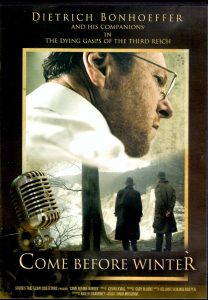
The main lines of development which Krause describes, especially with respect to the sources that are quoted again and again, are not new. The early phase of the church movement is known at least in its rough historical outline through the publications of Susanne Böhm and Oliver Arnhold. This is where the uniqueness of Joachim Krause’s book comes to the fore: it is based on local sources such as the archives of the various parishes in which the German Christians began to build their national church movement. Furthermore, he can draw on personal records of inhabitants of the Wieratal from the time of National Socialism. With the help of this extraordinary material, Krause is able to retell the missionary successes of the church movement amongst the inhabitants of the Wieratal in a lively manner within the opening chapters.

In the subsequent chapters on the period of the “Third Reich”, however, Krause makes a number of content-related errors: this begins with false dates (p. 63) and leads to claims that in 1937 the NSDAP had forbidden dual membership in the party and church (p.82). To the contrary, Walter Grundmann, the scientific director of the aforementioned institute and one of the ideological leaders of the German Christian Church Movement, serves as a classic example of membership both in the NSDAP and the church organization, which was easily possibly until the end of the war.  Likewise, the secret newsletter of Martin Bormann in 1941 was not a challenge of the Nazi Party to the churches or even Christianity, but rather the attempt to achieve a consistent separation of party and church, as Armin Nolzen has impressively demonstrated.[1]

In the last chapter, Krause effectively criticizes the myth-making of an alleged ecclesiastical resistance after 1945 and points out how, on the local level, former German Christians are still fondly remembered, even today. In the chapter on the church policy of National Socialism, Krause does not maintain such a critical attitude, since he only repeats older interpretations of church historiography. By adding more recent work on the history of the churches in the “Third Reich”, such misjudgments probably could have been avoided. However, if you would like to find out more about the early years of the German Christian Church Movement, I recommend this book, which surprises with very interesting sources at various points.

[1] Armin Nolzen, “Nationalsozialismus und Christentum. Konfessionsgeschichtliche Befunde zur NSDAP,” in Manfred Gailus, Armin Nolzen (eds.), Zerstrittene »Volksgemeinschaft«. Glaube, Konfession und Religion im Nationalsozialismus (Göttingen: Vandenhoeck & Ruprecht, 2011) 151–179.

Share

Review of Come Before Winter: Dietrich Bonhoeffer and His Companions in the Dying Gasps of the Third Reich

Contemporary Church History Quarterly

Volume 24, Number 2 (June 2018)

Review of Come Before Winter: Dietrich Bonhoeffer and His Companions in the Dying Gasps of the Third Reich, directed by Kevin Ekvall (Woodbury, MN: Stories That Glow Collectors, 2016).

By Kyle Jantzen, Ambrose University

This film aims to tackle two stories in one: the life and thought of German theologian Dietrich Bonhoeffer during his time in captivity leading up to his execution by the Hitler regime and the “fake news” black propaganda operation of the British journalist Sefton Delmer, assisted by Bonhoeffer family friend Otto John, Berlin-born actress Agness Bernelle, and later James Bond novelist Ian Fleming. It employs a combination of dramatic re-enactment, narration over still and moving images, and explanations from various experts, most notably sociologist Ekkehard Klausa from the Research Centre of Resistance History, ethicist Larry Rasmussen from Union Seminary, pastor John Matthews of the International Bonhoeffer Society, theologian and church official Ferdinand Schlingensiepen of the International Bonhoeffer Society, and Baptist minister and scholar Keith W. Clements, Past General Secretary of the Conference of European Churches, Geneva.

Come Before Winter begins by acknowledging the memoirs and writings of Sefton Delmer, Otto John, Sigismund Payne Best, and Dietrich Bonhoeffer as sources. It then asserts that “one of the tragedies of World War II was the refusal of President Roosevelt and Prime Minister Churchill to acknowledge the existence of a German resistance,” introducing the failed ­assassination attempt of July 20, 1944. From there viewers are introduced to Sefton Delmer, the British journalist (born and raised in Berlin) who operated several so-called black propaganda operations, broadcasting disinformation into Nazi Germany. The operation covered by the film was the German short-wave broadcast “Atlantic,” which used a powerful transmitter to broadcast jazz, invented personal announcements, and fake news throughout Germany and also to U-boats in the Atlantic during the later war years. Delmer’s goal was to demoralize German troops and to turn the German public against the Nazis. At several points in the film, broadcasts written by Delmer and Fleming (with information from Otto John) and read by Bernelle are re-enacted, in order to depict Delmer’s determined effort to use propaganda to defeat Germany. These scenes also serve as a vehicle for Otto John, a member of the July 20 assassination plot who had escaped to England, to explain the various efforts of the German Resistance to assassinate Adolf Hitler, along with Dietrich Bonhoeffer’s principled participation in the Resistance and his consequent arrest and detention in Tegel prison.
This section of the film contains interesting statements from several of the Bonhoeffer experts about the quest to kill Hitler. Schlingensiepen argues that Bonhoeffer’s extended conversation with German jurist, intelligence officer, and anti-Nazi Helmuth James von Moltke in April 1942 on the island of Rügen revolved around the theologian’s ethical justification for killing Hitler (23:40). When the head of state orders the death of thousands day by day, the only way to stop him is to kill him. Bonhoeffer believed that God left members of the Resistance free to do that, just as God left his son Jesus free to heal the sick on the Sabbath (24:44). Clements notes the difficulty of describing Bonhoeffer as either pacifist or assassin, given the complexity of his situation. Bonhoeffer deeply respected pacifism and knew the costs of war, but was it possible to preserve one’s innocence by doing nothing? (24:10).  Rather than dogmatic militarism or pacifism, Bonhoeffer argued people must face their duty to God, and that they determine that duty based on the question of what the consequences will be for other people. This was also the basis for his counsel to other members of the Resistance (25:23). Ethicist Reggie Williams of McCormick Theological Seminary adds that Bonhoeffer acted out of faith, asking what Christ calls us to do in the crisis (25:43), while religion scholar Lori Brandt Hale of Augsburg College notes that Bonhoeffer’s choice to enter the Resistance wasn’t really a choice; he knew that it was necessary and that so few others understood (26:02).

As the dramatized scenes in the film continue, Sefton Delmer and his black propaganda unit continue their work, Otto John laments the destruction of Berlin, and Bonhoeffer sits in Tegel prison. The film details his transfer to the Prinz-Albrecht-Strasse SS headquarters, then on to Buchenwald and the Schönberg schoolhouse in rural Bavaria, until his eventual final imprisonment in Flossenburg concentration camp. Along the way, we’re introduced to an eclectic mix of fellow inmates who encountered Bonhoeffer, including the British intelligence officer Sigismund Payne Best, the German mother Fey von Hassell, the Russian atheist Vassily Korokin, and the German cabaret singer Isa Vermehren. Bonhoeffer’s final sermon, preached to these prisoners before his summons to Flossenburg, included a scripture passage from Isaiah 53 on the suffering servant and a text from 1 Peter 1 on the Christian’s living hope through the resurrection of Jesus Christ. This and the singing of “A Mighty Fortress” are dramatized, along with Bonhoeffer’s famous parting words to Payne Best: “This is the end, but for me the beginning of life” (54:15).

Here Ferdinand Schlingensiepen provides a bold theological interpretation of Bonhoeffer’s execution: “Terrible as this story is, it was not without God’s commands. And Bonhoeffer knew that himself. He says, ‘Hitler cannot kill me. The hour of my death will be prescribed by the living God himself.’ And he almost escaped in Schönberg, with the others. But God allowed him to become a martyr, which made him a much more important figure for future times” (54:35).

Keith Clements explains that Bonhoeffer’s court-martial was a sham, a hasty process not meeting proper judicial standards. As the film dramatizes Bonhoeffer’s final moments, including his shaming by an SS officer and his hanging, the film shows only his feet, while cross-cutting to a typewriter tapping out the death section of Bonhoeffer’s “Stages of Freedom” poem. Clements then reflects thoughtfully on Bonhoeffer’s execution: “When the tyrant executes the martyr, the tyrant’s power ends, because he can’t do any more than that. But the power of the martyr begins, because his witness goes on forever. … [These resisters] were the people who won the battle of faith and courage and conviction and human dignity. And it’s to them that we now look today” (59:40).

The film ends with a dramatization of the memorial service for Bonhoeffer and Bishop George Bell’s sermon, including the section in which Bell makes meaning of the German theologian’s martyrdom: “He represents both the resistance of the believing soul, in the name of God, to the assault of evil, and also the moral and political revolt of the human conscience against injustice and cruelty” (1:04:10).

While the film seems to question the results of Delmer’s black propaganda (including the execution of German civilians who listened to the broadcasts and the creation of the myth of the good German soldier), it sums up Bonhoeffer by noting that, “In death, as in life, Bonhoeffer has remained on the edge of controversy. Nonetheless, his writings and life have gradually been embraced by millions and many scholars have marveled at the breadth of his theological and philosophical appeal” (1:06:36). Short descriptions of the fate of other main characters are also provided at the close of the film.

On the whole, the film does well where it dramatizes the events of Bonhoeffer’s final years using his own words or those of other key figures who knew him. The contributions of Schlingensiepen and Clements are also informative and thought-provoking. Less coherent is the story of Sefton Delmer’s black propaganda unit, which oscillates between humour and pathos. The film interprets it both as vitally important to Allied victory and as a misguided effort.

Whether these two stories—that of Delmer’s black propaganda unit and of the final stages of Bonhoeffer’s life—actually belong in the same film is probably up for debate. The person of Otto John is the link between the two, but he plays only a minor part in the film. While Come Before Winter captures something of the power of Bonhoeffer’s martyrdom, in terms of an introduction to the German Resistance, I would still recommend Hava Kohav Beller’s fine documentary The Restless Conscience: Resistance to Hitler in Nazi Germany (docurama films, 1991), and for an introduction to Dietrich Bonhoeffer and the significance of his life, thought, and death, I would turn to the Martin Doblmeier documentary Bonhoeffer: Pastor, Pacifist, Nazi Resister (First Run Features, 2003).


Share

Conference Report: Mennonites and the Holocaust, Bethel College, Kansas, March 16-17, 2018

Contemporary Church History Quarterly

Volume 24, Number 2 (June 2018)

Conference Report: Mennonites and the Holocaust, Bethel College, Kansas, March 16-17, 2018

By Doris Bergen, University of Toronto

Scholars, students, community and church leaders, and members of the general public gathered in mid-March 2018 at Bethel College in North Newton, Kansas, for two intense days of presentations and discussions on the subject of “Mennonites and the Holocaust.” Conference organizers Mark Jantzen, John Thiesen, and John Sharp put together a stimulating program featuring speakers from the USA, Canada, the Netherlands, Germany, and Ukraine. Around 200 people registered, and more attended the keynote address and the film showing, which were open to the public, so that the conversation continued beyond the formal sessions, over meals, during coffee breaks, and subsequently online. As the conference demonstrated, it is worth the time, effort, and expense to bring people physically together when the issues involved are so important and the stakes so high.

Joel H. Nofziger, Ben Goossen, Aileen Friesen, and Jason Kauffman prepared thoughtful summaries of all the sessions for the “Anabaptist Historians” blog. You can find those, along with additional commentary by Lisa Schirch, at https://anabaptisthistorians.org/tag/mennonites-and-the-holocaust-conference/page/1/.

This report focuses on three insights from the conference: one historical, another methodological, and the third programmatic.

History

Mennonites were directly involved in the destruction of Jews as witnesses, beneficiaries, and perpetrators. Already from John Thiesen’s opening remarks it was clear that the conference would unsettle the myth of Mennonite innocence. Thiesen’s research on the reception of National Socialism among Mennonites in Paraguay dates back to the 1980s; the title of his book, Mennonite and Nazi?, articulated a key question twenty years ago. Still, even for those familiar with the research of the late Gerhard Rempel (“Mennonites and the Holocaust: From Collaboration to Perpetration,” Mennonite Quarterly Review 84 [Oct 2010]: 507-49) and recent work by Ben Goossen, the conference produced shock after shock.

In her contribution to a panel titled “Mennonite-Jewish Connections,” Aileen Friesen described a massacre of Jews in Zaporizhia in southern Ukraine in 1942, just miles from the church where Mennonites from the Khortytsia colony gathered to celebrate Easter. Among the local police who did the killing were two Mennonite brothers. Using the recently opened KGB Archive in Kiev, Dmytro Myeshkov provided chilling accounts of Mennonite collaborators. For example, Ivan Klassen, a physician in the service of the SS, examined disabled patients in a hospital in the Mennonite Molotschna settlement. A killing squad followed up by shooting more than 100 children, women, and men whom Klassen had deemed unable to work. Erika Weidemann’s paper analyzed the experiences of two Khortytsia Mennonite women. One of them, an informant for the SS killing squad Einsatzgruppe C, used her language skills to rat out potentially subversive forced laborers.

Weidemann, Myeshkov, Friesen, and Victor Klet all noted the disastrous impact of the Soviet experience on Mennonite communities in Ukraine. But those victimized by Stalin were not the only Mennonites who joined the Nazi cause. Colin Neufeldt’s paper, on “Jewish-Mennonite Relations” in the Masovian Voivodeship, shifted attention to German-occupied Poland. At least twenty Mennonites, including Neufeldt’s grandparents, left their village of Deutsch Wymyschle to take over properties from which Jews had been expelled in nearby Gąbin. Papers by Arnold Neufeldt-Fast and Pieter Post identified Mennonite theologians in Germany and the Netherlands who embraced and propagated National Socialist ideology; Joachim Wieler added a poignant personal note, reading a letter by his father, a Wehrmacht officer, who in 1941 exulted from France, “The Lord is visibly on our side.”

Methodology

In her keynote address, “Neighbors, Killers, Enablers, Witnesses: The Many Roles of Mennonites in the Holocaust,” Doris Bergen called for more scholarship, and from as many angles and disciplines as possible. The conference illustrated how fruitful multiple approaches can be but also revealed many unexplored perspectives.

Jim Lichti’s presentation, “An Illusion of Freedom: Denominationalism, German Mennonites, and Nazi Germany,” compared Mennonites with other “free” churches, notably Quakers and Seventh Day Adventists. Like Imanuel Baumann and Astrid von Schlachta in their papers, Lichti was careful to point out the range of Mennonite positions, public and private, on everything from the Hebrew Bible to antisemitism and Nazi racial policies. At the same time, he observed that the lack of centralized structures made it almost impossible to develop a coherent Mennonite voice of opposition. Alle Hoekema’s discussion of Dutch Mennonites recognized by Yad Vashem as “Righteous among the Nations” confirmed this point. The forty individuals identified are, as Hoekema put it, not insignificant, but they are few. Nor do their accounts highlight Mennonite identity or beliefs as key factors. Instead they emphasize their networks and commitment to humanity as what motivated them to help Jews.

Several speakers noted that common narratives about Mennonite suffering and survival can serve to conceal negative assumptions about Jews and Judaism. Hans Werner analyzed how Mennonites frame their memories to produce “usable” versions of the past, for example, by writing only about the Soviet years or balancing sadness about the Holocaust with joy at Nazi German “liberation” of Christianity. Viewing the 1935 movie, Friesennot (“Frisians in peril”) showed how Mennonites, real and imagined, were mobilized for Nazi purposes. That theme of mobilization also came across in Ben Goossen’s paper on scholarship about Mennonites in the Third Reich. Mark Jantzen, who introduced the film and prepared the subtitles, pointed out that it does not explicitly refer to “Mennonites” or “Jews.” Nonetheless, antisemitic canards about Jews-Bolsheviks as the lascivious, blasphemous, brutal foe of pure and noble “Aryan”-Christian-German-Mennonites are embedded in the story.

The cultural components of the conference encouraged reflection on issues that tend to be neglected or repressed. Connie Braun’s poetry and prose invited listeners to contemplate “the missing pieces of our narratives”: Mennonite prejudices and the suffering and losses experienced by others. Helen Stoltzfus’s reading from “Heart of the World,” a play she co-wrote with Albert Greenberg in 1999, raised the topic of intermarriage as a way to explore what divides and connects Mennonites and Jews, and indeed all people. Stoltzfus’s performance of four different characters showed the value of multiple perspectives and reinforced an earlier moment in the conference. During the Q&A, an audience member had identified herself as Jewish, possibly the only Jew present she said, and challenged the rest of the room to consider how the light-hearted tone taken by some speakers sounded and felt to her.

Looking Ahead

Although the conference was academic and focused on the geographically and chronologically delineated subject of Mennonites and the Holocaust, it raised even broader questions with far-reaching implications. Some of these were spelled out explicitly, others remained below the surface of the formal proceedings or spilled over into discussions off-site. David Barnouw’s paper about Jacob Luitjens, “From War Criminal in the Netherlands to Mennonite Abroad and Back, to Prison in the Netherlands,” suggested the Mennonite Central Committee (MCC), a widely respected relief organization, actively helped a Nazi conceal his past and use his Mennonite ties to gain refuge. Does this history pose a challenge to the MCC’s ongoing efforts in Israel/Palestine? Some people present at the conference want an examination of these issues in advance of the upcoming 100-year anniversary of the MCC. Some also echo Arnold Neufeldt-Fast’s call for a Mennonite “post-Holocaust theology.” Already in the works is another conference, to be held in 2020 at the Anabaptist Mennonite Biblical Seminary in Indiana, on “Reading the Bible after the Holocaust.”

In his paper, “Selective Memory: Danziger Mennonite Reflections on the Nazi Era,” Steven Schroeder called for “truth-telling” about Mennonite involvement in the Holocaust and also about the ways that Mennonites participated in and continue to benefit from colonial systems. Schroeder, who teaches in western Canada, noted that his institution, University of the Fraser Valley, is located on unceded Indigenous Territory. Several members of the audience signaled an interest in future engagement with this aspect of the Mennonite past and present. As Bergen mentioned in her keynote, thinking critically about history does not imply that I would do better. But it might open possibilities to listen, understand, and care.

Share

Article Note: Janice A. Thompson, “Renewing the Church as a Community of Hope: The German Catholic Church Confronts the Shoah”

Contemporary Church History Quarterly

Volume 24, Number 2 (June 2018)

Article Note: Janice A. Thompson, “Renewing the Church as a Community of Hope: The German Catholic Church Confronts the Shoah,” Journal of Ecumenical Studies 51, no. 3 (2016): 337-365.

By Rebecca Carter-Chand, Clark University

Janice Thompson’s timely article from 2016 focuses on the West German Catholic document “Our Hope: A Confession of Faith for This Time,” promulgated by the Joint Synod of the Dioceses in the Federal Republic of Germany in 1975. It was the first official document from the Catholic Church in Germany to address the Holocaust and is, in Thompson’s assessment, “one of the forgotten treasures of the post-Vatican II Church.” Drafted by theologian Johann Baptist Metz and accepted by a majority of the synod (made up of bishops, priests, religious, and lay people), it offered a radical recentering of Catholic theology in the wake of the Holocaust. In it, Metz argued that real hope is possible only by facing the painful reality of death and suffering in the world. One of the interesting ways that Thompson contextualizes this document is by contrasting Metz’s theology with that of his close contemporary Joseph Ratzinger (later Pope Benedict XVI).

In our culture’s current attention on apologies, official statements of guilt, and reckoning of past wrongs, “Our Hope” offers an illustrative example of an earlier statement that demonstrated a collective deep reckoning with the past in light of contemporary concerns. As an open admirer of the document, Thompson discusses several ways in which “Our Hope” makes radical theological arguments, but admits that the language is perhaps too subtle for readers who may not have the theological background to recognize the implications. Her attention on “Our Hope” is prescriptive as well as descriptive—she makes a strong plea to reawaken the renewal process that was initiated by Metz and the synod in the mid-1970s. After several decades of retreat from change, the Catholic Church seems to be embracing renewal once again under the leadership of Pope Francis. Thompson’s contextualization and detailed analysis of the document’s theological claims can contribute to a larger discussion of apologies and the Christian church’s process of coming to terms with the past.

Share

Letter from the Editors (March 2018)

Contemporary Church History Quarterly

Volume 24, Number 1 (March 2018)

Letter from the Editors (March 2018)

By Kyle Jantzen, Ambrose University

Dear Friends,

With spring drawing slowly nearer, the editors are pleased to publish a new issue of Contemporary Church History Quarterly. This issue contains an eclectic mix of book reviews, article notes, and conference reports assessing new research in German and European religious history.

St. Hedwig’s Cathedral, Berlin, where Bernhard Lichtenberg was provost. Lichtenberg aided Catholics of Jewish descent during the Nazi era, and spoke out against the persecution of the Jews after the Kristallnacht Pogrom.
Source: Wikimedia Commons, CC BY 2.0, https://commons.wikimedia.org/w/index.php?curid=659751

Lauren Faulkner Rossi reviews Martin Röw’s substantial study of Catholic military chaplains, while Manfred Gailus examines Thomas Martin Schneider’s book on the Confessing Church’s Barmen Declaration and its longer-term impact. Dirk Schuster assesses Elizabeth Lorenz’s book on the German Christian attempt to create a nazified translation of the Bible and Andrew Chandler reviews an interesting edited volume on the British military chaplain Geoffrey Studdert Kennedy.

Beth A. Griech-Polelle and Kyle Jantzen report on journal articles and book chapters about the Vatican’s efforts to combat communism in the 1930s and 1940s, about church politics in Thuringia during the Third Reich, and about Protestants, Catholics, and Christmas in Nazi Germany. (The authors of these works include CCHQ editors Heath Spencer, Christopher Probst, and Kevin Spicer.)

Finally, Griech-Polelle and Matthew Hockenos supply conference reports from the Powell-Heller Conference for Holocaust Education at Pacific Lutheran University and from the German Studies Association, informing us about papers which consider the role of Catholicism in the Holocaust and interactions between international Protestants during the Nazi period.

We hope you continue to find Contemporary Church History Quarterly a useful addition to your reading about the history of religion in Germany and Europe.

On behalf of the editors,

Kyle Jantzen, Ambrose University

Share