Category Archives: Reviews

Review Article: The Missionary Impulse of the Early Twentieth Century

ACCH Quarterly Vol. 17, No. 3, September 2011

Review Article: The Missionary Impulse of the Early Twentieth Century

Johanna M. Selles, The World Student Christian Federation 1895-1925. Motives, Methods and Influential Women, (Eugene, Oreg.: Pickwick Publications, 2011), xviii + 294 Pp., ISBN 978-1-60899-508-0.

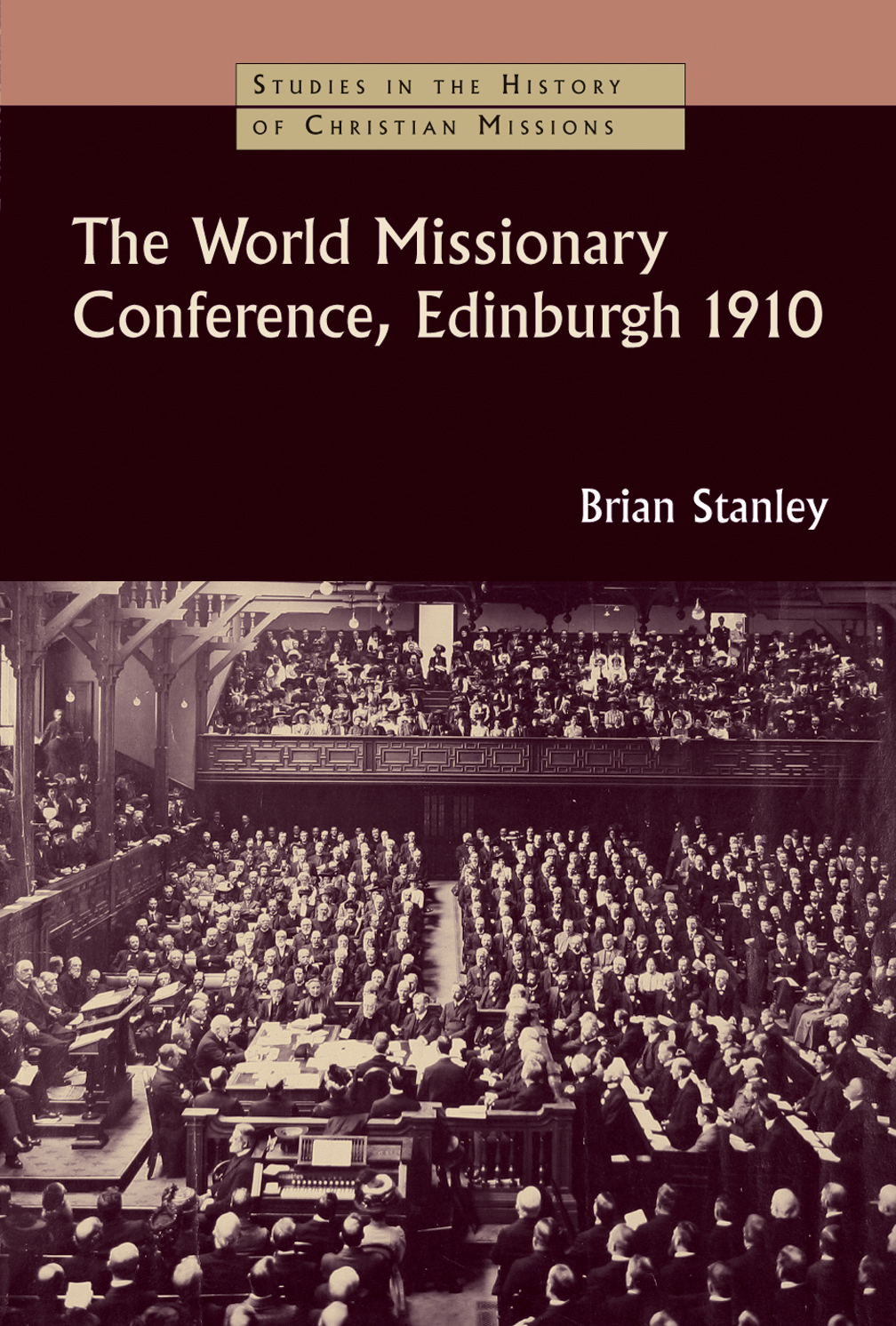
Brian Stanley, The World Missionary Conference, Edinburgh 1910. Studies in the History of Christian Missions (Grand Rapids, Mich.: W.B. Eerdmans, 2009), xxii + 352 Pp., ISBN 978-0-8028-6360-7.

By John S. Conway, University of British Columbia

The second half of the nineteenth century saw a remarkable surge of Christian energies, fervour and organisational developments, especially in the Protestant churches of Europe and North America. This sprang from, or was at least parallel to, the momentous spread of technical and scientific achievements, which formed the basis for the political, economic and imperialist expansions of those years. At the same time, the rapid and world-wide spread of travel opportunities and the increase in living standards and disposable wealth allowed for a wider discovery and knowledge of distant lands hitherto unknown or only occasionally visited. The resulting optimistic climate of opinion led in many Protestant churches to a confident pursuit of expansion, particularly in the field of overseas missions. The biblical precept to spread the gospel to the ends of the earth was now framed in the popular slogan: “the Evangelisation of the World in this Generation.” In the 1880s and 1890s this goal seemed to many Protestants to be entirely achievable, and an unprecedented number of eager young Christians resolved to devote their lives to this noble purpose. To later observers, this over-confident belief in the superiority of Christianity and in the capacity of these missionaries to bring its message to “lesser breeds without the law” now seems recklessly misconceived. But at its apogee, a hundred years ago, this hope that a new age of gospel triumphs was dawning was widely shared even by sober and experienced ecclesiastical leaders. It was the religious equivalent to the same kind of ambitious expectations, which, in the political sphere, in the same period, had justified the expansion of their colonial rule by the leaders of the western European nations and of the United States, to cover so much of the surface of the globe.

These two books under review each touch on specific aspects of this momentous endeavour. Johanna Selles draws attention to the contributions made by women, which she feels have been neglected in the earlier ecclesiastical histories written by churchmen. But women played a significant part in this mission work, both at home and abroad. They were recruited from the growing number of participants in women’s higher education, who were no longer limited to a future of domesticity. Many of the universities and colleges where they had been trained were Christian foundations where education and piety were closely associated. So they eagerly joined missionary societies, or societies to promote temperance or other social reforms. Voluntary service with a church-related organisation was a socially approved activity for women. At the same time, since they were blocked by their gender from seeking ordination, such service provided an outlet for their undoubted idealism, especially for many younger women.

Selles concentrates her attention on one of these groups, the World Student Christian Federation, founded in 1895, which was in fact the first international student group of its kind, seeking to build a stage for Christian internationalism through the witness of national members and societies. It sprang from the initiative and enthusiasm for expanded Christian evangelism, especially in the Protestant colleges and universities in North America and Britain, but extending also to Scandinavia and Germany. Loosely formed as a federation, because of the widely differing religious traditions, national backgrounds and languages, the WSCF provided an international framework for the holding of conferences and campaigns, many of which focussed on recruitment for missionary service overseas.

In its first thirty years, the WSCF was led, as its General Secretary, by the well-known American evangelist John R. Mott, who was also a leading figure in the international YMCA, and, as we shall see, became the best-known champion of international evangelisation. But he was supported loyally and effectively by numerous women assistants. Selles gives us a valuable account of these women’s contributions, particularly of Mott’s closest associate, the British graduate Ruth Rouse. She proved to be both competent and highly impressive, and ably seconded Mott’s campaigns, especially appealing to women students on campuses around the world. But, as some later commentators noted, she could not be called an ardent feminist.

Mott’s recruiting style was unique. He travelled the world almost incessantly in great style. Arriving at a university city, he would stay in the best hotel and arrange for the student audience to be assembled in the largest hall or church. His appeal to the students to join in the task of the evangelisation of the world ended in an inspiring altar call. Those who responded were invited to come for an interview in Mott’s hotel on the next day. As one of them told me, if Mott was suitably impressed by the candidate’s sincerity and qualifications, he would end the interview by saying: “The Lord has need of your services in Prague (or other destination). Here is your ticket”.

Ruth Rouse came to be the essential connecting link between the workers in the field and the policy makers at home. As more and more Christian student organisations sprang up on the local level, so the coordination of their efforts became a vital prerequisite for success. She shared the vision of Christian internationalism and ecumenism, coupled with the passion for social reform and confidence in women’s capabilities which were hallmarks of the WSCF’s witness. The WSCF’s principal activities lay in organising international conferences, providing speakers to work with local units, and issuing publications which linked such groups to the others. All were imbued with a strong missionary emphasis, which in turn was not free from the assumptions of Christian cultural superiority.

To begin with, the WSCF’s emphasis was on personal evangelism and individual conversion. But, from the turn of the century, increasing attention was given to wider social and international issues, following the new theology of the social gospel. And after the First World War, which shattered so many illusions and expectations, a much more critical tone was heard especially from the younger members. Selles’ account finishes with the end of Mott’s long term of office, after a new generation demanded a different and less triumphalistic approach.

In retrospect, the World Missionary Conference, held in Edinburgh in 1910, can be seen as the high point of Mott’s career. At the age of forty-five, he had already served for fifteen years with the WSCF and even longer had held leadership positions in the World’s Alliance of YMCAs. He had travelled the world to all sorts of missionary outposts, and had gained the support of numerous wealthy American business magnates who gave him unprecedented amounts for his various good causes. He had early on been convinced that the time was ripe for the Christian message to be spread around the world, taking advantage of all the means provided by modern discoveries. Indeed the urgency of this cause was his continuing and vital concern. But two major obstacles existed. One was the lack of recruits. Hence Mott’s incessant campaigns, particularly among students in North American and western European universities. The other major handicap came from denominational rivalries and conflicts. By the turn of the century, Mott and other leaders in the missionary movement were convinced that their great task of evangelising the world could only be realised if all the churches collaborated, or at least overcame their frequently-displayed hostility towards each other. Doctrinal rivalries derived from centuries-old theological disputes could not be allowed to stand in the way of saving the unconverted. If the churches recognised their opportunity to collaborate, then the triumph of the gospel world-wide could be effectively achieved. As Mott said, “This is a decisive time for Christian missions.” It was also a time of exalted ambitions and confident expectations for the expansion and victory of the Christian missionary endeavour.

Brian Stanley’s scholarly and valuable account of the Edinburgh Conference begins by correcting a widely-held interpretation, namely that it was the beginning point of the ecumenical movement which grew so notably among the churches in the twentieth century. But Stanley rightly wants to place the emphasis on the missionary endeavours which the Conference fostered and recorded. In fact this was a decidedly Protestant and broadly evangelical gathering, along with a few High Church Anglicans, but no representatives from either the Catholic or Orthodox persuasions. The delegates were chosen from Protestant missionary societies rather than from the churches or denominations, with a preponderant attendance by Britons and North Americans. Only eighteen delegates were from Asia. A lone indigenous black delegate from Ghana represented Africa. All were however conscious that they were participating in an event which proposed to reshape the course of the world’s Christian history.

This over-confident optimism believed that the non-Christian world, especially in Asia, stood on the brink of a progressive transformation. The movement for reform and modernisation led by Christian elites would result from the ideological and financial power of western Christendom. This expectation was only heightened by the belief that the window of opportunity might not last. The necessity of action was all the more urgent. Stanley’s account vividly captures the mood of confident hope that such action could and would now begin to be taken.

Stanley’s description of the preparations and conduct of the Conference is both excellent and detailed. He pays deserved tribute to the organising skills of the youthful Scottish missions secretary, Joe Oldham, as well as to the charismatic leadership provided by Mott as Chairman. From the beginning they had decided that this was not to be an inspirational jamboree for missions enthusiasts, but a serious working conference by appointed experts. Eight high-level Commissions were appointed two years in advance which were to take soundings across the world’s mission fields and to report back on the most effective ways of promoting these missionary endeavours. But discussions on doctrinal questions were to be excluded. In the event, the Commissions’ questionnaires and subsequent replies formed the Conference’s most valuable contributions, which provide graphic evidence of the writers’ assumptions and expectations. The statistical surveys and the atlas of missions are particularly interesting. These reports can still be read with benefit.

Stanley’s account of the Conference itself is both precise and percipient. Most usefully, he gives names and dates for most of the prominent participants both in the Conference and in its preparatory Commissions. Drawing on these vast records, now deposited in libraries in Britain and the United States, he steers us through the thickets of ecclesiastical politics and theological controversies which arose before and during the Conference. The final achievement, he believes, was largely due to the skilful diplomacy and leadership of both Mott and Oldham, who formed a most effective trans-Atlantic team. His successfully evokes the atmosphere which captivated the one thousand men and two hundred women, most of them gray-haired but eager mission society or church leaders, drawn from all over the world. They became united in what proved to be ten days of mind-broadening excitement and devotional stimulation.

Stanley rightly pays attention to some of the Conference members’ critical views, such as those of the young Indian pastor who pleaded with the delegates to abandon their imperialistic attitudes, especially in their social relations with their converts. “You have given your goods to feed the poor. You have given your bodies to be burned. We also ask for love. Give us FRIENDS!” Stanley also gives the evidence that, although the principles of the Three Self-Movement for Missions (self-governing, self-supporting, self-propagating) had been accepted, in practice, in the field, such precepts were rarely followed. Many missionaries were fluent in justifying their reluctance to implement them.

Furthermore, Stanley does not overlook some of the Conference’s short-comings, such as the exaggerated expectations indulged in by some delegates, or the frequently expressed view that all other religions were precursors to, and would find their fulfilment, in Christianity. Particularly in the Conference’s Commission Four, dealing with “The Christian Message to non-Christian Religions,” the view was taken that all religious phenomena could be placed somewhere along a scale of progression, at the apex of which was of course Christianity. Stanley is rightly sceptical of this kind of progressive evolutionism. On the other hand, he is also critical of the arrogant assumptions held particularly by some Evangelicals who presumed that their version of Christianity with all its western cultural baggage was the only true one and should be thrust upon lesser races, who were expected to be eternally grateful. Such cultural and racial myopia was not uncommon even among those with extensive missionary experience. The planting of new Christian communities in all parts of the globe was of course the pre-eminent goal shared by all the delegates. But, predictably, the Conference deliberations did not challenge the existing situation in which the foreign missionaries exercised overall dominance, especially through their theological and financial controls. Or at best, they looked forward to a distant date when the indigenous churches would be able to stand on their own feet.

The triumphs of Christian internationalism which so many of the delegates predicted did not last long. The outbreak of the European war in 1914 destroyed the myth of Europe’s spiritual superiority. The slaughter of the trenches removed many of the generation of leaders who were to have carried the message of Edinburgh around the world. Instead the ideologies of nationalism and revolution quickly outmatched the discredited Christian creeds. The evangelisation of the world did not happen in that generation, nor in the expected manner. The claims of the Christian gospel had to be presented henceforward in a much humbler tone.

Subsequently, as the missionary movement’s impetus faded away, the legacy changed. As noted above, Edinburgh came to be reinterpreted, even by some of the leading participants such as Mott and Oldham, as the founding conference for Christian ecumenism. But the original assumptions of the missionary movement had had to be abandoned. The Edinburgh delegates had in fact displayed very little awareness of the new racial, political and theological issues which were to dominate the twentieth century, and radically to change the course of Christian history. But Stanley’s scholarly tribute to the devotion and piety of this earlier generation of missionaries serves to remind us that such gatherings as Edinburgh can leave an ambiguous legacy. It also should lead us to engage in deeper theological reflection on the Christian missionary task in the world of today.


Share

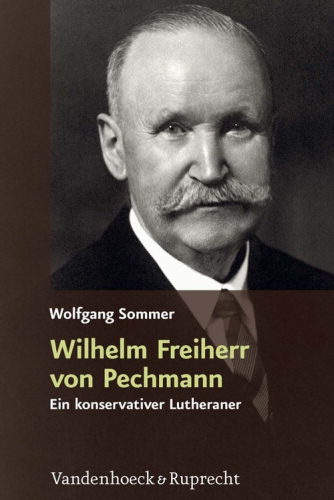
Review of Wolfgang Sommer, Wilhelm Freiherr von Pechmann: Ein konservativer Lutheraner

ACCH Quarterly Vol. 17, No. 2, June 2011

Review of Wolfgang Sommer, Wilhelm Freiherr von Pechmann: Ein konservativer Lutheraner (Göttingen: Vandenhoeck & Ruprecht, 2010), 255 Pp. ISBN 978-3-525-55005-2.

By Diana Jane Beech, University of British Columbia

Wilhelm Freiherr von Pechmann was one of the most influential laymen active in the German Protestant Church in the early twentieth century. Born into a well-respected family on 10 June 1859 in Memmingen, Bavaria, von Pechmann was raised with a profound respect for his German homeland and was christened and educated into the specifically Protestant tradition. From an early age, von Pechmann saw himself as both “christlich und deutsch” (Christian and German). The compatibility of these religious and national identities came under question, however, much later in his life when Adolf Hitler and his Nationalsozialistische Deutsche Arbeiterpartei (NSDAP) came to power in Germany. From this point on, von Pechmann became engaged in a continual struggle not only against the Nazi State and its blatant intention to ‘de-Christianise’ the German nation, but also against his own Lutheran church, which he saw as all-too-submissive to Nazi hegemony.

Having been thrust into the world of work as a legal advisor to the Bayerische Handelsbank in Munich in 1886 following the untimely death of his father, von Pechmann never allowed his new professional obligations to distract him from his true passions of national politics and church affairs. As early as 1901 he was called to serve as the lay representative of the Munich diocese on the Bavarian General Synod. In 1909 he was called to the most prominent office of the Bavarian Protestant church as President of its highest instrument of church administration—the Oberkonsistorium. Only his professional standing as a lawyer and not as a theologian prevented his proposed presidency from coming into fruition.

In 1913 the University of Erlangen put an end to von Pechmann’s status as a layman by awarding him an honorary degree in theology. From 1919 to 1922 he thus became the first elected President of the Provincial Synod of the Bavarian Protestant church. His influence within ecclesiastical circles was not just restricted to a regional level, however, as he quickly grew in prominence within the worldwide Lutheran community as well as within the administration of the national German Protestant Church. For example, between 1921 and
1927, he headed the German Protestant Church Congresses in Stuttgart, Bethel, and Königsberg.

Despite being deeply conservative and “deutschnational” at heart, von Pechmann showed
great distain for the advent of National Socialism in Germany in the 1930s. From the very
beginning of the so-called Third Reich (1933-1945), he took aversion to both the totalitarian claims of Hitler and his NSDAP, and, in particular, the politico-religious heresy of the Glaubensbewegung Deutscher Christen (German Christian Movement). To initiate protest against Nazism, von Pechmann engaged in potentially risky correspondence with pastors, academic theologians, bishops, ecclesiastical lawyers, publicists, and politicians. In 1933, he became a card-carrying member of the Bekennende Kirche (Confessing Church), and fostered close relations with anti-Nazi theologian Karl Barth and Confessing pastor Martin Niemöller.

Von Pechmann’s increasing activism against Nazism brought him most notably into conflict with many of his fellow conservative Lutherans, in particular the leader of the Bavarian Protestant Church of the time, Provincial Bishop Hans Meiser. Von Pechmann believed that Meiser acted spinelessly against Nazi demands, and he was particularly disappointed with Meiser’s reluctance to defend the Jews and other so-called ‘non-Aryan’ Christians from Nazi persecution. As a result of his deep dismay over the compromising conduct of Bishop Meiser and other Lutherans of the period, von Pechmann took the radical step of not only resigning his positions in the church administration but also of legally leaving the Protestant Church which he had faithfully served for so long. Years later, after the fall of the Third Reich, he converted to Roman Catholicism and remained a Catholic until his death in Munich in 1948.

In his endeavour to demonstrate how Wilhelm Freiherr von Pechmann eventually came to abandon his willingness to accept episcopal direction and to become instead one of the most forthright opponents of Nazism to emanate from the German Protestant Church, Wolfgang Sommer presents an in-depth biographical account of von Pechmann’s life. Sommer begins with von Pechmann’s formative years in Memmingen and Augsburg and continues through to his eventual rejection of German Protestantism during the final years of his life. Accordingly, the initial chapters of Sommer’s work are devoted to detailing von Pechmann’s background, and his early struggles to locate himself neatly within both a political party and within the German Protestant Church. To depict von Pechmann firmly as a product of his time, Wolfgang Sommer pays great attention to the political developments and challenges facing von Pechmann throughout his life, with entire chapters devoted to the First World War (1914-1918), the November Revolution of 1918, and the reconstitution of German Protestantism during the Weimar Republic (1918-1933). In order to reveal the relevance of von Pechmann for world Protestantism and not just for the national German Church, Sommer also devotes a chapter to his impact on ecumenical relations and his collaboration with the worldwide Lutheran community.

Unsurprisingly, the largest section of Sommer’s study concentrates on the years of Germany’s National Socialist dictatorship and von Pechmann’s increasing opposition not only to Nazi measures but also to the actions of his own Lutheran church. By detailing von Pechmann’s timely recognition of the pitfalls of Nazism and his constant warnings to Bishop Meiser to refrain from assimilation to the Nazi Weltanschauung, Sommer effectively presents von Pechmann as the virtuous thorn in the side of the spineless Bavarian church.

Sommer continually emphasises von Pechmann’s morality and righteousness by contrasting his readiness to protest against the Nazi persecution of the Jews with Bishop Meiser’s reluctance to oppose the measures. This technique downplays the reality of the situation for Meiser, however. As the leader of one of the only Protestant churches in Nazi Germany not to come under the national administration of the Deutsche Christen, Meiser had an unspoken obligation not to infuriate unnecessarily Nazi authorities in order to protect the autonomy of his church and, by extension, that of German Protestantism per se. Although von Pechmann’s humanitarian, political, and theological insight was arguably impeccable
under the brutal conditions of Nazism, by overlooking the precarious predicament of the
Bavarian Bishop, Sommer enhances von Pechmann’s reputation at the expense of those churchmen in more complex and critical situations. Whilst Wolfgang Sommer should be praised, therefore, for shedding light on a man who was influential to the German Protestant Church despite not being a theologian himself, it is nonetheless important that his work is not used to disparage the efforts of those who were firmly trapped by the shackles of their Protestant and specifically Lutheran vocations.


Share

Review of Erna Putz, ed., Franz Jaegerstaetter: Letters and Writings from Prison

ACCH Quarterly Vol. 17, No. 2, June 2011

Review of Erna Putz, ed., Franz Jaegerstaetter: Letters and Writings from Prison, trans. Robert Anthony Krieg (Maryknoll: Orbis Books, 2009), 252 Pp. ISBN 978-1-57075-826-3.

By Beth A. Griech-Polelle, Bowling Green State University

This review appeared first in H-German, H-Net Reviews in February 2011 (URL: http://www.h-net.org/reviews/showrev.php?id=31488) and is reprinted by kind permission of the author.

This volume presents the life and thoughts of a once obscure Austrian farmer, Franz Jaegerstaetter (1907-43). Thanks in part to the research of Gordon Zahn in the 1960s, Jaegerstaetter’s name began to circulate as a conscientious objector to Hitler’s brutal war.[1] And now, thanks to the beautiful translations of Robert Krieg and the careful editing of Erna Putz, readers can be reintroduced to the deeply moving writings of a truly spiritual man who determined that it would be better to die for his Catholic faith than to serve the evils of National Socialism.

The collection begins with Jim Forest’s introduction and with Robert Krieg’s overview of the general outline of Franz Jaegerstaetter’s life and death. Readers are transported to the small village of St. Radegund (d. 587) in Austria, not far from Adolf Hitler’s birthplace, Braunau-am-Inn. It is perhaps fitting that Jaegerstaetter was born in St. Radegund, since Radegund had lived through political turmoil, family assassinations, a forced marriage, and finally the formation of her own convent. St. Radegund’s institution enforced strict rules of meditation and constant prayer, and this example might have been useful to Jaegerstaetter, although his early life showed no signs of potential sainthood or a calling to martyrdom. Born an illegitimate child, Franz was eventually adopted by his mother’s husband. He had only an eighth-grade education, got in fist-fights, fathered an illegitimate daughter himself, and rode around on the village’s only motorcycle. Jaegerstaetter’s life, however, took a more noticeable turn when he married the devout Franziska Schwaninger. The farming neighbors may never have known this, but prior to Franz and Franziska’s marriage, both of them had independently considered entering religious life. However, most neighbors thought that Franz’s new wife influenced his openly religious dedication.

Part 1 of the volume reveals the extent to which Franz and Franziska’s religious views overlapped and supported each another. Here, Putz provides correspondence between the husband and wife while Franz was completing required military training (1940 and 1941), and then later his letters from his imprisonment (March-August, 1943). Throughout the correspondence, the couple’s love and respect for each other is evident. During the military training period, most of the letters detail the everyday life on the farm for Franziska, Franz’s widowed mother, and the couple’s three daughters. These letters have at times a playful note, since the couple fully anticipated being reunited once the training period was over. Franz offers advice about running the farm, often urging Franziska not to work too hard and to leave things for him to do upon his return. He also wrote briefly to Franziska’s father, who often came to help at the Jaegerstaetter’s farm. At other times, Franz begins to allude to his trouble in accepting the membership requirements of the “Volk community.” As his military training progresses, Franz begins to express more of his frustration with what he refers to as “the stream,” that is, National Socialism. He constantly uses this metaphor of struggling against “the stream’s” strong current, and he expresses dismay at the futility of much of what the training has entailed.

Although all of these letters offer compelling reading regarding the state of mind of Franz and Franziska, they also offer historians insight into the everyday life of Catholic farming communities under National Socialism. In them we see how various local priests were denounced, arrested, and imprisoned for speaking openly against the policies of the Third Reich. We run across Franz mentioning a mental institution in Ybb, and he alludes to the murderous “euthanasia project” of the Nazis. In some of Franziska’s letters from home, we can see how children were not allowed to attend mass on school days, how feast days had to be moved so Catholics could attend mass, how local politics played a role in who received leaves of absence, and who got to run an inn and whose inn was shut down due to “political unreliability.” Throughout this entire period, Franziska experiences pressure to participate in the local Nazi organizations, such as the Women’s Association, including the threat of social ostracism when choosing to opt out in this very small community.

The situation changes dramatically for the Jaegerstaetters on February 22, 1943. Franz receives notification that he is required to go to Enns for military service on February 25, 1943. By this time, Franz had written essays in various notebooks at home, which helped him to decide to refuse to fight for the Reich. Arriving at the Enns’ induction center on March 1, 1943, Franz had to return the next day due to a long line of men ahead of him. On March 2, 1943 Franz declared himself unwilling to fight for National Socialism, and, as he had anticipated, he was immediately arrested. Chapter 4 contains the correspondence between Franz and Franziska (although there was censorship of the mail) while Franz was in the prison in Linz. At this point of Franz’s incarceration, he still remained hopeful that he would be able to live, writing, “I want to save my life but not through lies” (p. 82). Indeed Franz writes to his wife that he would be willing to serve as a military medic, as that would not contradict his Christian conscience (p. 86). Ultimately, Franz decides that he cannot serve in any capacity in the military because he would be required to take the military oath of unconditional obedience to the Führer. What also emerges in this section is Franz working through his position, struggling with commands to obey earthly authority while serving the will of God. He resolves that it is far better to obey God than men. Jaegerstaetter determined that his eternal salvation was more important to him than his physical well-being, or even life. At the moment of his transfer to Berlin’s Tegel Prison, he quickly writes to Franziska, “Concerning my decision, I can tell you that I have come to no different decision as a result of the process that has played itself out. I am resolved to act no differently” (p. 108).

Arriving in Berlin on May 4, 1943, Franz was immediately incarcerated in the Tegel prison where he awaited his trial and sentence. At this point, Franz was only permitted to write one letter per month to his wife, but Franziska was allowed to send at least twelve letters to her husband. She was also able to visit him for twenty minutes on July 13. In Franz’s letters, he constantly offers his wife consolation, telling her that he is eating well, and is not physically suffering. He nonetheless exhorts her to continue to pray for him. Franziska sends him prayers, Communion petitions, and updates on village and farm activities. At one point, she is even able to send him a photograph of their lovely young daughters, which surely broke his heart. No less emotionally daunting for Franz would be the surprise visit of Franziska and Pastor Fürthauer on July 13, 1943. Franz’s defense attorney had arranged the meeting, urging Franziska and the priest to convince Franz to sign a statement that he would be willing to serve in the military. The twenty-minute meeting did not go smoothly. Franz became agitated with the priest, and in the days leading up to Franz’s execution, he wrote his last letters to Franziska, asking her, “Do you believe that all would go well for me if I were to lie in order to prolong my life?” (p. 128).

Franz, his hands in chains, wrote, “Do not be overly concerned about earthly things. The Lord indeed knows what we need…. In the next life we need suffer no longer. And the greater the suffering here, the greater the joy there” (p. 128). This letter was mailed the morning of August 9, the day that Franz was transferred to the prison at Brandenburg. There he wrote a final letter to his family, asking them for their forgiveness if he had offended them. At 4 p.m., August 9, 1943, Franz was guillotined. The priest, Pastor Albert Jochmann, reported that Franz went to his death peacefully.

Part 2 of the collection shows the evolution of Franz’s religious and political thought. There are two poems he wrote in 1932, and then a longer letter that he had written to his godson in 1935. The first of the notebooks was written by Franz in the period between his military training and his imprisonment. Each of the essays describes Franz’s thoughts on various aspects of Christian life, ranging from “On Faith” to “On our Fear of Other People” to “A Brief Reflection on the Current Era.” He addressed all of the essays to his family. They reveal Franz’s deep concern to preserve his integrity despite pressure from many sides to superficially accept the Nazi regime. He refused, stating, “What a terror it would be for us if we were sentenced by an earthly judge to life in prison. Yet it would be an even greater terror if we were sentenced by the eternal Judge to eternal damnation” (p. 158). The final essay in this notebook again directly references the dangers of swimming along with seemingly everyone else in “the stream,” and the dangers to one’s eternal soul.

Notebook 2, written in 1942, addresses the demands of National Socialism, opening with the important question: “Can someone be both a Catholic and a National Socialist?” (p. 173), to which Jaegerstaetter answers no. Catholics need to pull themselves “out of this swamp in which we are stuck and to become eternally blessed” (p. 176). He argues that suffering and martyrdom are part of working for Christ and one way to earn a place in Heaven. In subsequent essays, Franz explains that it will take true courage to be able to separate oneself from the “anti-Christian Volk community” (p. 178), but the promise of eternal salvation far outweighs any earthly suffering one might endure. He also argues that an acceptance of Nazism based on its fight against atheistic Bolshevism does not justify the taking of lives and property of Russian people (p. 183). He criticizes the lack of guidance and instruction from Catholic Church leaders: “Finding the right path is especially difficult when those who know about this path refuse to answer questions or give false information” (p.187). He then writes that Pope Pius XI warned that National Socialism was, in fact, more dangerous than communism (p. 190).

Chapters 9 through 12 contain separate essays and shorter notebooks, in which Franz continues his exploration of his faith and his understanding of the world and its demands. Throughout these writings, Franz argues that people must move beyond being Catholic in words but not in action. He refuses to judge National Socialists or people who claim to be Nazis, but he states that he does judge National Socialism as an evil ideology that endangers people’s souls. He asks, “Is death so horrible for us Catholics that we must gladly do everything so that we can lengthen our lives? Must we experience all of life’s enjoyments? Would we find much in this world to be difficult if we were to keep in mind the eternal joy of Heaven?” (p. 203). Throughout his final writings, Franz insists that Catholics take action in order to save themselves: “Who fares better in this world: the person who places earthly life before eternal life or the person who puts eternal life before earthly life?… For instead of being concerned about saving me from serious sins and directing me toward eternal life, these people are concerned about rescuing me from an earthly death” (p. 243). What Franz Jaegerstaetter concluded was startingly simple: “People want to observe Christians who have taken a stand in the contemporary world, Christians who live amid all of the darkness with clarity, insight, and conviction” (p. 211). He decided to live and to die with that clarity and conviction.

This deeply moving book is more than a collection of letters and essays by an uncompromising individual. It poses universal questions about the moral and physical consequences of the decisions that people make every day–questions about obedience to different institutions and individuals, and whether one should accept the cost of remaining quiet and going along with situations that give us ethical misgivings. Readers will be challenged and even inspired by the clear-sightedness of one obscure, straight-talking Austrian farmer, who decided that his “No,” even if it brought him an earthly death, was worth eternal life.

Note

[1]. Gordon Charles Zahn, In Solitary Witness: The Life and Death of Franz Jaegerstaetter, revised ed. (Spingfield, IL: Tempelgate,1986).


Share

Review of Jeremy Cohen, Christ Killers: The Jews and the Passion from the Bible to the Big Screen

ACCH Quarterly Vol. 17, No. 1, March 2011

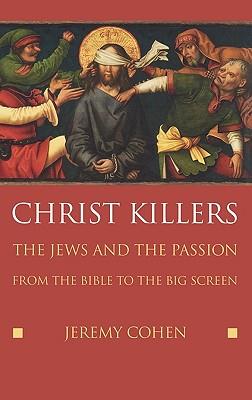
Review of Jeremy Cohen, Christ Killers: The Jews and the Passion from the Bible to the Big Screen (New York: Oxford University Press, 2007), 313 pp.  ISBN: 978-0-19-517841-8.

By Heath A. Spencer, Seattle University

In this book, Cohen explores the origin and evolution of the Christ-killer myth from the first century to the present, focusing his analysis on religious texts, sculptures, paintings, stage plays, and films.  The result is a fascinating but sobering study of an idea that has troubled Christian-Jewish relations and contributed to considerable anti-Jewish violence.

Cohen begins by noting that New Testament stories of Jesus’ crucifixion stood firmly within Jewish traditions, drawing inspiration from the Akedah, Passover, and “suffering servant” motifs as well as themes like deliverance and atonement that were already present in Jewish theology.  Unfortunately, the passion narratives also assign Jewish leaders a key role in Jesus’ arrest and trial, and they depict a Jewish crowd that demands his death.  In Matthew’s Gospel, the crowd even cries out, “His blood be on us and our children!”  Cohen is aware that Christians do not all draw the same conclusions from these stories, and he introduces the reader to a range of views among contemporary New Testament scholars, from those who see the passion narratives as historically reliable to those who understand them as “prophecy historicized” (23) or “the Christian faith put in narrative form” (16).  However, even if some of this scholarship has the potential to mitigate anti-Jewish readings of the New Testament, most Christians are not familiar with it and are more likely to be influenced by a long tradition of anti-Jewish thought that builds on and embellishes the already problematic content of the New Testament passion narratives.

Cohen continues with a survey of Christian theologians from antiquity to the early modern era who commented on the passion, noting that most of them promoted the idea – already present in Matthew’s Gospel – that all Jews were guilty of the crucifixion.  Theologians from Augustine to Anselm argued that first-century Jews killed Jesus in ignorance, not realizing he was the Son of God.  However, from the twelfth century on a more sinister view gained currency, as theologians like Peter Lombard, Thomas Aquinas, and John Duns Scotus imagined that Jewish leaders were willfully ignorant, killing Jesus out of hatred and envy.  They would have known Jesus was divine, so the argument ran, if they had not been blinded by their malice.  The notion that Jews were obstinate in their unbelief coincided with more hostile appraisals of Talmudic Judaism and dovetailed with accusations of ritual murder, ritual cannibalism, and host desecration that emerged in the twelfth century and continued into the modern era.  Devotional manuals from this period also instructed readers to imagine Jesus’ suffering (along with those who inflicted it) at length and in exquisite detail.  Together, these developments indicate an intensification of the Christ-killer myth and a tendency to see contemporary Jews as intentional Christ killers.

Cohen’s exploration of “The Myth and the Arts” reveals a fascinating correlation between developments in Christian theology and the visual arts.  For example, early medieval depictions of the figures “Synagoga” and “Ecclesia” reflected the belief that Jews rejected Christ out of ignorance, whereas works from later periods depicted Jews (but not Romans) enthusiastically torturing Christ in his final hours.  Often, the Jewish tormentors were shown wearing the same kinds of clothing as the artist’s contemporaries, collapsing past and present in a provocative manner.

The book ends with analysis of the Christ-killer myth on stage and on the screen.  Cohen tracks the evolution of the famous Oberammergaupassion play, which had a strong anti-Jewish slant until quite recently but then went through considerable revisions in 1980, 1984, 1990, and 2000.  The blood curse of Matthew’s Gospel has been eliminated, Pilate is portrayed less sympathetically, and Jesus’ Jewish identity is acknowledged.  However, the Jewish priests still conspire against Jesus and the Jewish crowd still demands his death, so Cohen sees the changes as largely cosmetic.  Films about the passion also get mixed reviews.  Il Vangelo secondo Matteo (1964) portrays Jews as obstinate, but it also universalizes the story, making it suitable as a commentary on twentieth-century Italy.  The Gospel of John (2003) does a better job than the Fourth Gospel itself in placing Jesus in his Jewish context, and it projects much of the evil onto a single Jewish antagonist.  Nevertheless, Cohen still sees an anti-Jewish bias in the depiction of the Pharisees and the crowd.  The Last Temptation of Christ (1988) and Jesus of Montreal (1989) largely avoid overt anti-Judaism, though the public controversy over Scorcese’s film brought some antisemitic rhetoric out into the open.  Mel Gibson’s  The Passion of the Christ (2004), on the other hand,  exonerates Pilate, demonizes Jesus’ antagonists while highlighting their “Jewishness,” and serves as a stark reminder that the Christ-killer myth still resonates with many in spite of all the work that has gone into debunking it.

One serious weakness of Cohen’s book is its almost exclusive emphasis on intellectuals, artists, and other elite individuals.  Several other recent studies on religion and violence demonstrate that the behavior of ordinary people did not always correspond to the decrees of rulers or the writings of intellectuals.  Benjamin Kaplan’s Divided by Faith: Religious Conflict and the Practice of Toleration shows that in early modern Europe, hateful ideas were often combined with a kind of pragmatic toleration.   New Testament scholar Amy-Jill Levine (The Misunderstood Jew: The Church and the Scandal of the Jewish Jesus) sees a similar phenomenon in contemporary American society.  Cohen promises that his book will explore “the direct effect that theology had on the treatment of Jews in Christian lands” during the Middle Ages (6), but in most cases he simply assumes that bad theology will have uniformly bad effects, as if ideas had a consistent and autonomous power regardless of context.   For example, Cohen presents the famous example of Thomas of Monmouth, who used a ritual murder accusation to promote the cult of St. William of Norwich.  However, one might also want to know what impact such a story had in a given locale.  Did it lead to popular violence, judicial murder, or apathy?  How many people cared enough to visit the shrine?  Anthony Bayle’s “Fictions of Judaism in England before 1290” (in Patricia Skinner, ed., Jews in Medieval Britain) reveals that donations to the shrine of St. William of Norwich eventually fell as low as 6d per year, an indication that ritual murder accusations did not always gain traction or maintain their appeal.  Medievalists Robert Chazan (In the Year 1096…The First Crusade and the Jews) and Jonathan Elukin (Living Together, Living Apart: Rethinking Jewish-Christian Relations in the Middle Ages) also highlight the broad spectrum of Christian attitudes and behaviors toward Jews, even during episodes of intense conflict.  Understanding the causes of anti-Jewish violence – or its absence – requires more than a mere survey of anti-Jewish ideas.

Cohen does acknowledge important shifts in Christian teaching following the Holocaust, most notably in the Catholic declaration Nostra Aetate.  However, he finds such developments insufficient because they fail to challenge the historicity of the New Testament passion narratives and often refuse to acknowledge the contribution of the churches to a long history of anti-Jewish thought and action.  If the source of the Christ-killer myth is the New Testament itself, Christians are faced with an intractable problem, and Cohen expresses little optimism they will achieve a satisfactory resolution.  Nevertheless, his book can raise awareness among Christians that their scriptures and institutions have created an anti-Jewish mythology with destructive potential.  Perhaps such awareness will deny the myth some of its power, even if it can’t be eradicated.


Share

Review Article: Christianity and Communism in East Germany

ACCH Quarterly Vol. 17, No. 1, March 2011

Review Article: Christianity and Communism in East Germany

Wendy R.Tyndale, Protestants in Communist East Germany. In the storm of the world (Farnham,U.K.: Ashgate Publishing, 2010), 189 Pp. ISBN 978-1409-4061-05.

Bernd Schaefer, East German State and the Catholic Church 1945-1989, translated by Jonathan Skolnik and Patricia C.Sutcliffe, Studies in German History: v. 11 (New York and Oxford: Berghahn Books, 2010), 303 Pp. ISBN 978-1-84545-737-2.

Katharina Kunter, Erföllte Hoffnungen und zerbrochene Träume. Evangelische Kirchen in Deutschland im Spannungsfeld von Demokratie und Sozialismus (1980-1993), Arbeiten zur Kirchlichen Zeitgeschichte, Reihe B: Darstellungen: Bd 46 (Göttingen: Vandenhoeck & Ruprecht, 2006), 346 Pp. ISBN13: 978-3-525-55745-7.

Hedwig Richter, Pietismus im Sozialismus. Die Herrnhuter Brüdergemeine in der DDR, Kritische Studien zur Geschichtswissenschaft, Bd 186 (Göttingen: Vandenhoeck & Ruprecht, 2009), 400 Pp. ISBN 978-3-525-37007-0.

By John S. Conway, University of British Columbia

In the twenty years since the overthrow of the Communist empires in Eastern Europe, a remarkable number of books have been written about the fate and fortunes of the Christian churches and communities during the period of totalitarian control in this region. This is particularly the case for the churches of the German Democratic Republic, or East Germany as it is generally known, the heartland of Martin Luther’s ministry and witness. This historic legacy made East Germany the only Communist-controlled country where the majority of the population – at least nominally – was Protestant. The resulting clashes and tensions between Christianity and Communism are at the centre of these recent studies, most of which are scholarly in tone and diligently researched. They describe a highly significant chapter of modern European church history.

Several reasons can be given for this noteworthy interest inEast Germany’s church developments, which has attracted the attention of scholars not only inGermany, but also inBritain, North America andAustralia. First, the sudden collapse of the Communist regime at the end of 1989 made available an unprecedented corpus of official documentation, including the highly revealing records of the Stasi,East Germany’s secret police. In most other jurisdictions, such records are withheld in secrecy for at least a period of thirty years. But inEast Germany, they were all available. Furthermore they contained shocking – and to many people personally painful – revelations. There was an urgent need to have competent scholars assess the damage.

The second motive behind these writings was undoubtedly the wider need somehow to come to terms with the impact of the decades of Communist hegemony, a form of Vergangenheitsbewältigung for the whole society. Both personally and politically, the churches, especially their leaders, now found their conduct scrutinized and criticized. They sought scholarly help to portray the series of crises and dilemmas with which they had been confronted, or the extent of political manipulation and oppression they had suffered at the hands of the Communist rulers. In the case of some, they had to explain what – in the aftermath – looked like capitulation, or a craven failure to uphold the Gospel imperative. This need for such a critical evaluation of the churches’ conduct was all the more vital because of the fact that it had all happened before, fifty years earlier. The catastrophic overthrow of the Nazi regime in 1945 had led to a full-scale review of the churches’ role under Hitler’s sway. The lessons allegedly learned were demonstrably a major influence on the churches’ policies under Communism. But now all had to be reconsidered and re-assessed.

A third reason was the clear need for scholars to chart the way forward for the churches in a post-Communist world. Having been for forty years constantly assailed with propaganda and police measures designed to cajole or enforce their submission, the churches now needed to recover their own priorities, and to rethink – once again – their whole relationship with the state, which had been so disastrously compromised during both the Nazi and the Communist eras. Inherent in all such studies has been the deeper problem of how the Christian churches – for better or for worse – have confronted the evils of twentieth century totalitarianism. The findings of these scholars have not always been comforting. There is too much evidence of both complicity and timidity. But yet, in 1989, the contribution of the churches in bringing to an end the years of tyranny and misrule cannot be doubted. The broad spectrum of responses from resistance to compromise is the subject of these books now under review.
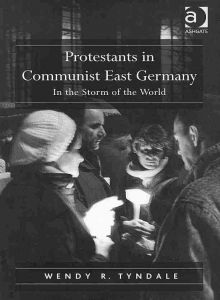
Wendy Tyndale is an experienced British journalist with wide international contacts. Her survey of the Protestant churches in East Germany is enhanced by the lengthy and well-informed interviews she conducted with leading church members, some of whom held high office during the years of Communist rule. She begins with recapturing the dramatic events of October and November 1989 when the mass gatherings of church supporters in Leipzig, Dresden and Magdeburg at their weekly prayer meetings built up unstoppable but peaceful waves of protest which eventually brought about the collapse of the regime. She rightly claims that the initiative came from those in the churches brave enough to defy the Communist authorities. Their fears that any such public demonstrations might lead to bloodshed were well-founded. The East German police state had no compunction about taking repressive measures against dissidents. Nevertheless the church leaders did not climb down. They called on their supporters to take part in peaceful marches around the city streets, when they carried candles not guns. Their advice was heeded. No violence ensued. This unique and exemplary commitment to non-violence was sufficient. Within a month, the Communist rule was overthrown. Tyndale’s book seeks to explain to English-speaking readers how this was made possible.

After 1945 the Cold War conflicts led to the division of Germany between two irreconcilable political systems.East Germany was to become controlled by the Socialist Unity Party, led by hard-line Marxists. Their ideology called for the imposition of ‘scientific socialism’ with the eventual eradication of the churches as symbols of the feudal-bourgeois past. In addition, the churches’ widespread complicity with the former Nazi regime made them vulnerable. The conservative and nationalist attitudes of most churchmen led to virulent accusations that they were agents of western imperialism. The state-run propaganda apparatus was continuously mobilized to denounce and denigrate the churches, while atheistic scientific socialism was made the sole guiding theory of the state. The first years of Communist rule were therefore particularly challenging. In the 1950s the pattern of state repression of church activities became firmly established. Bishops and church leaders were attacked in the press, church institutions closed down, youth work curtailed or forbidden and strict limits placed on church activities. On the other hand, as with the Nazis, the Communists did not seek to prevent or purge church services. The fiercest battles came over the state’s decree that all young people had to take part in the Youth Dedication Ceremony – a socialist atheistic attempt claim total loyalty to the Party and the Communist system. The churches resisted but in the end were forced to yield when this rite became a pre-requisite for all higher education beyond elementary school. Many loyal church members fled to the more sympathetic setting of West Germany until this avenue of escape was closed by the building of the Berlin Wall in 1961.

For those who remained, the ideas of the anti-Nazi theologians Dietrich Bonhoeffer and Karl Barth became largely influential. Both called on Christians to exercise their witness in the places where God had called them to live, and to gain strength enough to resist the oppression and discrimination they would have to face. At the same time, Barth, in a famous letter fromSwitzerlandin 1958, counselled East German Christians against any knee-jerk anti-communism, let alone identifying Christianity with the capitalist west. In her interviews with church leaders, Tyndale gained the impression that these teachings provided a theological life-line in the embattled churches Despite all the restrictions and discrimination they endured, despite the loss of their former privileges and social status, these churchmen struggled to believe in a more positive future. Their mission was, as Bonhoeffer had suggested, to become “the church for others”, a serving church humbly accepting its exclusion from the nation’s power base. But at the same time these church leaders sought to avoid retreating into a private and pietistic religious sphere. By the 1970s they had adopted a platform calling for a reformed socialist system, liberated from the oppressive dictatorship of the Communist police state with its ever increasing surveillance carried out by the notorious Stasi. Tyndale is obviously impressed by such optimism. She is therefore careful to note that the authors of the 1989 prayer meetings and demonstrations were far more committed to reforming rather than to replacing the tyrannical Communist system. For years the churches had trodden the perilously narrow path between opposition to the state and opportunistic accommodation to it. But in 1989, amid all the tensions and excitements, they still adhered to the idea that the East German state could be changed for the better. Their aim was to secure more human freedom and dignity, more tolerance and openness of expression, but within a remade socialist state. Tyndale expresses her strong support for such ideas.

But it was not to be. Within a year after the fall of Communism, East Germany ceased to exist, and all its institutions, including the churches, were subsumed into the wider West German framework. Tyndale gives an excellent analysis of how the East German church tried to come to terms with this unfortunate legacy. To many of her interviewees, this integration and loss of their own autonomy was a regrettable step. Happiness had come, but at a high price, including the lost dreams of these church leaders. Inevitably they were hurt by the triumphalism of their new West German colleagues. In vain did they call for a period of grief and re-evaluation of the past. But the West German churches had the money. They called the tune. So the theological insights which had been the hall-marks of what was called “Church within Socialism” were abandoned. Little credit was given to the churches’ stand against the former dictatorship. Instead all too much attention was paid to those few clergy who had served the Stasi as “unofficial collaborators”. Too often, the whole attempt to find a credible Christian discipleship in a Communist world was dismissed as a delusion now relegated to the dust-bins of church history. But Tyndale seems to share the nostalgia of her now aging correspondents for this brave but bygone episode, as well as the wishful thinking about the nature of their situation which was characteristic of these high-minded churchmen. Their vision for the church’s future may have turned out to be only a dream, but the controversial issues they raised for debate, she believes, still remain as vital challenges to the church today. We can therefore be grateful to Wendy Tyndale for her sympathetic account of how these church leaders lived out the tensions between Communist ideology and Christian faith.

II
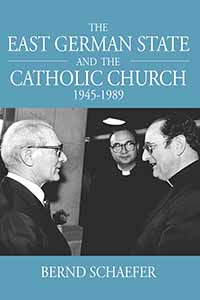
Bernd Schaefer’s account of the Catholics in East Germany was first published in German in 1998 in a somewhat longer version. It makes a valuable and complementary study to Wendy Tyndale’s. Both Catholics and Protestants suffered the same ideologically-based onslaught from their Communist rulers in the German Democratic Republic. Both were attacked as outdated survivals of a feudal era, now to be replaced by the brave new world of “Socialist Man.” Both had their institutions repressed, their communications censored, their youth work curtailed, their social outreach diminished, and were made victims of the ever watchful secret police, the Stasi. But there were also significant differences. For one thing, the Catholics were a small minority in this Protestant heartland. Ever since the unification of the country in 1871, Catholics had been disadvantaged. Bismarck’s Kulturkampf had left deep wounds. Only a few years later, Catholics were subjected to further persecution at the hands of Nazi radicals, such as Goebbels and Himmler. After 1945, they once again were called to endure fresh waves of persecution and obliged to seek new ways to defend their autonomy. It is hardly surprising that, during the forty years of Communist rule, the Catholics’ stance was a defensive one. They were largely cut off from their fellow Catholics in West Germany, and, after the erection of the Berlin Wall, virtually isolated from all outside contacts. Little was known about their institutional life, and even less published. Not until 1989 did a wealth of archival records and living witnesses become available to scholars. Schaefer in fact, served for several years in the 1990s as secretary to the East German Catholic Church’s commission investigating the nefarious activities of the Stasi and its alleged influence on Catholic life. His assessments are therefore based on his extensive research in both state and church archives.

Relations between the East German State and the churches were always one-sided. Even more than had been the case during the Nazi regime, the churches were to be faced continuously with the whole weight of the state’s repressive machinery, and rarely had an opportunity for any initiative of their own devising. Inevitably therefore accounts such as Schaefer’s have to start with a description of the Communists’ strategy and tactics as they came to launch and later to sustain their anti-church campaign. In fact, Schaefer claims, from the earliest days in 1945, the East German rulers quickly developed a two-pronged approach which became a permanent feature of the regime’s Kirchenpolitik. On the one hand, they made use of the repressive and surveillance tactics to induce obedience and compliance with their unilateral decrees. On the other hand, they also practised a policy of conciliation, attempting to lure the churches, and particularly their leaders, into affirming their loyalty to the regime or making public political declarations which could serve the regime’s search for legitimacy both at home and abroad. But the main aim remained to marginalize the churches and finally to hasten their decline.

As the Cold War intensified and the division of Germany into two rival systems became irreversible, so the Communist grip on the eastern half consolidated. The Socialist Unity Party’s hostility led to increased propaganda, administrative intervention and political attacks. From their point of view “political Catholicism” was only a facade “paving the way for German fascism.” For their part, the East German bishops attempted for as long as possible to maintain their links with their counterparts in West Germany. But the reality of Communist control forced the church leaders to come to terms with their political situation, and to abandon their wishful thinking about the prospect of German reunification. Particularly contentious was the status of the Reich Concordat of 1933. The SED regime refused to recognise its validity on the grounds that the GDR was not part of the Reich or that the treaty had been made with the Nazis. But the East German Catholic leaders refused to join with some of the West German bishops in calling for outright confrontation with the Communist regime. Discretion rather than valour became their watchword.

Subsequently the regime intensified its surveillance of the churches in search for proof of espionage. Over the years the network of informers for the Stasi infiltrated the clergy’s ranks and sought compromising information from ordinary church members. But, in Schaefer’s view, at no point were the security services, or their masters the SED, able to steer the Catholic Church to follow their dictates. Catholics in the GDR soon learnt enough about the Stasi’s operations to adopt a strong sense of caution against any intimidation. The Church as a whole retreated into a position of political abstinence, which was maintained until 1989.

After the building of the Berlin Wall in 1961, the Catholic Archbishop, later Cardinal, Bengsch, resided in East Berlin. During his long tenure of office until 1980, the clergy were ordered to refrain from any political statements or commitments. This was his strategy for avoiding political conflicts, preserving the status quo and establishing a long-term modus vivendi with the state. It might not last for a thousand years, but clearly for the foreseeable future there was no alternative. In contrast to the Protestant churches, no Catholic was encouraged to believe that the system could be reformed. Priests were to concentrate on their pastoral duties within the parish walls.

During the 1960s and 1970s, the Communist politicians made strenuous efforts to obtain international recognition for the GDR and support for its foreign policy. Despite the state’s implacable ideological hostility to the Vatican, its officials sought to exploit the wider church’s more favourable attitudes after the Second Vatican Council. Concessions to the East German Catholic churches could be used to gain international support. In the same way, the state’s continual need for hard currency led to a more flexible policy. The West German Catholics’ willingness to give aid to their East German counterparts could be exploited. Indeed soon millions of D-Marks flowed eastwards under these auspices. But neither the state, nor indeed the church, favoured moves towards a more pluralistic society. Both sought to preserve the inconvenient, but acceptable status quo.

By the 1980s these institutional restraints and repressive policies were increasingly repudiated by the younger generation of Catholics. They looked for more positive ways of engaging with the world. Their activity led to increased surveillance by the Stasi. Schaefer makes extensive and insightful use of the secret police records to trace their large-scale attempts to control such dissidence, but, as he shows, these officials were increasingly frustrated by their lack of effective influence. But the Catholic leaders were also hesitant. Any disruption of the status quo might well endanger the internal independence of the East German Catholic identity. The bishops were alarmed at the possible impact of the changes being demanded. They suspected that the enthusiastic initiatives of these younger members were being inspired by similarly-minded Protestant groups.

In Leipzig, Magdeburg and East Berlin, it was these groups who sponsored the prayer meetings and later protest marches which escalated in size month by month. Expectations rose accordingly. There was increasing pressure on the Catholic leaders to abandon their “hibernating stance” with its attitude of political abstinence. From the state’s point of view, such a stance was predictable and therefore acceptable. The officials in the Ministry of Church Affairs, or indeed the Stasi, therefore grew increasingly impotent and frustrated as the church members were less and less ready to be intimidated into obedient silence.

The growing self-confidence of Catholics in the GDR could be seen at the 1987 Dresden rally attended by 100,000 persons. Shortly afterwards, Catholics took part, with GDR Protestants, in an Ecumenical Convocation to debate the wide-ranging subjects of “Peace, Justice and the Integrity of Creation”, as promoted strongly by the World Council of Churches in Geneva. In addition the new Soviet initiatives for perestroika, and the reform processes in Poland and Hungary, only aroused further expectations. Pressure on the Catholic bishops to move on from their ghetto mentality grew steadily. But not until September 1989 did the Bishop of Magdeburg take an initial step to challenge the regime and call for reforms. His sensational pastoral letter was read in all churches, and marked the end of political subordination. But already power had shifted to the streets. The opening of the Berlin Wall on 9 November only confirmed the regime’s collapse. The people had spoken and succeeded. In the aftermath all the Catholic bishops could do was to claim that they had never granted legitimacy to the unlamented Communist state, and hence looked forward to its abolition and eventual reunification with West Germany.

The strength of Schaefer’s study lies in the details he provides outlining the positions of both state and church. His conclusion is that the Communist rulers were obliged to abandon their preconceived ideological prognostications about the church’s decline and disappearance. For its part, the Catholic Church found it necessary to accept its lesser place in society along with the loss of initiative and influence in political affairs. Schaefer points out that this convergence meant that no Catholics in the GDR lost their lives as a result of political persecution. The special position of the GDR saved Catholics from the full force of Stalinist repression. There was even talk in the late 1980s of an official visit by Pope John Paul II. The modus vivendi under which Catholics in the GDR operated was pragmatic, restrictive but liveable. The church’s public activities were to be sure limited by the Stasi’s surveillance and by administrative restrictions. But the Church could continue to exercise its witness within this framework. Schaefer therefore rightly states that, in this unheroic situation, Catholics were able to deal with the rigours of the monotonous socialist society. Some clergy indeed even welcomed the fact that GDR Catholics were sheltered from the permissiveness and materialism of western consumerism. But none regretted the final overthrow of the totalitarian system which they had steadfastly endured for forty years.

III

Katharina Kunter has contributed an excellent study of the churches’ reforming and socio-political initiatives of the 1980s. These were aimed at overcoming the political and strategic stalemate between the western world and the Communist bloc countries Germans on both sides of the Iron Curtain and the Berlin Wall were particularly alarmed at the plans for nuclear rearmament which seemed to herald a further increase in international tension on their territory. The time was ripe for new initiatives, and for more hopeful alternatives. This movement adopted as its slogan: “Justice, Peace and the Integrity of Creation”, and sought to encourage church members to increase their engagement with ethical and peace issues. Calling itself a Conciliar Process, this coterie of visionaries gained the support of such bodies as the World Council of Churches and the Conference of European Churches, and organized a series of ecumenical conferences where their ideals were discussed and strategies adopted for their wider dissemination. This alliance of peace activists, human rights defenders and environmental advocates proved highly advantageous. Their optimistic mood was enormously strengthened, as noted above, by the impact of Gorbachov’s glasnost and perestroika plans.
This vision was significantly reflected in the large gathering held in Dresden in February 1988 or the European Ecumenical Assembly held in Basel in May 1989, when for the first time Catholics, Protestants, Orthodox and Anglicans from all parts of Europe met in consultation about the continent’s future goals. Most notable was the presence of numerous activists, some with radical views, whose hopes and dreams were give full rein.

There can be no doubt that such rallies gave heart to the many Protestants and their churches in East Germany who played the most prominent role in the wave of protests and street demonstrations during the summer and fall of 1989. Their bravery evoked waves of sympathy around the world. Eventually they caused the regime’s downfall. Many commentators have in fact called this “the Protestant Revolution” or, because of the absence of any violence, “the velvet revolution.” This challenge to a long-established regime enormously increased the prestige of these beleaguered Protestant institutions and their leaders. They now appeared to have played a heroic part in overthrowing forty years of repression and human rights abuses. Their victory seemed to confirm the validity of the Conciliar Process and its propagation of politicized Christian ethics for a nation in crisis. Expectations were widely held that these church grass roots groups would play an important role in the renewal of society, and foster the necessary institutional changes down to the parish level. Hopes were high that the church leaders would play a significant part in a reformed non-Communist, but still socialist East Germany. And in many places pastors were looked to for such leadership.

But within a year, a very different tone was heard when revelations were made of the collaboration, or even of the complicity, between some of these churchmen and the Stasi. The secret police files contained damning evidence of too many pastors and priests giving confidential information about their parishioners, or about their institution’s internal affairs. The resulting outcry produced a severe backlash against these East German churches, and marred the whole impression of valiant resistance to tyranny.

Katharina Kunter’s study, which includes a six-page summary in English, seeks to evaluate these conflicting accounts. Like Wendy Tyndale, she too describes the “Fulfilled Hopes and Broken Dreams” of Protestants, but in both parts of the divided and later unified country. She then carries the story forward to the mid-1990s so that she can assess the contradictory waves of subsequent historiography which emerged in both East and West Germany during the difficult period of readjustment and reunification. Her analysis of these critical years shows how ambivalent many church people were – and in some cases still are – about the developments in both church and state. She has to admit that, looking at the high ambitions of many of the authors of the Conciliar Process, it must be seen as a failure. After the initial euphoria of 1989 had died down, the majority of church members became occupied with the practical details of earning a living in a broken and disrupted economy. The vision of what the church desired in terms of a renewed society died away, or remained the relatively abstract concern of a small ecclesiastical elite. Their idealistic dreams were not matched with any concrete programme for effective reforms on the spot, either nationally or locally, In the 1990s other political parties or associations sprang up to fulfill the Germans’ desire for democracy, human rights, freedom of movement and a better quality of life. Such developments, as Wendy Tyndale also noted, were a great disappointment to those church leaders who had campaigned for a new vision of Christian responsibility within a reformed socialist society.

But, in Kunter’s view, the contribution of these representatives of this utopian approach consisted in the enriched socio-political discourse within the Protestant churches. They formulated intellectual alternatives, contributing to a pluralism of views and a fruitful dialectic about ethical choices. Her final summary is very apt: “For the majority of Protestants in East Germany the hopes of liberation which they had already articulated in 1988/9 in the conciliar process, with their demands for democracy, the realization of individual human rights and the rule of law were fulfilled. However – for a minority of Protestants in the GDR and the FRG for whom the conciliar process was a way towards a democratic socialism, the end of the GDR was also the breaking of a dream” (p. 282).

IV

Tyndale’s and Kunter’s depictions of the Protestant churches covered their activities at the national level and from the perspective of the leadership. By contrast Hedwig Richter concentrates on one of the smallest church communities in East Germany, the Unity Brethren of Herrnhut, a small town in south-eastern Saxony, close to the Czech border. (In English the Herrnhuters are best known as the Moravian Brethren Church, and will be referred to as such here). In Richter’s view, although this strongly Pietistic group of parishes had at its core no more than two thousand persons, its stalwart witness and the manner in which it survived and surmounted the forty long years of Communist rule, are highly significant features and merit a full examination. Her 300-page study of how this community upheld its traditions and devotion to its Pietist heritage is an exemplary piece of church history, which fully deserves its publication in a distinguished series of historical monographs.
The Moravian Brethren church was founded by an energetic but idiosyncratic aristocrat, Count Zinzendorf in the early eighteenth century. His fervent advocacy of a religion of the heart was based on an intimate fellowship with the Saviour, and became the characteristic of his Pietist following. Their daily prayer meetings and bible-reading fellowships gave an enduring inner strength. But Zinzendorf’s main contribution was in the fields of education and mission. The schools in Herrnhut and district were to become some of the region’s best, attracting support from aristocratic families. Even more remarkable was Zinzendorf’s vision of spreading the Gospel to remote corners of the world such as Africa, Labrador, Surinam or the British American colonies. In time these Moravian missions flourished independently, but still retained their links to Herrnhut. Politically, like other Pietists, the Moravians adhered to the biblical injunction to give allegiance to due authority. When allied to the rise of German nationalism in the subsequent centuries, their patriotic sentiments led to a regrettably uncritical approach to National Socialism.

In 1945 Herrnhut was overrun and largely destroyed by the advancing Russian forces. Many of its leaders fled westwards and sought refuge among fellow Pietists in Württemberg. Leadership devolved upon members drawn from the working class, who nonetheless upheld devotedly the pietistic life-style of their forebears. The survival of the community was greatly aided by relief supplies from their American brethren, and in turn these contacts helped to restore their ideal of being a world-wide evangelizing community. Relations with the Soviet military administration ran smoothly.

After 1949, however, when the Communist control was established throughout the German Democratic Republic, matters became more critical. From the first, the regime was determined, as Tyndale showed, to bring all aspects of society, including churches, under its total control. The Moravian communities were placed under police observation, their communications censored, and they were the frequent victims of denunciations by jealous neighbours. Harassment by Communist officials became the norm, with refusal of permits for rebuilding their facilities, for their publishing activities or for visits from supporters and relatives abroad. The atmosphere of uncertainty was deliberately maintained by the Communist party at all levels. Blackmail, surveillance and occasional concessions went hand in hand.

Inevitably the Moravian traditions had to be rethought in this new setting. Overseas missions had to be handed over to other branches of the Brotherhood already abroad. The regime’s repressive restrictions curtailed much of their educational activities, which were only heightened by the mandatory requirement that all young people take part in the Communist-controlled Youth Dedication ceremony. Refusal to take part led many of the Moravian children to be excluded from all higher education schools. But the leadership sought to avoid confrontation, and hence adopted an ambivalent attitude towards their new rulers. They still retained their readiness to show a biblically-based loyalty to their political superiors. At the same time, they developed the concept of their prophetic mission to their changed society. As an example of their willingness to serve society in new ways, the Moravians took up an extensive ministry of caring for the handicapped and disadvantaged youth of the region. Such a service earned good marks from the regime, but as Richter rightly points out, had its drawbacks. Such a programme also required constant subsidies from the state, so it was also a means of enforcing the Herrnhuters’ political conformity.

In the event, by the end of the 1950s the Communist authorities also changed their tune. Since these smaller sects constituted no real political danger, they were treated more favourably than the larger churches. They could possibly be lured into giving public support to the Communists’ keen desire for international recognition. Permission to attend international conferences or to receive international visitors could be exploited for the regime’s political purposes. For example, the visit to Herrnhut by high-ranking officials of the World Council of Churches in 1981 was used in this way. Considerable publicity was given to the Council’s Program to Combat Racism on behalf of the oppressed people of Africa and Latin America, which in the Communists’ view fitted in well with their anti-western and anti-capitalist propaganda. Richter is suitably critical of the churches’ failure to apply the same criteria on behalf of the oppressed and marginalized peoples in Communist-controlled lands.

Richter’s account of these developments is drawn from her extensive and insightful use of both church and state archives. She rightly points out that due to the constant pressure to conform, these Herrnhut congregations, like so many other East Germans, became gradually accustomed to their loss of freedom, and were even ready to grant legitimacy to the injustices inflicted on them. Their isolation in the fortress beyond the insurmountable Berlin Wall, and the widespread disillusionment after the suppression of the Prague uprising in 1968, obliged a whole generation to accommodate themselves to this socialist reality, and even to express their support for its ambitious socialist goals. In Richter’s view this stance was remarkable in view of the constant repression of church activities, the attacks on religion especially by teachers and party propagandists, the relentless pressure on young people to take part in the Youth Dedication ceremony, and the marginalization the churches in general.

Not until the 1980s did the younger members begin to adopt a more critical stance. As with the larger Protestant churches, they were increasingly unwilling to accept the contradictions and injustices of the Communist regime. But the leaders in Herrnhut maintained their silent acquiescence. This was not solely the result of intimidation. Rather it stemmed from the ingrained Moravian tradition of deference to governmental authority, coupled with a somewhat naive belief in the reformability of the system, and a strong dose of Pietist traditional belief that politics were bound to be sinful and should be shunned. For this reason, some of the leaders in Herrnhut deplored the 1989 overthrow of their by now familiar oppressors. But the relief and joy of the younger generation was unbounded. After 1990 they were to play a leading role in reuniting the East German Moravians with their world-wide connections and bringing their centuries-old traditions back to a new and better life.
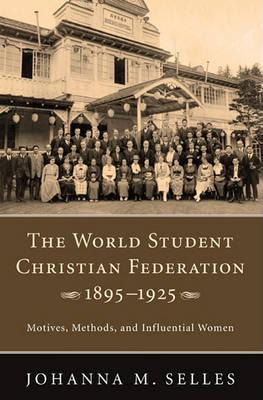
 

Share

Review of David Cymet, History vs. Apologetics: The Holocaust, The Third Reich, and the Catholic Church

ACCH Quarterly Vol. 17, No. 1, March 2011

Review of David Cymet, History vs. Apologetics: The Holocaust, The Third Reich, and the Catholic Church (Lanham, MD: Lexington Books, a division of Rowman & Littlefield Publishing Group, 2010). 489 pp. ISBN 978-0739132937.

By Robert Ericksen, Pacific Lutheran University

This book is a somewhat surprising entry in the ongoing wars over Catholics, the Holocaust, and Pius XII, especially in terms of the background and experience of its author. David Cymet, born and raised in Mexico City, traveled to the United States in 1944 as one of the first two Latin American students to study at an American rabbinical school. After four years at the Mesivta Torah Vodaath in Brooklyn, he returned to Mexico to study architecture, followed by an academic career teaching architecture at his alma mater, the National Polytechnic Institute of Mexico, and then at the National University of Mexico. He also served the Mexican government in various capacities from the 1950s through the 1970s, for example, in the National Housing Institute and in the Ministry of Human Settlements. In the 1980s he moved to the United States, where he began working for the New York City Department of Education in 1986, also earning a doctorate at the University of Delaware in 1991. Described in his author’s note as “a student of the Holocaust since his earliest youth,” Cymet spent the first decade of the twenty-first century – presumably retired from his multiple careers – researching and writing this book.

We might be surprised when a trained architect from Mexico, after a distinguished public and academic career, writes a 500-page book on history for Rowman and Littlefield Publishers. We will be less surprised when the subject is the Holocaust. Furthermore, though it is almost fifty years since Rolf Hochhuth’s The Deputy became a first salvo in the Pius XII wars, the level of controversy has scarcely diminished. Thus we will not be surprised that David Cymet, a Jewish man raised in a Catholic country, has chosen to concentrate on the Catholic Church, theVatican, and the wartime Pope, and that he comes to harsh conclusions.

Cymet begins with the observation that Jews were not in a position to critique the Catholic Church in the first years after 1945. They had much more pressing concerns, such as immediate assistance to survivors, finding visas for DPs, and securing the place of Jews inPalestine(xi). Cymet then gives credit to major authors who began to probe the role of the Catholic Church, including Hochhuth, Saul Friedlander, Guenter Lewy, Klaus Scholder,  and Carlo Falconi, as well as later figures such as Michael Phayer, Gitta Sereny, and Fr. John Morley, SJ (xiv-xvi). “The aim of this study,” he says, “is to look critically at the polemic and present a view of the issues within the wider context of their contemporary political and ideological background” (xvi).

There is no doubt that Cymet tilts toward the more critical observers within the “wider context.” His opening statement about “defenders” of the Catholic Church, who provide the “apologetics” mentioned in his title, is harsh indeed: “Unlike their not-so-distant cousins – the Holocaust deniers – they did not claim that the Holocaust never happened, but rather chose to take cover behind half-truths, misrepresentations, and subtle distortions. At the margin of legitimate discussion beholden to historical truth, the defenders of all sorts aimed at derailing the discussion by creating a thick cloud of confusion and doubt” (xvi).

Flaws can be found in this book. In one chapter he mentions Guenter Lewy correctly, but then calls him Lewy Güenther in endnotes, repeating this mistaken last name and mistaken spelling through a sequence of five notes (13). He praises Doris Bergen’s work, but in his bibliography he cites her as the author of In God’s Name: Genocide and Religion in the Twentieth Century (2000), rather than correctly noting the editors, Omer Bartov and Phyllis Mack (461). He is careless of chronology at times, such as when he says Guenter Lewy “reacted” to We Remember (1998) and its claim that Cardinal Faulhaber was a defender of Jews. When Lewy, as quoted, called it “little short of falsification of history when Faulhaber’s sermons in 1933 are hailed . . . as a ‘condemnation of the persecution of Jews,’” Lewy may have been right; but his statement in 1964 was not a reaction to aVatican publication of 1998 (9).

Despite these lapses and despite Cymet’s occasionally impassioned prose, with words such as “mean-spirited” and “diabolical” signaling his point of view, his thorough and detailed telling of the story makes for a sobering read. He accepts David Kertzer’s view (The Popes against the Jews: The Vatican’s Role in the Rise of Modern Anti-Semitism, 2001) that Christian anti-Judaism cannot be seen as significantly different from racial antisemitism, and he finds many Catholic statements in Germany and elsewhere in which common cause with racial antisemites is clearly expressed. His chapter on “Catholic Europe ‘Defends’ Itself from the Jews” begins with Humani Generis Unitas, Pius XI’s unfinished encyclical often regarded as a significant attack on antisemitism. But Cymet notes the residual antisemitism in those parts which justify the “social separation” of Jews and the justification for Christians defending themselves against Jews, “as long as the unbelief of the Jewish people persists” (142). He then describes anti-Jewish legislation written with Catholic support in Poland,Italy,Hungary, and Slovakia prior to the war (150-63). In a chapter on “The Final Solution in Christian Europe” (305-74), he emphasizes the obvious, that this murder took place in Christian countries. He also points out the instances in which Catholic leaders protested in favor of Catholics of Jewish descent, but not, despite many entreaties, against the deportation and murder of Jews as Jews.

Cymet’s chapter on “Vatican Response to the Final Solution” first notes that the Klerusblatt in Germany described the Nuremberg Racial Laws of 1935 as an “indispensable safeguard for the qualitative make-up of the German people” (375). He also describes Slovakia, Croatia, Hungary, Italy, and Vichy France as “clero-Fascist” countries which increased the severity of their anti-Jewish laws from 1938 to 1942, until they fed into the killing process itself. What was the Vatican response? Here Cymet points out the many avenues of information available to the Vatican, while stressing the silence that ensued. In a segment on “The Rome Deportations, a Paradigm of Vatican Policy,” he quotes Michael Phayer: “No other event placed Pius XII in greater physical proximity to the Holocaust than the deportation of the Roman Jews.” The paradigm for Cymet is seen in his conclusion that, here as elsewhere, “the Church stood calmly at the sidelines” (387).

Cymet makes extensive use of Kertzer, Morley, Lewy, Phayer, Saul Friedlander, and a host of others. I do not think he approached this project from a place of neutrality, with the thought that he might end up defending the Catholic Church, for example. However, he prepared his brief energetically. Those who would argue for the defense must acknowledge that his evidence for the prosecution weighs heavily. He identifies a burden of anti-Jewish prejudice, human insensitivity, and silence in the face of evil which fitted itself too comfortably within the Catholic nations, the “bloodlands,” of Central Europe.


Share

Review of Antonia Leugers, Jesuiten in Hitlers Wehrmacht. Kriegslegitimation und Kriegserfahrung

ACCH Quarterly Vol. 17, No. 1, March 2011

Review of Antonia Leugers, Jesuiten in Hitlers Wehrmacht. Kriegslegitimation und Kriegserfahrung, Krieg in der Geschichte, Band 53 (Paderborn: Ferdinand Schöning, 2009), 233 Pp. ISBN 9783506768056.

John S. Conway,University of British Columbia

The Jesuits in Germany had a roller-coaster history in the twentieth century. Persecuted by Bismarck in the newly-created German Reich, and later expelled from the country, they were re-admitted in 1917 as a concession to German Catholics in order to uphold their war efforts. In the inter-war period, they build up some notable schools and colleges, and re-established three Provinces. But when the Nazis came to power in 1933, their fortunes suffered a sharp downturn. Nazi radicals accused the Jesuits of being the Vatican’s shock troops, threw doubt on their loyalty to the “new”Germany, attacked their institutional life, particularly their youth work, and later on confiscated many of their properties. At the same time, the younger members, like all other German males, were conscripted for military service, even including those who were already ordained as priests. During their war-time service after 1939, these Jesuits regularly and faithfully wrote to their clerical superiors, relating their war experiences, and in return received circular bulletins from their Provincial headquarters.

The almost 3000 letters from the nearly 300 Jesuits who served in military units from 1939-1945, form the basis of Antonia Leugers’ research. However, the fate of these Jesuits in Hitler’s armies was strikingly affected by a secret decree issued from Hitler’s headquarters at the end of May 1941, shortly before the invasion of the Soviet Union. This ordered all soldiers belonging to the Society of Jesus to be demobilized forthwith, and returned to civilian life. Curiously Leugers does not investigate the reasons behind this remarkable edict, since she is interested only in its impact on the Jesuits themselves. The great majority were overwhelmingly dismayed. This implacable order seemed to challenge their loyalty to the army and the nation. It might well signal the escalation of the repressive measures against the Jesuit order already launched by the Nazi Party. No explanations were ever provided to the individual soldiers, and Leugers provides none to the reader.

Although her sample is very small, and lacks any comparative examination of other series of soldiers’ letters home from the front, Leugers systematically analyses how the war affected this particular group of dedicated Catholics. In particular she is interested in how these men justified their participation in Hitler’s aggressive wars, and how they reacted to the increasingly brutalizing conditions, especially after the German war machine invaded the Soviet Union. She shows that, surprisingly, even after Hitler’s decree, many Jesuits still continued to serve in the army. Their reports on how they reacted to the devastations inflicted on the Russian people are particularly illuminating.

Essentially, Leugers shows, Jesuits were influenced both by the traditional Christian justifications for war, derived from centuries-old models, but also by the more recent development of a youth culture which advocated comradeship and adventure in a romanticized setting and applied it to Germany’s national destiny. Both sets of justification were compressed into the slogan: “All for Germany,Germany for Christ”. The evidence provided shows clearly that Jesuits were eager to demonstrate their support of this slogan by serving in the military’s ranks, all the more since conscientious objection was illegal and carried a death penalty. Their enthusiastic desire to join in with their comrades in this God-blessed struggle against godless Bolshevism, or its handmaid, Jewish skulduggery, was limited only by the refusal to take part in the less moral pastimes of the common soldiery, such as drunkenness and fornication. But political scruples were absent – or at least were never reported to their superiors. Many Jesuits shared naive views about the war’s purposes. They could believe that the invasion of Russia would lead to its liberation from the evils of Communism, and to the re-Christianization of the people. So too they shared a widespread belief that a distinction could be drawn between service forGermany’s sake and the acceptance of Nazism’s ideology and practices. Most seemed to cling to the self-induced idea of the nobility of military service and to the notion of heroic sacrifice, if necessary, of their lives for their country.

Leugers does not explore how far – if at all – these sentiments were the means of avoiding any far-reaching crises of conscience. The extracts here given provide no hints of any psychological conflicts, although this may well be due to the writers’ awareness of their letters being censored. For the most part, the Jesuits failed to recognize how far they were being made accomplices of the Nazi terroristic regime. All too readily they accepted the Nazi propaganda about the enemy, while deluding themselves that they were fighting for a “better”Germany. The fact remains that only a handful of Jesuits recognized – too late – that active resistance was required against all forms of Nazi indoctrination and terror. The rest, captivated by their religiously-flavoured nationalism, were condemned to share the moral and physical disasters which overwhelmed Germany in the final years of Hitler’s Reich.


Share

Review of Dietrich Bonhoeffer, Berlin: 1932 – 1933: Dietrich Bonhoeffer Works, Volume 12

ACCH Quarterly Vol. 16, No. 4, December 2010

Review of Dietrich Bonhoeffer, Berlin: 1932 – 1933: Dietrich Bonhoeffer Works, Volume 12, ed. Larry L. Rasmussen, trans. Isabel Best, David Higgins, and Douglas W. Stott (Minneapolis: Fortress Press, 2009), 680 pp. ISBN 978-0-8006-8312-2.

By John S. Conway, University of British Columbia

The twelve months from November 1932 to October 1933 covered in this, the twelfth volume of Bonhoeffer’s collected writings, were to be of crucial significance, not just for the career of this young theologian, but for his nation as well. The political and social turmoil, which had resulted in violent clashes between rival gangs of Communists and Nazis in many of Germany’s major cities, culminated in the seizure of power by the National Socialists, led by Adolf Hitler, on January 30, 1933. It was the beginning of what Bonhoeffer, within a few days, was to describe as “a terrible barbarization of our culture”, the onset of what he later called “the masquerade of evil”. This insight was eventually to lead to Bonhoeffer’s involvement in the conspiracy to overthrow Hitler’s dictatorship and to his execution for high treason in April 1945. This period is therefore notable as marking the beginnings of his opposition to the Nazis’ imposition of totalitarian measures that were to have such fateful consequences.

This volume brings together the surviving letters, articles, papers and sermons from this short turning point in Bonhoeffer’s life. As before, the translation of the German original is excellent, and the editorial footnotes very helpful. In addition we are given a chronology of these months, a very full index of names, giving the positions held by those mentioned, as well as an exhaustive subject index. This volume’s value is enhanced by having not only Larry Rasmussen’s introduction, but also the translation of the afterword provided by the German editors. In addition, certain materials have been added since the original German edition was published. On the other hand, in contrast to the preceding volume 10, which covered Bonhoeffer’s stay abroad, this volume is less revealing. During these months in Berlin, Bonhoeffer was in close contact with his friends and family, so clearly most of the significant discussions and debates about his ideas and conduct were undertaken verbally and were not committed to paper or have not survived. Nevertheless, the remarkable number of his extant communications provides us with major clues, which of course were more fully explored in Eberhard Bethge’s full biography, first published in 1966.

If this volume contains only small items not hitherto known, it is still an impressive piece of scholarship. The centrepiece of this volume is the controversy over the future of the German Evangelical Church. This dispute greatly escalated after the Nazis came to power and particularly after the passage in April 1933 of the Law ordering the removal of people of Jewish origins from official positions. On the one side, the vociferous faction known as the German Christians sought to align the church as closely as possible with the new political regime. They supported Hitler’s goals for a renewed powerful Germany, and saw in him a leader who would restore the nation’s strength by boldly and forcefully attacking those they considered to be the national enemies, particularly Communists and Jews. By such a stance, they believed, the church would regain its popularity and demonstrate its loyalty to the state. On the other side were those whose conservative rootedness deplored such innovative departures from traditional Lutheran doctrines. From the beginning, as these documents make clear, Bonhoeffer championed this adherence to orthodoxy, and became, at the age of 27, one of the most vocal critics of the German Christians and their deplorable and false doctrines. He was thus caught up, as is clear from his correspondence and papers, in the turmoil and fluidity that assailed the churches. What is remarkable is the sense of foreboding reflected in his words from the early months of Nazi rule. He refused to share the widespread enthusiasm that swept through many sections of German conservative society, including the Evangelical Church. As early as February 1933, he was expressing his view that authoritarian leadership and ecstatic patriotism were dangerously misleading traits. Most particularly he now began to take issue with the German Christians’ attempts to introduce the state’s anti-Jewish regulations into the church by banning anyone of Jewish origin from holding offices in the church, and even by calling for their expulsion altogether. This led to his being invited in June 1933 to be one of a team drawing up a firm statement of orthodox belief, known from its place of origin as the Bethel Confession. Unfortunately the church leaders delayed its publication, and asked for revisions, so that eventually Bonhoeffer felt it had been watered down and dissociated himself. It was one of the factors that led him to decide to leave Germany and take over pastoring two German parishes in London in October 1933, which is where this volume ends.

We are not yet provided with a full account of the struggles that Bonhoeffer must have gone through to reach this decision. But it clearly meant leaving the two jobs he held, first the lectureship in systematic theology at Berlin’s university, and second a chaplaincy at the Technical College. The latter appointment was clearly a mistake since few students wanted counselling, and none appeared at his office hours. By contrast his students at the university were enthralled, even though Bonhoeffer lectured at 8 in the morning on Saturdays and Wednesdays! Fortunately several students preserved their notes from which a partial text has been reconstituted, which is included in this volume. But it is notable that Bonhoeffer carefully avoided any reference to current political events. Nor were the students consulted about his sudden career change.

No less striking is the material on Bonhoeffer’s extra-curricular engagements. In these months he diligently coached a confirmation class for young lads in a north Berlin slum district, and even moved there so that they could call on him in the evenings. No less significant was his involvement with the wider European ecumenical movement, particularly through the World Alliance for Promoting International Friendship through the Churches. Bonhoeffer had been appointed the World Alliance’s Youth Secretary for central Europe shortly after his return from America in 1931, and was responsible for organizing youth conferences designed to overcome national barriers and hatreds. But much to the regret of his mentors in this work, Superintendent Diestel and Professor Friedrich Siegmund-Schultze, Bonhoeffer was too preoccupied with his other responsibilities to give much time to the World Alliance. His most significant action was to travel to a conference in Sofia,Bulgaria, in September 1933, where he urged the World Alliance leaders to adopt a resolution deploring the German state’s measures against the Jews and protesting against the German church’s readiness to adopt the so-called “Aryan paragraph” discriminating against anyone of Jewish origin. At this point, Bonhoeffer felt that his outspokenness on this subject might well land him in a concentration camp if he returned to Germany. His decision to accept his next ministerial assignment in England was therefore a judicious move.

But the World Alliance continued to mean much to Bonhoeffer. This was the period when he was wholeheartedly persuaded of the need for world peace. In this cause he was a pupil of Siegmund-Schultze, the leading pacifist of the German Evangelical Church. But Siegmund-Schultze was to be forcibly expelled from Germany by the Gestapo in June 1933, which must have been a great shock and bitter blow to Bonhoeffer and his friends. It was not until the following year, at the World Alliance’s conference in Denmark, that Bonhoeffer’s most significant contribution to the issue of world peace was expressed. This volume, however, only hints at his developing ideas.

Karl Barth, whom Bonhoeffer greatly admired, was opposed to his leaving Germany, and the letters between the two reveal Barth’s strong regret and Bonhoeffer’s apologetic tone. But certainly we can be sure that Bonhoeffer’s steadfast denunciations of the false doctrines of the German Christians, as expressed in the Bethel Confession, were to pay a role in May 1934, when Barth composed the equally stringent rejection of false doctrines in the Barmen Declaration.

Equally notable is the text of Bonhoeffer’s often misunderstood statement on “The Church and the Jewish Question” of June 1933. This undoubtedly reflects the Lutheran theological tradition about these “outcast” people, and calls for their eventual conversion. But it also challenges the church to oppose the harsh measures taken by the state, and if necessary to bring the apparatus of the unjust and illegitimate state to a halt. He then goes on to proclaim the necessity of not allowing the state to prescribe who can be a member of the church. In reality, the church consists of Germans and Jews standing together under God’s Word. Racial characteristics have nothing to do with membership in the church. Unfortunately Bonhoeffer left this vital topic unfinished and rarely returned to it in subsequent years.

Our thanks are due to the editors and translators for their excellent work in maintaining the standard of previous volumes. It is to be hoped that the whole series will soon be completed for English-speaking readers. For as Vicki Barnett, the General Editor, rightly notes: “These volumes are a significant contribution to twentieth century theological literature, church history and the history of the Nazi era”. They afford us a detailed view of “Bonhoeffer’s historical context and its great challenges for the churches and for all people of conscience.”


Share

Review of Ralf Retter, Zwischen Protest und Propaganda: Die Zeitschrift “Junge Kirche“ im Dritten Reich

ACCH Quarterly Vol. 16, No. 4, December 2010

Review of Ralf Retter, Zwischen Protest und Propaganda: Die Zeitschrift “Junge Kirche“ im Dritten Reich (Munich: Allitera Verlag, 2009), 387 pp.  ISBN: 978-3-86906-066-8.

By Kyle Jantzen, Ambrose University College

Ralf Retter’s study of the Protestent journal Junge Kirche questions common historical assumptions about its role in the church politics of Nazi Germany. His detailed study of the periodical, which ran from 1933 to 1941, arises out of his doctoral dissertation at the Technische Universität Berlin. Drawing not only on his analysis of the publishing activity of Junge Kirche but also on the previously unpublished correspondence among those responsible for the journal, Retter tackles three discrete topics: the history of the German press in the Third Reich, the German Church Struggle, and the German Resistance. His main question is whether Junge Kirche was really just the mouthpiece of the Confessing Church and an organ of the church resistance to Nazism, as has been argued in the past. Like many other recent studies of the German churches under Hitler, his answers complicate our understanding of the relationship between Christianity and Nazism.

Junge Kirche was the leading Confessing Church journal in the Nazi era. More than that, it was one of the few supra-regional Protestant periodicals to survive in Hitler’s Germany, and was the Protestant periodical most likely to be read within Germany and circulated abroad. But how, asks Retter, did it function in the highly regulated press environment of the Third Reich? Clearly, it was oriented towards questions of theology, faith, and the proclamation of the gospel, avoiding subjects that spilled over outside the church and touching on state policy. However, given the anti-clericalism of the Nazi state and Junge Kirche’s insistence on the independence of the church to preach and teach according to Scripture, the journal found itself positioned against National Socialism (11). The key leaders who tried to steer the journal through the church politics of the Third Reich were Hanns Lilje, Fritz Söhlmann, and Günther Ruprecht, of whom only the first is fairly well known.

One of the challenging aspects of publishing during the Nazi era was censorship. Retter wonders how frequently and to what extent Junge Kirche suffered at the hands at censors, but also what role self-censorship played in the editorial process and (more controversially) to what extent those responsible for the journal might have identified with aspects of National Socialist ideology and rule. This raises the deeper question of whether Junge Kirche was really engaged in resistance against Nazism at all and, if so, whether its activities should be considered opposition (Widerstand) or merely non-conformity (Resistenz). Was it, Retter wonders, a force for the stabilization or destabilization of the regime (17)? In answering these questions, he devotes a good deal of attention to the argument that the journal was engaged in Resistenz between 1933 and 1936 (127), as it opposed the German Christian takeover of the church governments and supported the Barmen Confession, opposed both the introduction of the Aryan Paragraph in the churches and the abandonment of the Old Testament (188), affirmed the traditional historical narratives defending the long-standing presence of Christianity in Germany, supported the emergent ecumenical movement, and even criticized Nazi interference in the realm of the church (208). Still, Retter is careful to point out that this Resistenz took place in a context of traditional German-national sentiment.

By 1936, however, as the Confessing Church split and the pro-Nazi Fritz Söhlmann assumed the sole editorship of Junge Kirche, the journal lost most of its character as a centre for Resistenz. In rejecting the Dahlemite branch of the Confessing Church, Junge Kirche found itself caught up in internecine struggles and little able to engage in any significant opposition to the German Christian Movement. Siding with traditional Lutherans who were unwilling to break completely from the German regional church governments and the Reich Church authorities, Junge Kirche ceased functioning as a mouthpiece for the Confessing Church, argues Retter. By 1939, the pro-Nazi tendencies in the journal which had been present even from the beginning were given more or less free reign (particularly after Lilje, who had taken a more critical line towards the regime, was ousted from his editorial post). The self-censorship of publisher Ruprecht and editor Söhlmann kept the names of leading Nazis from appearing in the journal’s pages. And when Junge Kirche combined the embrace of Hitler’s war aims with its mission to foster piety and provide spiritual encouragement for Germans caught up in the Second World War, it grew into a stabilizing presence in the Third Reich—quite the opposite of a force for resistance.

For Retter, the fate of Junge Kirche mirrored that of the Protestant churches as a whole. Like the churches, it was reduced to the role of preaching the Word. Like the churches, its defence of the Reformation Confessions was interpreted by the state as political disloyalty and opposition. And like the churches, it had to work to clarify its relationship with the state. By choosing to support the “intact” Lutheran regional churches of Württemberg, Bavaria, and Hanover, Junge Kirche chose for cooperation with the National Socialist regime—a stance that opened the door for it to function as a propaganda arm of the state. Thus it was that the early period of protest gave way (in the language of the book’s title) to propaganda—active support for the Nazi regime and its conduct of war—a transition which was more self-induced than censor-driven (365). Indeed, the propaganda effect of Junge Kirche was especially profound, argues Retter, since it was a confessional publication and not a Nazi Party periodical. Its readers might well have assumed that Nazism was quite acceptable to the Christian churches of Germany.

All of this raises interesting questions pertaining to the relationship between Christianity and Nazism, highlighting once more the conflicting messages and understandings of the religious situation among German Protestants (and perhaps among Nazis, too). Concerns over Nazi anticlericalism and warnings about the movement becoming a political religion are mixed with Confessing Church support for aspects of Nazi antisemitism and the foreign policy of Lebensraum as well as calls to preach and promote piety in a particularly German cultural manner consistent with the conservative nationalism that marked the Protestant churches. In highlighting the presence of these inconsistencies and hypocrisies within the publishing arm of the Confessing Church, Retter contributes to our understanding of Christianity and Nazism as both partners and rivals attempting to win the hearts and minds of Christians in the Third Reich.


Share

Review of Jürgen Elvert and Jürgen Nielsen-Sikora, eds., Kulturwissenschaften und Nationalsozialismus

ACCH Quarterly Vol. 16, No. 4, December 2010

Review of Jürgen Elvert and Jürgen Nielsen-Sikora, eds., Kulturwissenschaften und Nationalsozialismus. Historische Mitteilungen im Auftrage der Ranke-Gesellschaft, 72 (Stuttgart: Franz Steiner, 2008), 922 pp. ISBN: 978-3-515-09282-1.

By Robert P. Ericksen, Pacific Lutheran University

This review appeared first in German History, Vol. 28 No. 2 (June 2010): 246-48, and is reprinted by kind permission of the author.

At the collapse of the Nazi State, some Germans committed suicide, unwilling to face a world without their Führer; some Germans were brought to Nuremberg, where they were placed on trial for war crimes and crimes against humanity; and most Germans began to act as if they had never been attracted to Adolf Hitler, despite sometimes copious evidence to the contrary. Already in 1946 Max Weinreich wrote Hitler’s Professors: The Part of Scholarship in Germany’s Crimes against the Jewish People;  but most professors managed to cultivate the idea, common to a large portion of their German fellows, that they had played no role in Nazi crimes and had merely been caught under the boot of a totalitarian regime. This postwar denial endured largely intact for a generation or more. In the past two or three decades, however, it has been overturned by scholarship which shows that ‘good Germans’ of every sort succumbed to the attractions of Hitler and worked willingly within and for the Nazi State. Such an assessment clearly includes German professors and their universities. Despite purges of Jewish faculty, despite the burning of books, despite violations of academic freedom, the Nazi goal of ‘Gleichschaltung’ (coordination) within the universities is now widely thought to have been ‘Selbstgleichschaltung.’ It was professors who helped burn the books and professors who competed for preferment after their Jewish and leftwing colleagues had been removed.

Kulturwissenschaften und Nationalsozialismus is one of several recent attempts to focus on scholars in the humanities as one aspect of this problem. The plan for the book, formulated in 2000, involved thirty-five disciplines. Participants hoped to create a foundation for future scholarship, showing where research on each of these disciplines stood at the time and creating a sort of grid by which interdisciplinary comparisons could be made. Jürgen Elvert somewhat disarmingly admits that the goals of the project were not achieved (p. 17). No contributor could be found for some areas, some contributors agreed to produce a chapter but failed to deliver, and some contributors produced work unworthy of being printed. Nonetheless, this ‘failed’ project resulted in twenty-eight chapters plus an introduction, filling some 922 pages. It is a very useful work, though hardly a quick read and somewhat uneven in quality and thoroughness. Individual contributions vary from a low of thirteen pages to a high of sixty on standard topics such as history, sociology, literature and political science, with much attention to philology as well as fields as diverse as classical archaeology and modern theater.

Hans-Joachim Dahms, one of the contributors, was an early player in the uncovering of academic complicity. In 1987 he co-edited Die Universität Göttingen unter dem Nationalsozialismus and he has since written extensively on philosophy during the Nazi era. Here he gives a very useful assessment of that discipline, arguing that no actual ‘National Socialist philosophy’ emerged during the Third Reich, nothing to equal, for example, the anti-Jewish, anti-Einstein ‘German Physics’ pushed by two Nobel laureates, Philipp Lenard and Johannes Stark. He blames this upon the quarrelsomeness of German philosophers and their ongoing arguments over neo-Kantianism, logical positivism, and other branches within their field. Many important philosophers, however, did endorse the Nazi state, most famously Martin Heidegger. Heidegger’s supporters later argued that his famous pro-Nazi address in 1933 as Rektor atFreiburg had nothing to do with his philosophical ideas and represented merely an early, mistaken assessment. Dahms cuts him no such slack: ‘It has long been clear that his NS enthusiasm during the Third Reich never stopped and that even after 1945 he never distanced himself from National Socialism in general or from his own actions during that time’ (p. 43). Dahms sketches the careers of other pro-Nazi philosophers, such as Alfred Baeumler ofBerlin, who said at the time of the book burning in 1933: ‘What we remove today are poisonous materials which were collected during a time of false tolerance. It is our task to let the German spirit within us become so powerful that such materials can no longer be collected’ (p. 48).

Horst Junginger, taking on the discipline of Religionswissenschaft, illustrates some of the irony and complexity of the Nazi era. As a student of comparative religion, Junginger cannot approve the old tendency to study religion only from the perspective of orthodox Christian belief. He mentions Adolf von Harnack, for example, arguing a century ago for the primacy of the Christian point of view (p. 52). Junginger then bemoans the postwar influence of Karl Barth, whose Christology rejected all non-Christian faiths as false attempts to find the true God (p. 85). Comparative religion of the sort practiced today expects a more modern approach, more objective, based upon empirical evidence and similar to anthropology in its method. Ironically, Junginger finds that just that sort of open modernity produced a strange variety of racist and völkisch religious movements during the Nazi period. Many of the individuals he describes began as Protestants. They studied theology and then often spent time on a mission field, perhaps in India, as in the case of Jakob Wilhelm Hauer. Back in Germany their linguistic skills and openness to non-Christian religions allowed them to fill newly created university positions in comparative religion. Within the nationalistic and racist atmosphere of their day, however, they were likely to use their freedom from Christian orthodoxy to endorse syncretistic beliefs closely related to the Nazi Weltanschauung.  Some, like Hauer with his German Faith Movement, tried to return to a purer, pagan past. Others, like the Deutsche Christen within the official Protestant Church, used comparative religion to reach the unlikely conclusion that Christianity had no actual connection to Judaism, but had always been entirely and inherently anti-Jewish. Walter Grundmann, professor of theology at the University of Jena and founding director of the Institute for the Study and Eradication of Jewish Influence on German Church Life, worked at de-judaizing the Christian tradition and even Jesus himself (as described recently by Susannah Heschel in The Aryan Jesus: Christian Theologians and the Bible in Nazi Germany). Dozens of professors attended conferences at Grundmann’s institute and contributed to its work. No scholar today would consider the work of Grundmann or the ideas of Hauer objective attempts to study and learn from religious traditions, yet many professors made that claim in the Nazi era and achieved success.

Every chapter in this book acknowledges the affinity of German scholarship for the ideas of the Nazi state, though authors differ in their assessment of culpability and in the breadth of their critique. Most academics never cooperated with the regime quite as much as the regime would have liked; most retained some loyalty to the ideals of their profession. Yet the story remains grim and much closer to the one told by Max Weinreich in 1946 than defenders of academia might like to think. This book is an important source for insight into the phenomenon. As is often the case, these German authors could have paid more attention to scholarship produced in Britainand America. However, most made good use of archival records, correspondence, and other forms of primary documents. Kulturwissenschaft und Nationalsozialismus thus takes its place beside similar volumes, such as Nationalsozialismus in den Kulturwissenschaften (Hartmut Lehmann and Otto Gerhard Oexle, eds., 2004) and Die Rolle der Geisteswissenschaften im Dritten Reich, 1933-1945 (Frank-Rutger Hausmann, ed., 2002), in helping us understand the failure of humanities scholars in Nazi Germany to be humane.

Share

Review of Emmy Barth, An Embassy Besieged: The Story of a Christian Community in Nazi Germany

ACCH Quarterly Vol. 16, No. 4, December 2010

Review of Emmy Barth, An Embassy Besieged: The Story of a Christian Community in Nazi Germany (Eugene, Oregon: Cascade Books, Plough Publishing, 2010), 306 pp. ISBN 13: 978-1-60899-879-1.

 By John S. Conway, University of British Columbia

The Bruderhof was the name given to a small Christian experimental community established in 1919 by Eberhard Arnold, a charismatic teacher and preacher, as a protest against the militarism and nationalism which had led to Germany’s recent defeat. He sought to recreate a community based on the ideas of the radical Reformer, Jakob Hutter, whose disciples had long since been banished from Europe and survived only in small groups in the Dakotas and western Canada. They aimed to follow Tolstoy’s lead in living a communal life without individual property, but witnessing in unity to their common piety and pacifism. In the 1920s this group settled on a dilapidated farm in a remote corner of Hessen near Fulda and began to propagate their idealistic vision as best they could. At first, this alternative life-style attracted a number of young people both from Germany and from other parts of Europe, drawn together in fervent discipleship of brotherly love according to the Sermon on the Mount. By 1933, the community had grown to over 100 persons.

The advent of the Nazi Party to power drastically altered the Bruderhof’s fortunes. Eberhard Arnold was quite clear about the incompatibility of his vision with Nazi ideology. It was not long before the local authorities began to harass the community, making use of allegations that they were a bunch of crypto-communists or even drug users. Already in November 1933, the farm was raided by armed policemen who openly declared that the Bruderhof had no place in Hitler’s Germany. The Bruderhof’s charitable status was revoked, their fostering of children at risk was suspended, and various sanctions damaged the profitability of their farming operations. In early 1934, they were forbidden to operate a separate Christian school, so that the school-age children had to be evacuated to Switzerland. In the following year, the introduction of military conscription led to the emigration of all their young men, whose pacifist beliefs prevented them from joining any military force. At first, a refuge was found on a remote hillside farm in Lichtenstein, until the authorities there bowed to Nazi pressure. Another section of the community then went to England in 1936, where they were befriended by Quakers and relocated to a farm in the Cotswolds. Unfortunately Eberhard Arnold died of a botched operation in November 1935, but even without his inspiring leadership the group managed to maintain their spiritual integrity. However, this was not enough to alter the Nazis’ resolute determination to get rid of them all. In April 1937, the police again raided the Bruderhof in force, declared its property to be confiscated, and ordered the community’s immediate disbandment. Three of the leaders were imprisoned for nearly three months, but were eventually released. The survivors emigrated from Germany to England and began to reorganize their witness once again.

This whole sad story is excellently told by Emmy Barth, one of Eberhard Arnold’s descendants, who is the community’s archivist in what is now their main centre in upper New York State. She has skillfully woven together and translated the surviving material of Arnold’s sermons, speeches and letters, and has been able to discover in Berlin the relevant documents in the records of the Reich Ministry of Church Affairs for 1936-37. While this book is entirely written from the point of view of those affected and tells us little that is new about the Nazi persecution of these minor sects, nevertheless her story is a valuable illustration of self-reliant spiritual strength refusing to capitulate in the face of ruthless and unfeeling paranoia.. Thanks to Eberhard Arnold’s prophetic vision, the Bruderhof movement continues to survive and indeed flourish. Emmy Barth’s sequel to this book, No Lasting Home: A Year in the Paraguayan Wilderness, continuing the story of their subsequent wartime flight from England to Paraguay, was reviewed in our March 2010 issue (Vol. 16, No. 1).

Share

Review of Richard Bonney, ed. and trans., Confronting the Nazi War on Christianity: The Kulturkampf Newsletters, 1936-1939

ACCH Quarterly Vol. 16, No. 4, December 2010

Review of Richard Bonney, ed. and trans., Confronting the Nazi War on Christianity: The Kulturkampf Newsletters, 1936-1939. Studies in the History of Religious and Political Pluralism, Vol. 4 (Oxford: Peter Lang, 2009), 578 pp. ISBN 978-3-03911-904-2.

By Doris L. Bergen, University of Toronto

This volume presents a fascinating primary source on church-state relations in National Socialist Germany from the remilitarization of the Rhineland in early 1936 to the eve of World War II.  The full title of the newsletters collected here was “Kulturkampf: News Bulletin of the Religious Policy of the Third Reich.” As Bonney explains in his introduction, these newsletters were published in London in English by the Kulturkampf Association, also known as the League for the Defence of Christianity, with funds from Erwin Kraft and encouragement from Bishop George Bell. Bonney estimates a circulation of about 2,500 copies. The English edition was translated from a French original, the work of German Catholic exiles in France. Karl Spiecker, a former chief of the German press service, was the editor. No doubt his experience was key in giving the bulletin its professional quality. Some of the newsletters have already been published in German, edited by the distinguished church historian Heinz Hürten: ‘Kurturkampf, Berichte aus dem Dritten Reich, Paris’. Eine Auswahl aus den deutschsprachigen Jahrgängen 1936-1939 (Regensburg: F. Pustet, 1988). Bonney’s book now makes this material available in English, along with some portions that Hürten did not include.

The newsletters are remarkable in their depth of coverage and analytical sophistication. Spiecker and his contributors, none of whom are identified, were surprisingly well informed on everything from international affairs to local developments. They devote what comes to almost 150 pages in the book to the Anschluß of Austria and its ramifications for the churches yet also note the significance of quotidian matters, such as the July 1938 attempt by a German merchant to “Aryanize” his daughter’s name, Judith, by lopping off the “h.” Consideration at three levels of courts left the outcome uncertain (416-7). Many of the newsletters reproduce passages, some of them extensive, from Nazi speeches and publications: Der Stürmer and Das Schwarze Korps, but also others that are no longer well known. Readers interested in any aspect of life in Nazi Germany in its understudied “middle period” are certain to find pertinent tidbits and possibly even major insights here.

The broad outline of the position presented in the newsletters is fairly predictable. Informed readers will be able to anticipate the central claims already from the titles – of Bonney’s volume, with its reference to the “Nazi War on Christianity” and of the newsletter, with its invocation of Bismarck’s Kulturkampf. The newsletters depict National Socialism as an ideological, institutional, and moral assault on Christianity that evolved from crude frontal attacks led by pagans and neo-pagans to a much more dangerous scheme to create a nazified, national church. For the people who assembled and distributed the bulletins, what must have been incredibly difficult and also risky work held out the promise of rallying forces beyond Germany in support of the churches, in particular the Roman Catholic Church and its most beleaguered elements. For Bonney, publishing this material now is a way to pay tribute to clergy who did not give in to Nazism (the book, like the German edition of Raul Hilberg’s Täter, Opfer, Zuschauer, is dedicated to Bernard Lichtenberg). It also appears to be a response to Richard Steigmann-Gall’s “revisionist position” (23), to which Bonney refers at numerous points.

Like every rich primary source, the Kulturkampf newsletters also contain surprises. The authors demonstrate an impressive grasp of the complex and dynamic connections between Nazi treatment of the churches and Hitler’s foreign policy. They devote a significant amount of space and understanding to developments within German Protestantism and to fostering a spirit of Christian solidarity. Rather than preaching the now familiar contention that the Roman Catholic hierarchy, led by an anti-CommunistVatican, settled for Hitler as the “lesser of two evils,” the newsletters explicitly reject that view. National Socialism was totalitarian, they insist, and as an ideologically conceived religion or substitute for religion, it posed an absolute and mortal threat with which there could be no compromise. The authors of the newsletters clearly recognized the centrality of antisemitism to the Nazi program, but in their analyses, the persecution of Jews is always a point of departure for discussion of the position of institutionalized Christianity. Most telling perhaps is the lengthy coverage of Hitler’s infamous speech of January 30, 1939, in which he “prophesied” that the next world war would result in the annihilation of Jewry. That part of Hitler’s tirade goes unremarked here, as the newsletters focus on another threat he made: that continued “misbehaviour” on the part of the churches would result in complete separation of church and state in Germany (488).

The usefulness of Bonney’s volume is unfortunately limited by the brevity of the introduction – much more could have been done to explain exactly what the newsletters were and how they were produced and received – and the paucity and unevenness of the footnotes. Nevertheless, this is a valuable contribution that provides much to ponder for all students of National Socialism.


Share

More reviews of Susannah Heschel, The Aryan Jesus: Christian Theologians and the Bible in Nazi Germany

ACCH Quarterly Vol. 16, No. 4, December 2010

More reviews of Susannah Heschel, The Aryan Jesus: Christian Theologians and the Bible in Nazi Germany (Princeton: Princeton University Press, 2008), 384 pp., ISBN: 978-0-691-12531-2.

Susannah Heschel’s book about Walter Grundmann and the Institute for the Study and Eradication of Jewish Influence on German Church Life (1939-1945) continues to attract attention and stimulate debate. Below are links to four reviews (two we’ve already published and two that are new to us) that we believe will be of interest to readers of the ACCH Quarterly:

1. Daniel J. Harrington, S.J., Professor of New Testament at the Boston College School of Theology and Ministry, in the predecessor of the ACCH Quarterly, John Conway’s ACCH Newsletter, available here.

2. Björn Krondorfer, Professor of Religious Studies and the Department Chair for Philosophy and Religious Studies, St. Mary’s College of Maryland, in theologie.geschichte and ACCH Quarterly (Vol. 16, no. 2), available here.

3. Beth A. Griech-Polelle, Associate Professor of History, Bowling Green State University, on the listserv H-German, available at http://www.h-net.org/reviews/showpdf.php?id=25673.

4. Bernard M. Levinson, Professor of Classical and Near Eastern Studies and of Law, University of Minnesota, and Tina Sherman, Brandeis University, in Review of Biblical Literature, available at  http://www.bookreviews.org/pdf/7576_8280.pdf.


Share

Review of Dyron Daughrity, The Changing World of Christianity

ACCH Quarterly Vol. 15, No. 3, September 2010

Review of Dyron Daughrity, The Changing World of Christianity (New York, Oxford: Peter Lang, 2010), 290 pp. ISBN 978-14331-0452-7.

By John S. Conway, University of British Columbia

Dyron Daughrity teaches World Christianity at Pepperdine University in southern California. He rightly believes that such a course should now be taught from a global perspective and no longer with the earlier emphases on Europe or North America. Today there are far more Christians in Africa than in Western Europe or North America. The region of Latin America and the Caribbean is easily the most Christianized part of the world. These facts represent a changing of the guard. So this new text book reflects these new positions and stresses not only the geographical spread of Christianity, but also the fact that it is the most global, most diverse and perhaps the most influential religion in history. Such a comprehensive survey in the space of less than three hundred pages requires not only a skilful absorption of secondary sources, but also an ecumenical and eirenic disposition and an ability to adopt a judicious balance between the various components of such a study. It is good to say that Daughrity admirably displays these characteristics. While there is no complete bibliography, each chapter has extensive footnotes for the sources used, as well as questions appended for analysis which are designed to prompt further discussion. Despite some passages which call for greater precision and depth, Daughrity’s lucid style makes for easy undergraduate reading.

Daughrity’s approach is geographical, dividing the world into eight regions, but beginning with the historical evolution from the Middle East and ending in Oceania, suitably for the world’s largest faith. Following the lead of such current scholars as Lammin Sanneh and Philip Jenkins, Daughrity traces the shift in numbers from the northern hemisphere to the south, when he sees the tipping point as occurring around 1980. The reception of the Christian message as brought by earlier northern missionaries made all the difference, and demography will maintain the momentum. While he warns that religious growth is uncontrollable and unpredictable, he is clearly optimistic for the future of Christianity, especially in its more free-flowing Pentecostal forms.

His survey of each region begins with a general description of the political and social background, followed by a section on the background of Christianity in this area. He then moves to an examination of present-day Christianity, followed by a short piece on each country. This allows him to make interesting and sometimes provocative comparisons. For instance, he suggests that the present weakness of Christianity in the Middle East can be traced back to the divisions in Christian ranks at the time of the Muslim conquests. The solidarity of Islam and its tighter control over its adherents has prevented any Christian resurgence. By contrast, the defeat of Muslim forces in Spain in the late Middle Ages can be attributed to the solidarity – fanaticism? – shown by the Catholics of that region. He even suggests that, had Ferdinand and Isabella failed, then the whole exploration of the New World might well have been undertaken by Muslims.

In Eastern Europe, Daughrity of course welcomes the overthrow of Communist rule with its attendant persecution of the churches, but suggests that in Russia, the residue of the Soviet oppression of faith is like a cultural mist which does not evaporate instantaneously. In Hungary, however, the overthrow of Communist rule has revived freedom of religion and made that country a leading example of religious pluralism.

Turning to Western Europe, Daughrity explores the reasons why this region, which was Christianity’s heartland for so many centuries, is presently experiencing a period of increased scepticism and secularism. Europe for so long provided the leadership corps, widened the theological and scholarly horizons and mobilized the missionary forces which carried Christianity to all corners of the globe. But in recent decades a widespread disillusionment with “organized religion” has been notable. In part, the political changes of the last two centuries have almost everywhere broken the ties between Church and State which were increasingly seen as barriers to individual freedom, or to some at least a hindrance to spiritual growth. Furthermore the rapid changes in immigration and demographic patterns have led to a pluralisation of religious allegiances in Europe. Many people now fear that Islam may become the predominant religion in twenty-first century Europe. The “De-Christianization of Europe” is already being discussed. At the same time, the two major wars of the last century undoubtedly challenged all authority patterns. Dietrich Bonhoeffer provocatively argued in favour of a religionless Christianity, one where Christian social ethics would be practised without the burden of authority or doctrine. Daughrity supports the view taken by Grace Davie that Western Europeans are in a phase of “believing but not belonging”. When humanitarian movements strikingly follow Christianity’s prophetic voice, one could argue that, in this sense, Christianity is being reinvented.

In Latin America and the Caribbean, despite the brutal even genocidal manner of Christianity’s introduction five centuries ago, this region nevertheless now encompasses the heartland of Christianity. Paradoxically, this legacy imposed by the European conquerors is now vibrant and indigenized. But it still contains overtones of injustice, especially towards the original native peoples. Predominantly Catholic,Latin America nevertheless has seen an explosive growth of Protestantism, especially Pentecostalism. This community has the advantage of a much more flexible church polity and is free from the regrettable burden of Catholic history.

In his account of Christianity inNorth America, Daughrity lays stress on the darker side of the impact on native peoples and the long support for slavery. Nevertheless, its ethos is very different from that found inEurope. The absence of any politically dominant state church led to an amazing plurality of Christian endeavours, particularly in revivals, which have continued to the present. This resilient tradition, he hopes, will be enough to counter the corrupting influence of acquisitive capitalism.

The remarkable fact about Asiais that Christianity, as brought by European colonialists, has expanded rapidly now that the imperial era is finished. The successful indigenization of this originally Asian faith has seemingly been able to avoid the kind of syncretism which has weakened Christian witness elsewhere. Yet Asiais still riven by religious conflicts, especially in Muslim majority areas, and the future of Christianity remains problematic.

Africa is now second to Latin America in having the most Christians in a cultural block. Again, this growth has accelerated after decolonization. While Ethiopiacan boast of a continuous Christian adherence without European intervention since the early centuries, most of the continent’s Christians resulted from the nineteenth century missionaries’ activities, both Protestants and Catholics, of such well-known figures as David Livingstone. Today,Africa as a whole struggles to find political and social models of its own. The lack of success may perhaps be attributed to past colonialism, or to the effect of the slave trade, or to the indigenous poverty which hampers the kind of developments seen in Asia. Nevertheless, the faith thrives. Daughrity’s survey of the background of African Independent Churches is very helpful. His conclusion that Africa is suffused with religion seems well documented.

Finally there is Oceania, where a multiplicity of Christian influences has spread across the many archipelagos, making Christianity the most universally accepted and integrated cultural force. But this process is severely understudied, due to the marginalization of Christian missionary work by anthropologists who concentrated on tribal indigenous cultures. Daughrity pleads for a more balanced account of Christianity’s contribution to this fascinating and far-flung area.

One hundred years ago, Protestant missionaries were calling for the “evangelization of the world in this generation”. Daughrity claims that this goal has now been achieved in that every part of the globe has heard the call of Christ and the responses are still reverberating. Christianity, in its various and sometimes conflicting forms, affects virtually every country and society. Daughrity’s survey of the various factors involved in this world-wide process will be appreciated by students as a valuable guide for further and deeper investigation.


Share

Review of Tanja Hetzer, “Deutsche Stunde”: Volksgemeinschaft und Antisemitismus in der politischen Theologie bei Paul Althaus

ACCH Quarterly Vol. 15, No. 3, September 2010

Review of Tanja Hetzer, “Deutsche Stunde”: Volksgemeinschaft und Antisemitismus in der politischen Theologie bei Paul Althaus (Munich: Allitera Verlag, 2009), 296pp.  ISBN: 978-3-86520-328-1.

By Christopher Probst, Howard Community College

Tanja Hetzer’s in-depth study of the widely published, genteel Erlangen theologian Paul Althaus originally appeared as the author’s Ph.D. dissertation for the University of Sussex.  It is a work of intellectual history in the finest sense of that term.  In addition to shedding new light on his personal development and career, Hetzer mines a broad range of Althaus’s works, providing rich analysis of his thinking about Jews and Judaism over the course of a career that spanned many decades.  The fullness of the biographical information is woven together with Althaus’s developing thought, giving the reader a full-orbed picture of this crucial but bleak aspect of his life and work.

During the Nazi era, Althaus self-consciously occupied a place in the Protestant “middle.”  That is, he did not align himself formally with either the generally Nazi-wary Confessing Church or the largely pro-Nazi German Christians.  Even so, argues Hetzer, the Protestant middle propagated many of the same völkisch and antisemitic tropes and cultural codes as did their counterparts in the German Christian movement.  This realization is heightened by the fact that Althaus sought consciously to build bridges between the middle and the more “moderate” members of the German Christian movement (17, 241).  In impressive fashion, Hetzer situates Althaus’s urbane and theologically sophisticated antisemitism in the intellectual environs of neo-conservative Lutheran theology but also in the broader cultural currents of anti-egalitarianism, anti-liberalism and the “Wilhelmine mentality of authority, power and severity” (40).  The author thus forwards the picture of a theologian who traded in antisemitic stereotypes, but whose worldview was nonetheless fairly complex.  This was no rabble-rouser on the margins of Protestant Christianity.  Althaus was a gifted and revered theologian with a public face.

Althaus maintained that the Protestant churches “greeted the German turning point of 1933 as a gift and miracle of God,” ascribing theological significance to the ascent of the Nazi regime, and marveling that the German people had been saved from both “the abyss” and “hopelessness” (23).  He also co-authored the Erlangen Opinion on the Aryan Paragraph (1933), in which he and his colleague Werner Elert called for the implementation of the Aryan Paragraph in the church, demanding that Jewish Christians refrain from taking “official positions” in the Protestant church.  In the early postwar era he at first chaired the denazification committee at Erlangen, then was suspended from his university post (largely due to his anti-democratic, pro-Nazi pronouncements in Die deutsche Stunde der Kirche (The German Hour of the Church, 1933) and Obrigkeit und Führertum (Authority and Leadership, 1936)), and finally was re-instated to his chair approximately one year later (20).  Such important biographical details are coupled with detailed analysis of his theological writings and represent the book’s greatest strength.

Another strength of the book is the author’s convincing portrayal of Althaus’s long-term ideological development.  Crucial to this is her discussion of Althaus’s Weimar-era writings.  Hetzer demonstrates convincingly that “his worldview solidified far before the seizure of power of the National Socialists” (11).  A key component of this worldview is Althaus’s theologically sophisticated concept of the “orders of creation” (Schöpfungsordnungen).  In his 1934 work Theologie der Ordnungen (Theology of the Orders) Althaus described these orders, which include family, Volk and nationality, as divinely sanctioned forms which represent “essential conditions of the historical life of mankind.”  Hetzer demonstrates both that Althaus’s orders of creation theology was well-established by the time the Nazis came to power and that the Erlangen theologian connected the orders to his refined system of theological ethics (17, 143).

In the mid-1920s, German Protestantism’s relationship to the “völkisch question” was “still in many respects unsettled” (149).  Due in large part to Althaus, the issue moved from the margins of the Protestant discussion to the center.  His experiences with the German völkisch movement while he served as a military chaplain in occupied Poland during the First World War had helped to shape his views about the Volk.  Then, in 1927 the 39-year-old Althaus delivered a lecture titled “Kirche und Volkstum” (“Church and Nationality”) to a church congress at Königsberg.  The lecture, argues Hetzer, signified a “caesura” with respect to Protestant attitudes toward the Volk and indeed toward the so-called “Jewish Question” (151ff.).  Here, Althaus offered a carefully constructed new political theology in which he complained of an “invasion by foreigners” (Überfremdung) in the areas of the arts, fashion and finance which he believed had led to a disintegration of the national community (Volksgemeinschaft).  The present distress of the German Volk, he railed, was due to the “Jewish threat.”  Even while generally avoiding open and direct antisemitism, Althaus “theologically legitimized and stylized” hatred of Jews (154).

The author includes an insightful discussion of the heated controversies engendered by Althaus’s antisemitic “entanglements” during the Third Reich (15-18).  It appears that this dark facet of Althaus’s past did not really begin to come to light until at least the late 1970s.  Also included is a very helpful and thorough bibliography of Althaus’s works, arranged chronologically (266-278).

This excellent study substantially augments our previous knowledge about the Erlangen theologian – and by extension the Protestant “middle” – during Weimar and the Third Reich.  There are no radical interpretive departures from previous literature on Althaus (e.g., Robert Ericksen’s Theologians Under Hitler).  Yet, the beauty of Hetzer’s book lies in its richness, depth and breadth – all of which enhance considerably our understanding of the anti-Judaism and antisemitism present within the Protestant church during Weimar and the Third Reich.  An English translation would enable students and others without facility in the German language access to this work, which is essential reading for anyone interested in German Protestantism during the first half of the twentieth century.


Share