Contemporary Church History Quarterly
Volume 19, Number 4 (December 2013)
Seminar Announcement: Moral Dilemmas and Moral Choice in the Holocaust
United States Holocaust Memorial Museum, Center for Advanced Holocaust Studies
Program on Ethics, Religion, and the Holocaust
2013 Annual Seminar for Seminary and Religious Studies Faculty
Moral Dilemmas and Moral Choice in the Holocaust: Dietrich Bonhoeffer and Pius XII as Case Studies in Religious Leadership
June 23-27, 2014
The Program on Ethics, Religions, and the Holocaust of the United States Holocaust Memorial Museum is pleased to announce its annual seminar for faculty from all disciplines but particularly for professors of theology, ethics, and religion at theological schools and other institutions of advanced education. The seminar is scheduled for June 23-27, 2014.
Holocaust history provides complex, often troubling examples of the responses of religious groups, theologians, and leaders from across Europe. As two of the most studied religious figures of this era, German Protestant theologian Dietrich Bonhoeffer and the Catholic pontiff Pope Pius XII offer significant insights into the larger theological, ecclesial, and political issues that shaped Christian reactions to National Socialism and the Holocaust. Bonhoeffer, a young Confessing Church pastor and theologian, eventually became involved in the conspiracy to overthrow the Nazi regime and was executed by the Nazis in 1945. Eugenio Pacelli was the Vatican’s secretary of state until he became Pope Pius XII in 1939. Both men have their defenders and critics, particularly with respect to their responses to the persecution of the Jews. This seminar will explore the historical and theological complexities of their respective roles, as well as their legacies in shaping Christian understandings of the Holocaust after 1945.
The seminar will be co-taught by Victoria Barnett and Robert Ventresca. Robert Ventresca is associate professor of history at King’s University College at Western University in London, Ontario (Canada), and the author of Soldier of Christ: The Life of Pope Pius XII (2013). He is also the author of From Fascism to Democracy: Culture and Politics in the Italian Election of 1948 (2004) which received an honorable mention for the Canadian Historical Association’s Wallace K. Ferguson Prize. Professor Ventresca was a founding member and inaugural Co-Chair of the former Center for Catholic-Jewish Learning at King’s University College at Western University. Victoria Barnett directs the Museum’s Programs on Ethics, Religion, and the Holocaust. She is also one of the general editors of the Dietrich Bonhoeffer Works English Edition, the translation of the complete 16-volume writings of Bonhoeffer being published by Fortress Press. She is also the author of Bystanders: Conscience and Complicity during the Holocaust (1999) and For the Soul of the People: Protestant Protest against Hitler (1992).
Participants will also have the opportunity to learn more about Museum resources for their teaching and to consult and interact with Museum staff and visiting scholars. More information about the Museum’s programs on the history of the churches during the Holocaust can be found at www.ushmm.org/research/center/church/.
Candidates must be faculty members at accredited, degree-awarding institutions in North America. Applications must include: (1) a curriculum vitae; (2) a statement of the candidate’s specific interest and purpose for attending the seminar; and (3) a supporting letter from a departmental chair or dean addressing the candidate’s qualifications and the institution’s potential interest in having Holocaust-related courses taught.
Admission will be decided without regard to age, gender, race, creed, or national origin. A maximum of twenty applicants will be accepted. For non-local participants, the Center will (1) reimburse the cost of direct travel to and from the participant’s home institution and Washington, DC, up to but not exceeding the amount of $500; and (2) defray the cost of lodging for the duration of the course. Incidental, meal, and book expenses must be defrayed by the candidates or their respective institutions. All participants must attend the entire seminar.
Applications must be postmarked, emailed, or faxed no later than Monday, February 24, 2014, and sent to: Victoria Barnett, University Programs, Center for Advanced Holocaust Studies, United States Holocaust Memorial Museum, 100 Raoul Wallenberg Place, SW, Washington, DC 20024-2150 (Email: vbarnett@ushmm.org; Fax: 202-479-9726). For questions, contact Victoria Barnett at 202-488-0469 or vbarnett@ushmm.org. All applicants will be notified of the results of the selection process by Monday, March 24, 2014.
This seminar is made possible by the Hoffberger Family Fund and by Joseph A. and Janeal Cannon and Family.

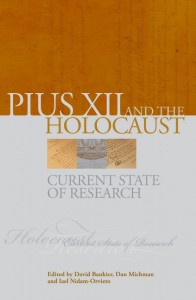 The workshop was a further attempt to mend frayed relations. Yad Vashem and the Reverend Roberto Spataro (acting “on behalf of the Nuncio”) each chose five scholars for the workshop. The latter: Andrea Tornielli, Matteo Napolitano, Grazia Loparco, Jean-Dominique Durand, and Thomas Brechenmacher; the former: Paul O’Shea, Michael Phayer, Susan Zuccotti, Sergio Minerbi, and Dina Porat. Summing up at the end, the Reverend Spataro commented: “we met in an atmosphere of confidence, trust and mutual respect.”
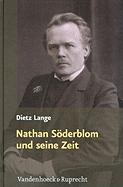 A new biography has recently been published in Germany of Nathan Söderblom, the most prominent Protestant church leader in the decade of the 1920s. The author, Dietz Lange, is the emeritus professor of Systematic Theology in Göttingen, and in this laudatory but leisurely account of Söderblom’s career, the emphasis is placed on the evolution of Söderblom’s intellectual ideas and his relations with other scholars and theologians of his time. Lange supplements but does not supplant the standard biography in English, written nearly half a century ago by Bengt Sundkler, which concentrated on Söderblom’s main claims to fame, his championships of the peace endeavours during the first world war, and his leadership of the ecumenical movement in the aftermath.
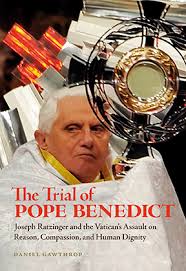 Writing with considerable journalistic flair, but of course without any Vatican official documentation, Gawthrop presents us with a highly critical account of Ratzinger’s career. To be sure, he allows that, during the Council’s sessions, Ratzinger, then a theological advisor to one of the German Cardinals, supported many of the reformist ideas. But only a few years later, while he was teaching at Germany’s most prestigious university of Tübingen, he was deeply offended by the virulent student radicalism embracing a “Marxist messianism”. As a result he turned away from his colleagues such as Hans Kung and other progressive theologians. Shortly afterwards he retreated to the rural backwater of Regensburg in his native Bavaria, and began to prepare his theological counter-offensive to Vatican II.
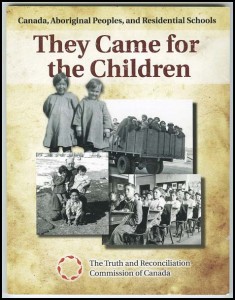 The book explains how the churches in Canada began their missionary work of converting Aboriginals to Christianity and to western cultural practices long before confederation. This foundation proved useful to Canadian government officials who found accord with the church leaders’ intent “to civilize and Christianize” Aboriginal children.
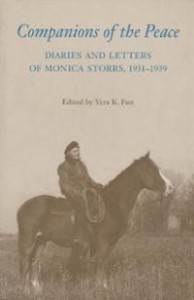 Monica was a cultured English gentlewoman who had volunteered in 1931 to come out to western Canada to help build up the Anglican Church amongst the isolated and often impoverished homesteaders of the Peace Dictrict. Luckily, at the end of 1938, Monica was taking a home leave, so she was able to meet the two German boys when they arrived in England on one of the “Kindertransporte” which rescued several thousand children in the few short months before the outbreak of war.
 The work is divided into four “complexes” which Linden has assigned to the years 1907-1910, 1920, 1926-1930 and 1933-1936 respectively. According to the author, these times saw greater changes in inter-pastoral relationships than did the political watersheds of 1914, 1918 and 1933. Linden explains the beginning of the time period considered by referring to comprehensive changes in the churchly life of Osnabrück, especially the increasing passivity of the laymen and therefore the increasing importance of the pastor in the parish. By contrast, why the time period ends in 1936 is not explained. According to the attached short biographies, there was no significant change to church staffing in that year with the exception of Rudolf Detering, who went to Goslar for a better position. However, Linden states at the end that the intensity of the relationships had decreased since 1935, with increasing isolation leading to fewer opportunities for networking or cooperation (p. 793).
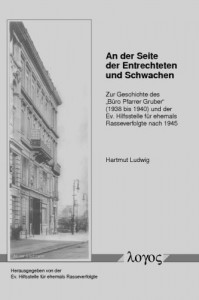 The record of the German Evangelical Churches, including the Confessing Church of Karl Barth and Dietrich Bonhoeffer, in failing to mobilize opposition to the Nazis’ violent attacks on the Jews is a shameful one. It has been excellently researched in the recent book by Robert Ericksen, Complicity in the Holocaust: Churches and Universities in Nazi Germany. In the post-1945 period, when the horrifying facts of the Holocaust were revealed, the Church was overwhelmed with a deep feeling of guilty shame. The subject was to be avoided. It took many years before the details emerged of one of the more significant, if belated, efforts in the Protestant ranks, namely the establishment in 1938 of an office to assist the persecuted Protestant victims of Nazi oppression. Hartmut Ludwig’s contribution in retelling the story of the “Büro Grüber” is therefore much to be welcomed.
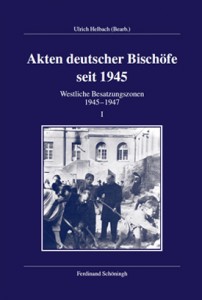 The research behind these editions is tremendous. These three tomes collectively occupy approximately 2400 pages and bring together nearly 725 documents from more than fifty archives, including more than 40 church archives in Germany, German state archives, private papers and two archives from the United States. Before making their final selections, the archivists and research teams assisting them had to wade through thousands of folders of documents and pre-select more than two thousand documents for possible inclusion. The documents themselves include correspondence and addresses not only in German but also in English, French and Latin, as the bishops were in regular correspondence with occupation officials from the Western Allies and the Vatican. Fortunately, the two editors, Dr. Ulrich Helbach, the director of the archive for the archdiocese of Cologne, and Dr. Annette Mertens of the Kommission für Zeitgeschichte, ensured that adept translations into German were provided for the foreign documents.
 Three essays from this collection that focus on the Catholic and Protestant churches in Europe and America will be of particular interest to CCHQ readers. In his essay, “The Western Allies, German Churches, and the Emerging Cold War in Germany, 1948-1952,” JonDavid Wyneken maintains that the political leaders in the US, Britain, the Soviet Union, and in East and West Germany paid close attention to the stance of German church leaders and at times shaped their policies with the churches in mind. At the end of WWII the German churches believed that they deserved a prominent role in postwar reconstruction and promoted themselves to the Allies as offering a faith-based alternative to the appeals of atheistic Communism. Although the Allies, especially the Americans, found this appealing, they refused to grant the churches the comprehensive role they desired and imposed harsh occupation and denazification programs in their zones of occupation. Church leaders voiced strong opposition to what they called “victors’ justice” and bemoaned that the Western Allies were just making Communism more appealing to a desperate and disgruntled population.
 Many of the authors offer inter-denominational (that is, Protestant and Catholic) comparison, with an emphasis on the rise and influence of mass media, and the nature of the discourse about the role of religion and spirituality in the daily lives of individuals, including its participants and changes over time. These reflect the ambitions of the larger Bochum project: to produce a detailed examination of the religious sphere and its gradual change over the years and decades since the last world war, and to evaluate the multiple influences of geography, gender dynamics, political contexts, economic realities, and the fluctuating strengths and weaknesses of ecclesiastical and non-ecclesiastical institutions. Above all, the project highlights the interdependence of the social and the cultural worlds, which are treated as concurrent, overlapping spheres rather than distinct entities. The processes and influences under consideration are situated in a six-point matrix that has a vertical dimension, divided into macro-, meso- and micro-levels, and two broad sociological dimensions, semantics and social structures (a helpful diagram is provided on 23).