Chapter Note: Karl Schwarz on Gerhard Kittel

Contemporary Church History Quarterly

Volume 27, Number 4 (December 2021)

Chapter Note: Karl Schwarz on Gerhard Kittel

By Robert P. Ericksen, Pacific Lutheran University (Emeritus)

“Sie haben [. . .] geholfen, den nationalistischen Einbruch in unsere Kirche abzuwehren.” Anmerkungen zu Gerhard Kittel und dessen Lehrtätigkeit in Wien

This chapter by Karl Schwarz appeared under the above title in Uta Heil and Annette Schellenberg, eds., Theologie als Streitkultur, Vienna University Press (as published by Vandenhoek & Ruprecht), 2021, 319-339. This volume also serves as the entirety of the Wiener Jahrbuch für Theologie, vol. 13, 2021, “Herausgegeben im Auftrag der Evangelisch-Theologischen Fakultät der Universität Wien.”

Karl Schwarz, author of this chapter, has spent his career as a member of the Protestant Theological Faculty at the University of Vienna, while also filling important administrative positions at the university in several stages of his career. In addition, he has been a long-time member of the multi-national editorial board at Kirchliche Zeitgeschichte, which is how I met him decades ago. In the early 1990s, Schwarz contributed a chapter on the Protestant Theological Faculty at Vienna in the important volume edited by Leonore Siegele-Wenschkewitz and Carsten Nicolaisen, Theologische Fakultäten im Nationalsozialismus, (Göttingen: Vandenhoek & Ruprecht, 1993).[1] In the chapter reviewed here, Schwarz revisits a portion of that topic, focusing on Gerhard Kittel and the years from 1939 to 1943. This was a time when Kittel, famous as the founding editor of the Theological Dictionary of the New Testament, took leave from his position at Tübingen, moved with his family to Vienna, and lectured as a visiting member of the Protestant Theological Faculty at the University of Vienna.

Schwarz touches upon several aspects of this Viennese moment in Kittel’s career. For example, the Protestant Theological Faculty at the University of Vienna, since 1938 within German borders, imagined that it might become an enlarged, more important institution as a “Borderland Faculty” (“Grenzlandfakultät”), reaching out to the “volksdeutsche Diaspora” in southeastern Europe.[2] Adding someone with the stature of Gerhard Kittel might have been useful, and both the Theological Faculty and Kittel seemed to have had this in mind. However, Schwarz then highlights another issue in this piece. That is the contrast found between one major portion of Kittel’s oeuvre, his very harsh work regarding Jews and Judaism, ongoing during those years in Vienna, and the glowing letters of support and admiration he received from Bishop Gerhard May and others during his postwar confrontation with denazification.

Schwarz’s chapter appears under a title that begins with this direct quote, taken from a letter Bishop Gerhard May of Vienna sent to Gerhard Kittel on 29.11.1946: “You have … helped protect us against a nationalistic attempt to take over our church.” Kittel then used this letter along with several others (e.g., from the theologian Hans von Campenhausen, postwar Rector at the University of Heidelberg) as character references appended to Kittel’s own Meine Verteidigung.[3] That latter document, sent to numerous friends and colleagues to convince them (and denazification authorities) of his innocence, followed eighteen months of postwar experience that suggested his guilt: his arrest by French occupation troops at the end of World War II, his removal from his professorship at Tübingen, his six months in prison, his eleven months of internment, and then his “sort of ‘Klosterhaft’” at Beuron, a form of ongoing confinement at a monastery near Tübingen.[4]

For purposes of Kittel’s denazification defense, Gerhard May’s letter could be understood as a “Persilschein,” the sort of postwar attestation named for a famous brand of German soap. These testimonies were given the nickname to identify their main goal: to wash clean a person’s Nazi past and get him or her past the denazification process. Despite the “Persilschein” term, with its satirical implications that we might be tempted to apply to Gerhard May’s letter, it is possible, of course that Bishop May had something important and appropriate to say in Kittel’s defense. He was Kittel’s bishop during those years from 1939-1943 when Kittel lectured at the University of Vienna and he and his family lived in Vienna. May in this letter made the claim for Kittel that he, as a professor of New Testament in the Theological Faculty at Vienna, worked hard to protect the Theological Faculty and the Protestant Church from the worst excesses of Nazi ideology and practice.

That claim provides the essence of the question that Karl Schwarz pursues. Were Bishop May and other important figures in the Protestant Church in Austria (an integral part of Nazi Germany from 1938 to 1945) accurate in their defense of Gerhard Kittel? Were they correct postwar in separating professors of theology from Nazis? Were real Christians not Nazis? Did May’s description of Kittel as a fellow Christian really establish him as one who stood up for his faith and for his co-believers against Nazi encroachment? (Among other things, Bishop May in his postwar remarks repeatedly referred to the Confessing Church, almost certainly exaggerating its level of support in Austria as well as its actual level of opposition to Hitler and National Socialism.) Kittel did in fact grow up in a pietist family and continued that tradition within his own family. He also taught the normal things for a Protestant professor of theology. In his four years at Vienna, he lectured on the synoptic Gospels, as well as on various books of the New Testament: Romans, Ephesians, Philemon, etc.[5]

However, Kittel also held a second position at Vienna, giving lectures in the Faculty of Philosophy. That is where he dealt most directly with his theories about Jews, Jewishness, and the role of Jews in history and in Germany. In particular, Kittel presented his own theory, identifying a dramatic change from traditional Jews in the Old Testament to the diaspora Jews of the modern world. This distinction about Jews allowed Kittel to accept the Old Testament and its place in the Christian Bible, when many “Deutsche Christen” wanted to exclude it. He thus stayed within the boundaries of normal Christian beliefs. It also allowed him to accept the career of his father, Rudolf Kittel, a famous professor of Old Testament and the translator of a modern version that became well known. Kittel justified his respect for Jews of the Old Testament by developing a theory that modern Jews had changed entirely during the diaspora. From about 500 BCE to 500 CE, he argued (in line with modern antisemitic prejudice), Jews lost their healthy roots in the soil of their homeland and their occupation as farmers. They then spread out in all directions, becoming the uprooted, money-oriented, disreputable, and noxious Jews of medieval and modern Europe.[6]

Kittel presented this idea in his keynote talk at the opening conference in November 1936 of the Nazi-oriented Reichsinstitut für Geschichte des neuen Deutschlands. It was here that Kittel described the alleged transformation from biblical Jews to modern Jews, how “the admirable Jews of the Old Testament degenerated into the loathsome Jews of the modern world.” This lecture, “Die Entstehung des Judentums und die Entstehung der Judenfrage” [“The Origin of Judaism and the Origin of the Jewish Question”], soon appeared in the first issue of Forschungen zur Judenfrage, the new journal of research on “the Jewish question” supported by the Reichsinstitut.[7] This journal published a total of seven annual volumes, with Kittel becoming the single most active contributor. It was the sort of work and alleged expertise that helped make him seem a suitable scholar also to work on the propaganda exhibition, “The Eternal Jew” in 1938 in Vienna, and “The Physical and Mental Appearance of the Jews” in 1939.[8]

Karl Schwarz considers two seemingly contradictory explanations for Kittel’s attitude toward Jews, either a Christian antijudaism with its 2000 years of history and its basis in religious belief, or a modern antisemitism with its more recent history, its racist underpinnings, and its significance within the now discredited Nazi Germany. The former could be the sort of distinction that might allow Bishop May—whether honestly or surreptitiously—to ignore the antisemitic side of Kittel’s academic work. Was Kittel simply a pious Christian, researching and writing a spiritual critique against Jews? That could be explained as part of a long Christian tradition, not least including a quite vicious version contributed by Martin Luther. From this point of view, Kittel was simply a professor of theology. Bishop May’s claim that Kittel had always tried to protect Christianity and the church, implied that he actually held an “anti-Nazi” stance. By this argument, it was only in his role in the Faculty of Philosophy–a role ignored by Bishop May–that he indulged in antisemitism, the sort of thing for which Nazis postwar were being condemned.

Throughout the balance of Schwarz’s chapter, he pursues the abundant evidence that Kittel both participated in and contributed to the racial antisemitism of the Nazi regime. I recently noted in a publication about Kittel, edited by Manfred Gailus and Clemens Vollnhals in 2020, that Gerhard Kittel returned to Vienna in the summer of 1944 for a guest lecture on “The Race Problem in Late Antiquity and Early Christianity” [“Das Rassenproblem der Spätantike und das Frühchristentum”] In that lecture he described “Christianity as a bulwark against the Jewish threat” [“das Christentum als Bollwerk gegen die jüdische Bedrohung;” which I then described as proof of his “complicity in the Nazi persecution of Jews” [“Mittäterschaft an der Judenverfolgung der Nazis”]. I was pleased to see that Karl Schwarz quoted those two passages and affirmed my conclusion.[9]

I believe that Kittel describing Adolf Hitler as late as 1944 as a “twin bulwark” alongside the Christian church, saving Christian Europe from the Jewish menace–indeed from the Enlightenment as a whole–tells us all we need to know about where Kittel’s allegiance can be found. Karl Schwarz seems to agree. Though the title of his chapter begins with Bishop May defending Gerhard Kittel as a good Christian and an important defender of Christian culture, Schwarz concludes,

The most recent publications, calling back to memory a scholar with a worldwide reputation, show how he allowed himself, pushed by the spirit of the times, to instrumentalize the antisemitic politics of National Socialist rule—and indeed, they show how the proclamation of antijudaism turned into a Christian antisemitism. Added to that, the years of his work in Vienna register clear signals that no character references from the side of the church could hide.[10]

[Die jüngsten Publikationen rufen einen Wissenschaftler von Weltruf in Erinnerung; sie zeigen, wie er sich vom Zeitgeist getrieben für die antisemitische Politik der nationalsozialistischen Machthaber instrumentalisieren liess—und wie in der Tat aus dem proklamierten Antijudaismus ein christlicher Antisemitismus geworden war. Dazu sind auch in den Jahren seines Wirkens in Wien deutliche Signale zu registrieren, über die auch die Leumundszeugnisse der Kirche nicht hinwegtäuschen können.]

This chapter by Schwarz is a very useful treatment of the four years in which Kittel was based at the University of Vienna and also a part of the Protestant church in that region. It is interesting. It is important. And, as Schwarz shows, it confirms that the broad and deep critique of Gerhard Kittel that has developed in the past four plus decades is accurate and justified.

Notes:

[1] Additional publications by Schwarz on the Protestant Theological Faculty at Vienna include “’Haus der Zeit.’ Die Fakultät in den Wirrnissen dieses Jahrhunderts,” in Karl Schwarz and Falk Wagner, eds, Zeitenwechsel und Beständigkeit: Beiträge zur Geschichte der Evangelisch-Theologischen Fakultät in Wien 1821-1996, Schriftenreihe des Universitätsarchiv 10, Vienna 1997, 125-204; Karl Schwarz, “Zwischen kulturpolitishen Kalkül und theologischem Interesse: Die Ehrenpromotion von Nichifor Crainic an der Universität Wien,” ZBalk 56 (2020), 69-85; and Karl Schwarz, “Bejahung—Ernüchterung—Verweigerung: Die Evangelische Kirche in Österreich und der Nationalsozialismus,” JGPrÖ 124/125 (2008/2009), 18-38.

[2] Schwarz, 324-327.

[3] For a recent treatment of Kittel’s defense statement, see Matthias Morgenstern and Alon Segev, Gerhard Kittels Verteidigung: Die Rechtfertigungsschrift eines Tübinger Theologen und “Judentumsforscher” vom Dezember 1946, Berlin 2019.

[4] Schwarz, 320. Kittel died in the summer of 1948 at the age of 59, without having been given permission to return to his home (much less his position) in Tübingen.

[5] Schwarz, 330.

[6] Loyal to Nazi norms, Kittel also emphasized in his Nazi publications that the “pure” racial identity of Old Testament Jews was destroyed by sexual mixing during the diaspora. Several of his contributions to Forschungen zur Judenfrage tried to identify and prove this proclivity, in line with bizarre Nazi ideas about the imagined racial purity of “Aryans,” and hence, the special danger of racially mixed (and even sexually predatory!) diaspora Jews. See my chapter on Kittel in Theologians under Hitler: Gerhard Kittel, Paul Althaus and Emanuel Hirsch (Yale University Press, 1985), especially 61-68. See also my first article on Kittel, “Theologian in the Third Reich: The Case of Gerhard Kittel,” Journal of Contemporary History, 12 (1977), 595-622.

[7] See Robert P Ericksen, “Schreiben und Sprechen über den ‘Fall Kittel’ nach 1945,” Manfred Gailus and Clemens Vollnhals, eds., Christlicher Antisemitismus im 20. Jahrhundert: Der Tübinger Theologe und “Judenforscher” Gerhard Kittel (Göttingen: Vandenhoek & Ruprecht, 2020). The actual quotation here comes from this chapter of mine, note 7, p. 33 in the Gailus and Vollnhals volume. This volume by Gailus and Vollnhals, based upon a conference on Kittel they convened in 2017, is a very important recent contribution on the “case” of Gerhard Kittel.

[8] Schwarz, 319.

[9] Schwarz, 333, and Ericksen, “Schreiben und Sprechen,” 27, note 7.

[10] Schwarz, 338.

 

Share

Webinar Note: Humanitarian Entanglements: A Report on Recent Research on Mennonite Central Committee, Mennonite Refugees, and the Legacies of National Socialism

Contemporary Church History Quarterly

Volume 27, Number 4 (December 2021)

Webinar Note: Humanitarian Entanglements: A Report on Recent Research on Mennonite Central Committee, Mennonite Refugees, and the Legacies of National Socialism, November 4, 2021

By Alain Epp Weaver, MCC

Since its inception in the second half of the nineteenth century, modern humanitarianism has operated within fields of power, with humanitarian actors seeking to carve out space to carry out their work in accordance with their principles such as impartiality and neutrality. Humanitarian practice has always run the danger of becoming entangled in different ways with government agendas and with the complicated histories of individuals and communities displaced by war that humanitarian agencies seek to assist. On November 4, 2021, a group of historians gathered at a virtual roundtable convened by the University of Winnipeg on the theme, “Mennonite Central Committee, Refugees, and the Legacies of National Socialism,” to discuss one example of such humanitarian entanglements before, during, and after the Second World War. The roundtable built on the fall 2021 issue of Intersections (a publication of Mennonite Central Committee, or MCC), that featured examinations by 12 historians from Canada, the United States, Paraguay, France, Germany, and the Netherlands of the complex ways in which MCC, as a Christian humanitarian agency, interacted and was bound up with Nazism and its legacy from the 1930s into the mid-1950s. Several articles featured in Intersections benefited from extensive consultation of MCC’s archives in Akron, Pennsylvania.

At the roundtable, four authors from the Intersections issue highlighted key findings from their research on MCC’s postwar resettlement efforts with displaced Mennonites, with Anna Holian, author of a landmark study of uprooted groups in Germany after WWII, offering a response.[1] This roundtable also drew on sustained scholarly attention from the past few years on transnational Mennonite intersections, entanglements, and even complicity with Nazism in the 1930s and 1940s.[2] This brief report highlights findings from both the November 4 roundtable and the fall 2021 issue of Intersections, outlining the various ways that MCC entanglements with Nazism were bound up with broader Mennonite entanglements with Nazism.

MCC’s entanglements with National Socialism emerged as a byproduct of the organization’s efforts to assist Mennonites seeking to leave the Soviet Union.[3] MCC was founded by Mennonite churches in the United States in 1920 to respond to the call of Mennonites in southern Russia (soon to become part of the Soviet Union) who, along with their neighbors, faced both war and a devastating famine. In the first half of the 1920s, MCC operated feeding and agricultural development programs in parts of southern Russia home to Mennonite communities. While MCC distributed humanitarian assistance, other actors, such as the Canadian Mennonite Board of Colonization (CMBC), worked to help Soviet Mennonites migrate to Canada, with Soviet officials sometimes suspecting MCC of supporting and encouraging such migration efforts.[4]

The conditions facing Soviet Mennonite communities progressively worsened in the 1920s, with the Soviet state dispossessing Mennonite landholders and imposing increasingly strict restrictions on religious expression. By 1929, the situation had worsened to the point that up to 15,000 German-speaking Soviet citizens (Mennonites, but also Catholic, Lutherans, and others) descended on Moscow to demand that they be allowed to migrate. This pressure eventually led to 4,000 Mennonites receiving permission to leave the Soviet Union for Germany—with financial loans from the German government (guaranteed by MCC), these Mennonites then migrated to Paraguay where, with MCC assistance, they established the Fernheim colony in the country’s Gran Chaco region.

MCC’s entanglements with National Socialism emerged from this period. Once the Nazis assumed power in Germany in 1933, MCC de facto became a debtor to the Nazi government. To help with negotiations with the German government to postpone payment on this debt, MCC relied on pro-Nazi Mennonites, including Benjamin Unruh (one of the Mennonites from Russia who had appealed to U.S. Mennonites for help in 1920 and who had ended up in Germany).[5]

Strongly anti-Communist, Unruh also dreamed of Mennonite settlement in eastern European lands to be conquered by the Nazis and helped nourish the hopes of some in the Mennonite Fernheim colony in Paraguay of a return to Europe following anticipated Nazi victories. MCC grew increasingly concerned throughout the 1930s and into the war years by the growing pro-Nazi feeling within this Paraguayan Mennonite colony it had helped to set up and continued to support. MCC sought to nurture commitment to the traditional Mennonite doctrine of nonresistance among Fernheim’s colonists, while also avoiding direct involvement in Fernheim’s governance. However, once the tension within Fernheim between the völkische (German nationalist) and wehrlose (unarmed, or nonresistant) factions erupted into violent conflict in 1944, MCC, under pressure from the U.S. government, in turn pushed colony leadership to expel the völkische leaders.[6]

Mennonites and other groups classified as German by the Soviet authorities faced sustained and harsh persecution under the Stalinist regime in the 1930s, including the deportation of half of the Mennonite population from what is now Ukraine to Siberia. The Nazi occupation of Soviet Ukraine in 1942 brought a reprieve for Mennonites and others identified as Volksdeutsche who were viewed favorably within the Nazi racialized hierarchy. During the Nazi occupation period, not only did Mennonites receive favored treatment, but some also actively implemented Nazi genocidal policies, including the massacre of Soviet Jews.[7]

As German forces retreated from the Soviet Union, many Soviet Mennonites fled with them. Nazi authorities settled some of these Mennonites in Germany and some in occupied Poland, depending on how ideologically trustworthy the Nazis viewed specific individuals. Mennonite men of eligible age served in German military units; some served in the Waffen-SS and in the paramilitary death squads of the Einsatzgruppen. These displaced Mennonites received houses and other goods stolen by Nazi authorities from Poles, Jews, and others. The vast majority of these displaced Mennonites accepted German citizenship.

After the Allied defeat of Nazi forces, these displaced Mennonites found themselves in a precarious situation, under threat during the first couple years after the war of deportation back to the Soviet Union. [And, in fact, around half of these displaced Mennonites were returned to the Soviet Union, where they faced a deeply precarious future.] Mennonite refugees seeking options within the emerging postwar international refugee system had multiple strikes against them—their acceptance of German citizenship, service in the German military, and the assessment by international refugee bodies that Mennonites had left the Soviet Union voluntarily.

Alongside broader postwar humanitarian efforts, including active participation in the joint efforts of the Council of Relief Agencies Licensed to Operate in Germany (CRALOG), MCC worked to assist displaced Soviet Mennonites (along with Mennonites from the Danzig/Vistula Delta region who had fled after the war) and to help them migrate to the Americas (especially Canada and Paraguay). To counter the strikes that displaced Mennonites had against them, MCC workers advanced different arguments in different contexts, making a variety of arguments regarding Mennonite “nationality” (e.g., that they were Dutch, or that Mennonites should be viewed as having their own nationality, similar to Jews), contending that Mennonites had been coerced into accepting German citizenship, and downplaying Mennonite participation in Nazi military bodies. When one argument failed, MCC staff advanced others in their sustained lobbying efforts for Mennonite refugees. Over the course of the decade following the war, MCC succeeded in resettling around 15,000 displaced European Mennonites in the Americas, including approximately 12,000 Mennonites from the Soviet Union.[8]

The University of Winnipeg’s November 2021 roundtable on “Mennonite Central Committee, Refugees, and the Legacies of National Socialism,” chaired by Ben Nobbs-Thiessen, the co-director of the university’s Centre for Transnational Mennonite Studies, examined this latter part of the story of MCC entanglements with Nazism, with four historians who contributed to the fall 2021 issue of Intersections briefly sharing key highlights from their research.

Benjamin W. Goossen, affiliated with Harvard University, initiated the roundtable with remarks underscoring the importance of contextualizing Mennonite and MCC entanglements with Nazism within broader and longer histories of Mennonite antisemitism. Goossen highlighted how antisemitic attitudes can be found in the writings of leading anti-Nazi Mennonites in the United States, Canada and Europe—not only among overtly pro-Nazi Mennonites. MCC’s postwar comparison of Mennonites to Jews, deployed as part of efforts to secure Mennonite migration, was, Goossen contended, disingenuous, covering over the complex, multifaceted ways that Soviet Mennonites had not only benefited from Nazism but had in different ways been actively complicit with it, including, in some cases, participation in the Holocaust. The postwar public narrative promulgated by MCC workers among Mennonite communities in Canada and the United States of the providential, Exodus-like rescue of a persecuted Mennonite community not only grossly simplified a much more complicated reality but also chilled Mennonite postwar grappling with legacies of antisemitism and investigation into Mennonite involvement in Nazism’s genocidal program.

Many MCC workers in postwar Europe expended considerable time and effort to convince groups such as the Intergovernmental Committee on Refugees (IGCR) and the International Refugee Organization (IRO) of Soviet Mennonite eligibility to migrate from Europe (and to receive international assistance to do so). In her presentation, Erika Weidemann of Texas A&M University traced how IGCR officials debated internally about Soviet Mennonite eligibility for Displaced Persons (DP) status and examined the evolving arguments MCC workers advanced to convince the IGCR and IRO of that eligibility. On the whole, Weidemann noted, these MCC efforts proved successful. International refugee bodies sought to articulate an unambiguous approach to Soviet Mennonite refugees, but in practice the approach was constantly shifting, with MCC adjusting to those shifts in its efforts to interpret Mennonites to international refugee agencies and to advocate for their favorable treatment.

Steve Schroeder of the University of the Fraser Valley focused his intervention on MCC’s assistance to uprooted Mennonites from the Danzig/Vistula Delta region. To help secure Mennonite emigration from Europe, Schroeder explained, MCC workers argued that Danziger Mennonites had an identity that transcended Germanness and portrayed these Mennonites as victims. In reality, Schroeder continued, these Mennonites had fully assimilated into German society decades before the war.[9] During the war, Danziger Mennonites voluntarily served in the army, some worked as concentration camp guards, and some used enslaved labor from concentration camps on their farms. Like Goossen, Schroeder underscored how MCC’s constructed narratives about displaced Danziger Mennonites contributed to and furthered a distorted narrative of European Mennonites having been removed from or above the fray of the war (or of having been victims of the war), a narrative that covered over the varied forms of Danziger (and broader European) Mennonite complicity with Nazism.

The final panelist, the University of Winnipeg’s Aileen Friesen, began by urging historians to recall the individual toll of the Holocaust, naming the individuals murdered by people carrying out Nazism’s genocidal program. On the Yad Vashem website, one can search the towns and villages in Ukraine once home to large Mennonite communities like Molochansk and find the names of Jewish people like Maria Sheffer and Mendel Ioffe who were murdered in the Holocaust. Friesen discussed how MCC’s postwar attempts to present Soviet Mennonites as having “Dutch” nationality was a reinvention of older arguments and discussion about where Mennonites fit into the emerging order of nation-states. Drawing from her Intersections article, Friesen suggested that the assessment of international refugee organizations after the war that Mennonites had left the Soviet Union “voluntarily” did not square with how the Mennonite refugees perceived their departure. Interpreting Soviet Mennonite actions during the Nazi war-time occupation and as German forces retreated cannot, Friesen stressed, be divorced from the backdrop of two decades of increasingly harsh persecution faced by Soviet Mennonites.

Building on her research in MCC’s archives, Friesen discussed how MCC workers providing humanitarian assistance to displaced Soviet Mennonites sought to make sense of those Mennonites as they learned about the ways those Mennonites had been entangled and had collaborated with Soviet authorities and then with the Nazi regime. Tensions among displaced Mennonites in MCC-operated camps in post-war Germany simmered and sometimes erupted with recriminations about different forms of collaboration. The response of MCC workers as they learned in piecemeal fashion of these Mennonite entanglements with both Soviet communism and Nazism was to “let it all go”—rather than seeking to establish a true account of what choices different individuals under MCC’s care had made during the war, MCC instead focused on constructing general accounts of Mennonite victimhood in efforts to secure Mennonite emigration from Erope. This hands-off MCC approach enabled someone like Heinrich Wiebe, who served as mayor of Zaporizhzhia during the German occupation, to present himself to MCC and CMBC as a pillar of the Mennonite community who had remained distant from Nazism, when in fact he had been involved in the ghettoization of the city’s Jewish population and the expropriation of their property and was active as mayor when the city’s security apparatus, which included Mennonites among its leaders, executed the city’s remaining Jews in 1942.

In her response to the panel, Anna Holian of Arizona State University placed MCC’s postwar refugee resettlement efforts within the broader context of the emerging international refugee regime in which “nationality” functioned as the key concept. Holian explained that in this postwar system, one’s “nationality” (understood in both political and cultural terms) determined where one supposedly belonged, even if that was not where one had previously lived or was where one wished to be. Mennonites were not the only group seeking to classify themselves as a distinct nationality as they sought favorable outcomes for themselves in this postwar system: Jews and Ukrainians also sought to disentangle themselves from other national identities.

Holian’s response and the discussion that followed pointed to questions for further research: How did MCC postwar work with displaced Mennonites change over time? How did MCC understand (or fail to understand) the Mennonites whom it sought to assist? Mennonites were not free of the varied forms of antisemitism that marked Christianity in Europe, the United States, and Canada—what role did that antisemitism play in MCC (and broader Mennonite) entanglements with Nazism? To what extent did MCC shape or dictate Mennonite refugee narratives about themselves and their war-time experiences—and to what extent were MCC narratives about these Mennonite refugees shaped by how the refugees narrated their experiences to MCC? The rich conversation at the November 2021 roundtable on these and other questions highlighted that much fertile scholarly ground remains to be explored regarding Mennonite and MCC entanglements with Nazism and its legacies before, during, and after the Second World War.

Alain Epp Weaver directs strategic planning for Mennonite Central Committee. He is the author of Service and the Ministry of Reconciliation: A Missiological History of Mennonite Central Committee, C.H. Wedel Series No. 21 (North Newton, KS: Bethel College, 2020).

Notes:

[1] Anna Holian, Between National Socialism and Soviet Communism: Displaced Persons in Postwar Germany (Ann Arbor, MI: University of Michigan Press, 2011).

[2][2] See especially Benjamin W. Goossen, Chosen Nation: Mennonites and Germany in a Global Era (Princeton: Princeton University Press, 2017) and Mark Jantzen and John D. Thiesen, eds., European Mennonites and the Holocaust (Toronto: University of Toronto Press, 2020).

[3] For an analytical overview of MCC entanglements with National Socialism, see Benjamin W. Goossen, “MCC and Nazsim, 1929-1955,” Intersections 9/4 (Fall 2021):

[4] Esther Epp-Tiessen, “MCC and Mennonite Emigration from the Soviet Union, 1920-1932,” Intersections 9/4 (Fall 2021): 13-17.

[5] Arnold Neufeldt-Fast, “Benjamin Unruh, Nazism, and MCC,” Intersections 9/4 (Fall 2021): 17-27.

[6] See John Eicher, Exiled among Nations: German and Mennonite Mythologies in a Transnational Age (Cambridge, UK: Cambridge University Press, 2019); Eicher, “MCC and Nazi Impressions of Paraguay’s Mennonite Colonies in the 1930s and 1940s,” Intersections 9/4 (Fall 2021): 27-32; John D. Thiesen, Mennonite and Nazi? Attitudes Among Mennonite Colonists in Latin America, 1933-1945 (Kitchener, ON: Pandora Press, 1999); Daniel Stahl, “How the Fernheimers Learned to Speak about the Nazi Era: The Long Historical Echo of a Conflict,” Mennonite Quarterly Review 92/2 (April 2018): 285-298; Stahl, “Paraguay’s Mennonites and the Struggle against Fascism: A Global Historical Approach to the Nazi Era,” Mennonite Quarterly Review 92/2 (April 2018): 273-284; and Stahl, “Between German Fascism and U.S. Imperialism: MCC and Paraguayan Mennonites of Fernheim during the Second World War,” Intersections 9/4 (Fall 2022): 32-35.

[7] See Martin Dean, “Soviet Ethnic Germans and the Holocaust in the Reich Holocaust in the Reich Commissariat Ukraine,” in The Shoah in Ukraine: History, Testimony, Memorialization, ed. Ray Brandon and Wendy Lower (Bloomington: Indiana University Press, 2010), 248–71 and Aileen Friesen, “A Portrait of Khortytsya/Zaporizhzhia under Occupation,” in European Mennonites and the Holocaust, ed. Mark Janzen and John D. Thiesen (Toronto: University of Toronto Press, 2020), 229–249.

[8] For examinations of MCC’s efforts to resettle displaced Mennonites after the Second World War, see Ted Regehr, “Of Dutch or German Ancestry? Mennonite Refugees, MCC, and the International Refugee Organization,” Journal of Mennonite Studies (1995): 7-25; Benjamin W. Goossen, “MCC and Nazism, 1929-1955,” Intersections 9/4 (Fall 2021): 3-12; Erika Weidemann, “Identity and Complicity: The Post-World War II Immigration of Chortitza Mennonites,” in European Mennonites and the Holocaust, ed. Mark Jantzen and John D. Thiesen (Toronto: University of Toronto Press, 2020), 269-289; Weidemann, “Facing the Future, Reinterpreting the Past: MCC’s Solutions for Successful Mennonite Immigration after the Second World War,” Intersections 9/4 (Fall 2021): 45-50; Aileen Friesen, “Defining the Deserving: MCC and Mennonite Refugees from the Soviet Union after World War II,” Intersections 9/4 (Fall 2021): 50-54; Steven Schroeder, “National Socialism and MCC’s Post-War Resettlement Work with Danziger Mennonites,” Intersections 9/4 (Fall 2021): 54-60; and John D. Thiesen, “John Kroeker and the Backstory to the ‘Berlin Exodus,’” Intersections 9/4 (Fall 2021): 40-45.

[9] See Mark Jantzen, Mennonite German Soldiers: Nation, Religion, and Family in the Prussian East, 1772–1880 (Notre Dame, IN: University of Notre Dame Press, 2010).

Share

Conference Report: “Let Us Solace Ourselves with Love:” Women, Religion, and Emotions in Modern Germany

Contemporary Church History Quarterly

Volume 27, Number 4 (December 2021)

Conference Report: “Let Us Solace Ourselves with Love:” Women, Religion, and Emotions in Modern Germany, German Studies Association Annual Conference, Indianapolis, IN and Virtual, September 30-October 3, 2021

By Martina Cucchiara, Bluffton University

Presenters of the virtual panel “’Let Us Solace Ourselves with Love:’ Women, Religion, and Emotions in Modern Germany” at this year’s German Studies Association used the lens of emotions to reconsider Jewish and Christian women’s increased participation in organized religion in nineteenth and twentieth-century Germany.  Questions about women’s progress and oppression in patriarchal religious institutions long have been at the fore of this scholarship, and pioneering historians like Gail Malmgreen posited early on that “what is clear is that the dealings of organized religion with women have been richly laced with ironies and contradictions.” The tension of women’s religious engagement as liberating or oppressive also was palpable in this panel but panelist explored this topic in new ways. Scholars traditionally have analyzed the intersections of women’s religious engagement and progress in modern Europe through the lenses of labor and education, which at times has failed to highlight the increasing importance of women’s religiosity in the modern nation state.  Addressing this lacuna in the scholarship is vital because women’s religious engagement in fact increased in the modern era. Drawing on methodologies from the history of emotions, the presenters illuminated this heretofore neglected aspects of women’s religiosity and practice in the modern era.

In her talk titled “Desperate Desires: Religious Feelings as Discipline and Exaltation in Notburga, a Nineteenth-Century Magazine for Catholic Maidservants,” Martina Cucchiara (Bluffton University) used the concept of “emotionology” developed by Peter Stearns and Carol Stearns in her analysis of this magazine, to highlight the strict religious-emotional standards set for these mostly poor and unmarried women whose purportedly wild emotions were seen as a threat to the stability and prosperity of the modernizing state. Much of Notburga indeed was devoted to the social control of poor women through the fostering the proper religious feelings in its female readership. At the same time, the magazine also succeeded in fostering positive feelings of piety, pride, hope, and belonging in a group of poor women whose already dire situation only worsened in modern Germany.  Thus, Notburga’s emotional script was not always oppressive, a point all panelists stressed in their presentations. In her talk “Love and Unity, Love and Opportunity: Rhetorical Uses of Love in Calls for Change by Catholic Women Leaders 1900-1914,” Lisa Fetheringill Zwicker (Indiana University South Bend) illuminated the important free spaces two Catholic women leaders, Isabella Baroness von Carnap and Barbara Klara Renz, carved out for themselves in the early twentieth-century Church in particular how they used love “as a way to make diverse claims for change within German society.” In particular, she highlighted the utilization of various approaches from the history of emotions in her work.

Doctoral student Nisrine Rahal from the University of Toronto explored how women within the dissenting Deutschkatholiken and the kindergarten movement in the nineteenth century “mobilized the ideal of love and feminine emotions as an act of protest and opposition to the patriarchal state and church.” Her talk was titled “The Deutschkatholiken and Love: A New Type of Womanly Emotion.”  The last presentation, “Between the ‘feminization of Judaism’ and the “New Woman:” German Jewish Women’s Religious Experiences, 1918-1968 by Christian Bailey (Purchase College/Suny) directed the audience’s attention to Jewish women intellectuals in twentieth-century Germany, asking “how these intellectuals’ new ways of living out their Judaism,” for instance by asserting their right to discuss Jewish scholarship in print, rather than merely expressing piety within private spaces, “affected the emotional scripts that applied to a new generation of Jewish women.” Due to time constraints, the speaker focused mainly on the Nazi era. He argued convincingly that whereas Jewish women were forced to once more practice their faith in private under Nazism, their continued exploration of their faith emboldened some survivors to take on prominent roles in postwar Germany.  Rebecca Bennette (Middlebury College) offered thoughtful commentary on the presentations, and the panel concluded with a brief but lively discussion.


Share

Conference Report: “Nazi Germany, International Protestantism, and the German Churches”

Contemporary Church History Quarterly

Volume 27, Number 4 (December 2021)

Conference Report: “Nazi Germany, International Protestantism, and the German Churches,” German Studies Association Annual Conference, Indianapolis, IN and virtual, October 1, 2021.

By Blake McKinney, Texas Baptist College

After a yearlong delay, five scholars of German and religious history virtually convened a panel entitled, “Nazi Germany, International Protestantism, and the German Churches” at the German Studies Association Annual Conference in Indianapolis, Indiana. This panel featured papers by Rebecca Carter-Chand (United States Holocaust Memorial Museum), Kyle Jantzen (Ambrose University), and Blake McKinney (Texas Baptist College). Maria Mitchell (Franklin & Marshall College) cheerfully served as moderator and Stewart Anderson (Brigham Young University) provided helpful commentary that flowed into a collegial conversation among the panelists and attendees.

Religion in the Third Reich remains a dynamic field. Long gone are the simple characterizations of godless National Socialists persecuting the good Christians of Germany. Over the past fifty years, historians of religion in the National Socialist era have added to a complex understanding of the social, political, theological, and ethno-national facets of Christian experiences in Germany. This panel represents the growing influence of transnational analysis in the robust field of religion in the Third Reich, especially in relation to German Protestantism. German Protestants simultaneously viewed themselves as members of the church universal and as Christian Germans. The panel papers considered the complex roles of transnational confessional identification, internationalism and ecumenicism, the interconnectedness of foreign and domestic concerns within National Socialist Germany, and eschatological interpretations of geo-political developments. The panel presented a multi-faceted approach to transnational analysis of religion in the Third Reich, examined often overlooked Christian groups within Germany and North America, and showed points of connection between German domestic church politics and Christian international relations.

Rebecca Carter-Chand opened the presentations with her paper, “Navigating International Relationships in Nazi Germany: Anglo-American Religious Communities in 1930s Germany.” This paper comes from her work in the forthcoming volume co-edited with Kevin Spicer entitled Religion, Ethnonationalism, and Antisemitism in the Era of the Two World Wars (McGill-Queen’s University Press, January 2022). In her paper, Carter-Chand offered a comparative examination of many small churches and religious communities in Germany with Anglo-American roots. She noted that relatively few of these groups were banned in the Nazi era, and she explored the challenges and opportunities presented to these groups by their marginal status in Germany and their international connections. She discussed how different groups approached the coordinating efforts of the early years of the Nazi regime, and how they negotiated their place in Germany. Furthermore, she explored different groups’ shifts in international relationships with their co-religionists in the pre-war years. Carter-Chand’s analysis of a broad collection of these groups (e.g., Adventists, Baptists, Quakers, Salvation Army, etc.) demonstrated “that many of these religious groups were not only allowed to continue operating in the Nazi period but also found their place in the Volksgemeinschaft and participated in various aspects of Nazi society.” Carter-Chand concluded that for many of these groups, “national, international, and religious identities were not mutually exclusive.”

Kyle Jantzen followed with his paper, “From Aryan Messiah to Jacob’s Trouble: Nazis and Jews in Fundamentalist Christian Eschatology.” This paper comes from Jantzen’s current book project considering the Christian and Missionary Alliance’s eschatological interpretations of National Socialist antisemitic policies. His paper drew on a rich (and previously untapped) source base. He analyzed the complex of attitudes, theologies, and convictions that shaped North American fundamentalist Christian perspective on Hitler, Nazism, Jewish persecution, and the Holocaust. Jantzen offered a helpful overview of premillennial dispensational eschatology, which he argued provided the key to understanding Christian and Missionary Alliance interpretations of National Socialism and its treatment of Jews. He contrasted the critiques of National Socialism by North American liberal Protestants based on humanitarian concerns and critiques by fundamentalist Protestants (represented by the Christian and Missionary Alliance) who interpreted Nazism eschatologically. Jantzen argued that the dispensationalist eschatology of Christian and Missionary Alliance writers served as a “social imaginary” both guiding and limiting interpretations of—and responses to—National Socialist actions against Jews. Jantzen concluded by arguing for the contextualization of Christian responses to Nazism and the Holocaust, stating that these responses must not be seen “as isolated sentiments but as facets of wider sets of beliefs and practices about Christians, Jews, world events, and eschatology.”

Blake McKinney finished the paper presentations with his, “Are There Free Churches in Germany? International Responses to German Protestantism and the Universal Council of Life and Work – Oxford 1937.” This paper originated from the final chapter of his dissertation, which examines the impact of international Protestantism on German Protestant church politics from 1933-1937. His paper concentrated on the Life and Work World Conference on Church, Community, and State held in Oxford July 1937 as a focal point of the intersection of German Protestant interactions with the Nazi state and world Protestantism. In the weeks immediately preceding the Oxford Conference, many Confessing Church leaders had their passports revoked or suffered arrest. The lone German representatives at the largest ecumenical gathering since 1925 were leaders of German Baptist, Methodist, and Old Catholic churches. McKinney argued that the events of the summer of 1937 demonstrated the completion of a transformation in the Nazi state’s policies towards German Protestant engagement with international ecumenicism. Whereas, in 1933-34 the Nazi state sought positive propaganda to international Protestant audiences, “by the summer of 1937 opposition to international Protestant interventions in German church politics paid richer dividends for German Protestants than ecumenical cooperation.”

Stewart Anderson provided commentary on the three papers and posed questions that invited the panelists to converse on the use of “Protestantism” to describe these varied movements, the transatlantic flow of information and news regarding German church events, and the relevance of these studies to historical scholarship beyond “Church History.” Anderson commended the panelists for exploring how various Protestant groups “in multiple geographic and cultural contexts had to come to terms with the implications of National Socialism’s triumph.” A fruitful discussion followed with expressions of eager anticipation for the publication of new works examining international aspects of the history of Christianity in Nazi Germany.

Share

Letter from the Editors (September 2021)

Contemporary Church History Quarterly

Volume 27, Number 3 (September 2021)

Letter from the Editors (September 2021)

By Kyle Jantzen, Ambrose University

Dear Friends,

In the midst of another busy beginning to the new academic year in many of our universities, the editors of Contemporary Church History Quarterly are pleased to present a new issue of book reviews and reports on the history of twentieth-century German and European Christianity and Christian churches. As is our usual practice, we examine a mix of Catholic and Protestant individuals and institutions.

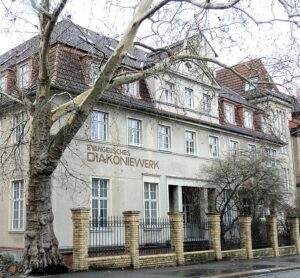
The Mutterhaus of the Halle Evangelisches Diakoniewerk, built in 1929. The Diakonie is the Germany’s Protestant social welfare agency. https://commons.wikimedia.org/wiki/File:HAL-Lafontainestr15-DiakonieMutterhaus.JPG#/media/Datei:HAL-Lafontainestr15-DiakonieMutterhaus.JPG

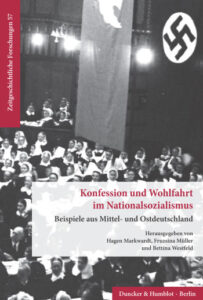
Leading off is Dirk Schuster’s review of Hagen Markwardt, Fruzsina Müller, Bettina Westfeld’s  study of Protestant church welfare institutions in central and eastern Germany during the Nazi era, Konfession und Wohlfahrt im Nationalsozialismus. It contains a series of case studies examining the ways in which Protestant social welfare institutions were caught up in the process of co-ordination to the National Socialist regime (Gleichschaltung), sometimes quite willingly.

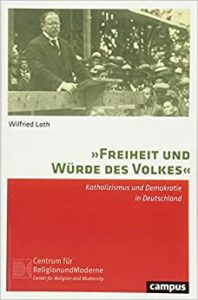
Martine Menke follows with a lengthy review of Wilfried Loth’s “Freiheit und Würde des Volkes”: Katholizismus und Demokratie in Deutschland, a collection of essays that probes “Catholics’ contributions to the development of democracy in Germany since the mid-nineteenth century.” As Menke points out, in the book Loth “argues that while the institutional Church opposed modernity until after World War II, lay Catholics, especially those organized in political parties, contributed significantly to the development of modern democracy in Germany.”

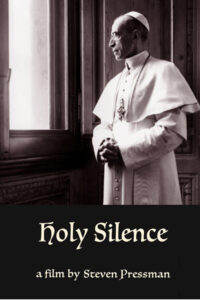
Rebecca Carter-Chand contributes two reviews of works which are out of the ordinary, in terms of the usual content of the journal. First she assesses a social scientific study of the rescue of Jews in the Low Countries, Robert Braun’s Protectors of Pluralism, noting that the author tests his “hypothesis that religious minorities are more likely to assist or rescue persecuted groups from mass violence or genocide” using a “detailed geocoding of Jewish evasion in the Netherlands and Belgium, combining spatial statistics, archival sources, contemporary newspapers and other published materials, and postwar testimony.” Next, Carter-Chand reviews Steve Pressman’s film, Holy Silence, which discusses the role of the Vatican at the time of the rise of Nazism and during the Holocaust. It draws on the expertise of various scholars, including members of the CCHQ editorial team. Carter-Chand sums up the film as “a balanced and accessible primer to audiences, both newcomers and those well-versed in this history.”

This issue of CCHQ also features reviews of three books that move from history towards popular writing: Beth A. Griech-Polelle enjoys Fergus Butler-Gallie’s Priests de la Resistance! The Loose Canons Who Fought Fascism in the Twentieth Century, finding hope in the stories of clergy who resisted Fascism and Nazism (and American racism too); Dirk Schuster ponders Carsten Linden and Craig Nessan’s short biography of Paul Leo, a Lutheran pastor persecuted under Nazi racial laws who found his way to a new life and ministry in the United States; and Andrew Chandler appreciates John A. Moses’ collection of essays on the state of Anglicanism in Australia, which pays homage to Dietrich Bonhoeffer, Hans Küng, Martin Luther, and John Henry Newman.

As for shorter notes, we have included just one shorter news item: an announcement for an upcoming webinar on the significance of the Vatican Archives of Pope Pius XII, scheduled for October 17.

Finally, we have made a correction to a conference report from our June issue, on the conference Martin Niemoeller and His International Reception.

On behalf of the editorial team, I wish you a pleasant and above all safe autumn season (in the northern hemisphere).

Kyle Jantzen, Ambrose University

Share

Review of Hagen Markwardt, Fruszina Müller and Bettina Westfeld, eds., Konfession und Wohlfahrt im Nationalsozialismus. Beispiele aus Mittel- und Ostdeutschland

Contemporary Church History Quarterly

Volume 27, Number 3 (September 2021)

Review of Hagen Markwardt, Fruszina Müller and Bettina Westfeld, eds., Konfession und Wohlfahrt im Nationalsozialismus: Beispiele aus Mittel- und Ostdeutschland (Berlin: Duncker & Humblot, 2021). 372 pages. ISBN 978-3-428-15753-2.

By Dirk Schuster, University of Vienna / Danube University Krems

Denomination and welfare under National Socialism – a topic that at first glance is not directly related to the National Socialist mass crimes. However, right at the beginning of their introduction, the editors help the reader understand the importance of welfare in the Third Reich. During the nineteenth century, there was a massive expansion of charitable institutions in Germany. With the seizure of power by the National Socialists in January 1933, a new understanding of the tasks of a health policy would develop based on the party ideology, which was fundamentally opposed to the previous ideas. Accordingly, the institutions owned by religious associations were faced with the crucial question of how to deal with the reorientation of health policy from 1933 onwards.

The focus on the regions of Central and Eastern Germany is a response to the current dearth of research on that region. Because denominational institutions were relatively autonomous at that time, such a regional delimitation makes perfect sense. Due to the denominational character of the region, then, most of the contributions deal with institutions and actors from the Protestant (evangelisch) spectrum, which is understandable. This will allow comparisons to be drawn between the various actors and institutions in different regions of Germany at a later point in time. It is regrettable that the editors did not succeed in soliciting contributions on the Thuringian region. They have focused on Silesia, however, which has also been rarely examined by research so far. A positive point to be emphasized here is the approach of the editors, acknowledging that the “relationship between the Christian-denominational institutions and the Nazi rule [are] not to [be understood] from the outset as dichotomous” (p. 11). Even if this approach should be a matter of course from this reviewer’s point of view, recent works show again and again that an ideological opposition between Christians and National Socialists is frequently assumed from the outset. Therefore, as self-evident as it may be, the editors’ basic attitude as it is formulated and implemented in the book is to be appreciated.
In the first, very well-structured article, Norbert Friedrich examines the developments within the Kaiserwerther Verband (KWV) in the ‘Third Reich.’ The KWV was the umbrella organization of the German deaconess mother houses. The head of the KVW is at the center of Friedrich’s examination. The KWV, to which around 30,000 deaconesses were subordinate in 1936, quickly introduced self-enforced conformity with National Socialist policies in 1933 without government coercion. In the same year, the national-conservative and anti-democratic executive committee accordingly abolished the democratic structures remaining from the times of the Weimar Republic, which were not popular anyway. By the end of March 1933, antisemitic propaganda from the National Socialists was also being echoed by the KWV. During the same year, the leadership of the association also clearly positioned itself in favor of German Christian Movement, which illustrates anti-democratic and antisemitic thinking. Due to the increasingly strong position of the Thuringian German Christians, the association distanced itself from the German-Christian spectrum from 1934 onwards, but this should not obscure its support for the Hitler state. Even if the state increasingly tried to restrict the deaconry in its actions, the KVW remained an important point of contact over the years.

In his contribution, Uwe Kaminsky analyzes the Expert Committee for Eugenics of the Inner Mission (“Fachausschuss für Eugenik der Inneren Mission”), which was founded in 1931. He concentrates on the Saxon representatives of the committee – those tasked by the regional church to discuss eugenics and euthanasia. That discourse was not without consequences, as Kaminsky rightly states, in reference to the approximately 25,000 Saxon victims of eugenics policies during the period from 1933 onwards. In the essay, Kaminsky presents biographical analyses of the individual Saxon representatives and concludes that many who had previously advocated voluntary sterilization went on to support the compulsory sterilization enforced by the National Socialists in 1933. Nevertheless, even though they agreed to the plans of the new authorities for mass sterilization, the representatives rejected euthanasia.

The Regional Association of Saxony of the Inner Mission is the focus of Bettina Westfeld’s contribution. Particularly shocking is the fact that in 1931 three of five clergymen in this regional association were members of the NSDAP. It is therefore not surprising that, immediately after Hitler came to power, the Inner Mission made declarations of loyalty to the new regime throughout Germany. Even before 1933, there was an endorsement of sterilization measures in the Regional Association of Saxony, citing as the reason for such measures the cost of care for mentally and physically handicapped people. In the years that followed, the Regional Association found itself in a field of tension within the divided Saxon regional church, which certainly did not make it easier for them to act. Westfeld’s contribution is shocking in some places, as she repeatedly refers to the number of victims and the individual fates of victims of the Nazi terror. She also addresses the attempt by individual deaconesses to hide patients to prevent them from being transported to killing centers like Pirna-Sonnenstein. However, these were individual actions and not measures by the regional church and the Inner Mission, which were hardly able to act anyway. The positive attitude towards sterilization measures also weakened the arguments of the Inner Mission to act against further measures aimed at “racial hygiene.” In the end, there was the terrifying number of 432 deaths from the homes of the Inner Mission, as well as a still unknown number of deaths of people over whom the Inner Mission held guardianship.

Christoph Hanzig examines another important aspect of this history, namely, that most of the facilities for the care of handicapped people in Saxony were not church-owned, but state-sponsored. Accordingly, Hanzig offers biographical information about the Protestant pastors in those state care facilities, in which pastors functioned as state officials. None of the pastors portrayed in detail belonged to a democratic party before 1933, but some were members of the NSDAP. So, it is hardly surprising that from 1933 almost all those pastors were actively involved in the Nazi state, supporting Nazi health policy.

The six contributions by Jan Brademann, Annett Büttner, Fruzsina Müller, Helmut Bräutigam, Manja Krausche and Elena Marie Elisabeth Kiesel all deal with empirical studies on one or more deaconess houses in Saxony or Saxony-Anhalt. For example, Kiesel examines the internal correspondence between headmasters and the sisterhood, using the case of the houses in Halberstadt, Magdeburg, and Halle/S and focusing on the “Schwesternbriefe” as a primary source. These were private in nature, which is why they offer an exclusive insight into the actual correspondence between the various staffing levels. As can be seen in the other contributions, the superiors of the houses examined by Kiesel also endorsed the appointment of Hitler as Reich Chancellor and called on the sisterhood to participate in “building up the Volksgemeinschaft.” Despite the increasing pressure from the National Socialist People’s Welfare (NSV), loyalty to the state was never in question. In 1940, an antisemitic appeal was issued to fight the Jews on the home front as well. The persecution of the Jews and the practice of euthanasia were almost never mentioned. Only in 1943 does a change in the content of the letters become visible, in which the previously loyal position to the regime was given up in favor of a stronger orientation toward peace.

Maik Schmerbauch provides a study on nursing and welfare for the poor in Breslau, while Jürgen Nitsche and Hagen Markwardt examine Jewish care facilities. Nitsche’s contribution illustrates the pressure that Jewish communities faced beginning in 1933. Increasingly deprived of infrastructure and government grants, they had to try on their own to organize care for older and handicapped community members. Accordingly, the Jewish community in Chemnitz, which serves as an empirical example, was forced to build a rest home.

Even though the regional focus is on Saxony and Saxony-Anhalt, the knowledge gained through the anthology is expansive. The respective contributions impress with their empirical depth, so that the reader gets an insight into the connection between welfare and church denomination during the time of National Socialism, from the level of regional associations down to the very local level. However, the anthology deserves a summarizing conclusion. The individual contributions are highly informative and contain many new findings. A summary by the editors would have made it possible to systematically analyze the empirical contributions again, articulate special features and point out new research perspectives. Unfortunately, the editors missed this opportunity to broaden the perspective. Nevertheless, the anthology generates a multitude of new findings regarding the role of welfare institutions under religious sponsorship during the period of the ‘Third Reich.’

Share

Review of Wilfried Loth. “Freiheit und Würde des Volkes:” Katholizismus und Demokratie in Deutschland

Contemporary Church History Quarterly

Volume 27, Number 3 (September 2021)

Review of Wilfried Loth, “Freiheit und Würde des Volkes:” Katholizismus und Demokratie in Deutschland, Religion und Moderne, Vol. 13 (Frankfurt am Main: Campus Verlag, 2018). ISBN 978-3-593-50838-2.

By Martin R. Menke, Rivier University

Wilfried Loth is a well-known German historian. In addition to research on nineteenth-century German Catholicism, he has also published on the early Cold War, on the history of France, and on European unification. In this collection of fourteen previously published essays, Loth analyzes Catholics’ contributions to the development of democracy in Germany since the mid-nineteenth century. Loth offers a nuanced analysis based on an impressive command of the scholarly literature and archival sources. He argues that while the institutional Church opposed modernity until after World War II, lay Catholics, especially those organized in political parties, contributed significantly to the development of modern democracy in Germany.

Loth argues that much relevant scholarship has rested on Rainer Lepsius’ theory of a closed Catholic milieu, largely dominated by ultramontane clergy.[1] According to Loth, instead of a stereotype of German Catholicism dominated by clergy and uniform in thought and practice, German Catholics learned early that defending modern goals such as the constitutional order, a responsible ministry, and the defense of civil rights was the best way to defend Catholic faith and values against in a secularized world. Loth’s analysis represents a strain of scholarship dating back to Margaret Lavinia Anderson’s Practicing Democracy: Elections and Culture in Imperial Germany and including Margaret Stieg Dalton’s Catholicism, Popular Culture and the Arts in Germany, 1880-1933, as well as Mark Edward Ruff’s The Wayward Flock: Catholic Youth in Postwar West Germany, 1945-1965, and others. [2]
One might question why a collection of Loth’s articles, which are generally well known, is needed. In the introduction, Loth warns that, “a quarter century after the collapse of the Soviet bloc, western pluralism, parliamentary democracy, and European unification suddenly no longer belong to the secure elements of the social order in Germany and Europe.”(9) Loth blames this decline on the alienation of social elites, middle strata and lower classes. He claims that reviewing the contribution of German Catholics to the country’s democratization might be useful to the development of a vigilant and self-asserting democracy, which the national Catholic convention of 2018 demanded. Keeping this admonition in mind lends the essay additional coherence.

In the first essay, Loth reviews the ultramontane attitude of the nineteenth-century Catholic hierarchy. Rather than considering Leo XIII, author of rerum novarum, as a modernizer, Loth reminds the reader that the church rejected all Catholic organizations beyond the control of the hierarchy, which impeded the social integration of Catholics. By the early twentieth century, however, German Catholics desired full integration into the majority society. To this end, the Center Party, the Volksverein, and the Görresgesellschaft were founded to further the Catholic laity’s political interests free of the hierarchy, to educate the lower classes, and to create a forum for Catholic scholars and intellectuals.  Loth argues in his second essay that Bismarck’s Kulturkampf did more for Catholic unity than the ultramontane faction could ever have done.

In the third chapter, Loth convinces the reader that assumptions about a coherent and homogeneous Catholic milieu are erroneous. This is both Loth’s most important and most controversial contribution to scholarship, first made in his Habilitationsschrift of 1984. He describes a Catholic bourgeoisie bent on emancipation in the Reich, populist tendencies among peasants and freeholders, as well as among the petit bourgeoisie, and finally, a Catholic labor movement. In this essay in particular, Loth offers such a nuanced and differentiating analysis to prove generalizations about “the” Catholic milieu become impossible. Rather, it is resistance against discrimination that brings Catholics together in support of the Center Party as the broadest Catholic organization.

In the fourth essay, Loth addresses the milieu thesis more directly, again with notable differentiation. He distinguishes between frequenting the sacraments and the liturgies on the one hand and living a life of Catholic daily practices and habits. What milieu may have formed would arise regionally to defend against discrimination. After 1945, the milieu disappeared completely. Loth concludes, “Political Catholicism and Catholic milieu constituted transitional phenomena. If these were created to resist modernity, Catholics instead ended up helping shape modernity.”(107)

In the following essay on the priest Georg Friedrich Dasbach, as in the essays on the resister Nikolaus Groß and on the Center Party’s colonial politics, Loth inserts case studies to illustrate his broader arguments. Father Dasbach established a publishing enterprise in which he supported small freeholders.  His calls for reform led to a Prussian state repression against him. Dasbach’s engagement for small freeholders, vintners, and the miners of the Saar brought him the disapproval of Catholic notables. Against the wishes of the Center Party leadership, the voters returned him to the Reichstag with 92 percent of the vote. This man’s fight against both state repression and the Catholic elites demonstrates the impossibility of a homogeneous Catholic milieu.

In the sixth essay, Loth describes the work of late nineteenth-century Catholic social thinkers such as Georg Hertling, Father August Pieper of the Volksverein, and the future Reich labor minister, Father Heinrich Braun, who openly rejected ultramontane attitudes and demanded Catholic teaching be rendered effective in laws to protect workers and their families. Loth further discussed the Volksverein in a separate chapter. He explains its transitional character to facilitate the entry of Catholic workers into the broader trade union movement. It began as an organization to protect Catholic workers from socialist temptations, then briefly became the voice of Catholic labor as a whole. After World War One, however, Catholic workers no longer needed the Volksverein as interdenominational Catholic unions now provided an attractive venue for the political and social formation of workers. Analyzing Catholic unions more specifically in a separate essay, Loth explains the eventual victory of Catholic workers over the ultramontane pressures of the hierarchy.  Despite near-condemnation from Rome, the Christian unions prevailed and thrived until 1933.

The ninth essay is probably the least satisfactory, largely because it addresses too great a time span. Loth addressed the development of political Catholicism from the Wilhelmine empire to the end of Weimar. Of the thirty pages of the essay, only five are devoted to the Weimar period before 1930. Loth concisely summarizes the Center Party’s struggles against the ultramontane hierarchy, against increasingly marginalized Catholic notables and nobles, and against the distrust of the Reich’s leadership. Loth convincingly argues that the Center drove towards the establishment of responsible government in a parliamentary democracy even before 1914. He cites the Center’s role in colonial politics, in the military budget. While in 1912, Matthias Erzberger, one of the Center’s young hotheads, openly demanded parliamentary democracy, the Center’s leaders avoided risking an open break with the government. Soon, however, the party’s labor wing demanded more radical measures to protect its interests, which amounted to reforms limiting the power of the dynasty, the nobility, and other elites. In this chapter, Loth argued the Center Party downplayed its demands for parliamentary government in 1918 due to the rapidly evolving constitutional crisis. One might argue, however, that by late summer, the Center’s role in the mixed committee of political parties (the Interfraktionelle Ausschuß) in the Reichstag amounted to the that of a party with governing responsibility, especially in uncovering the navy’s falsification of data claiming great achievements in submarine warfare and then, after August 1918, exercising de facto legislative and increasingly executive power. Also, describing the 1920’s, Loth exaggerates the degree to which the Center Party leadership adopted utopian notions of organic corporatism and revived medieval Reich. In fact, the Center focused primarily on quotidian demands and needs until 1933, perhaps too much so. Loth further argues that Heinrich Brüning, the last Center Party chancellor, actively sought to exclude the SPD from government, which is questionable. Loth agrees with Larry Eugene Jones and others that German parliamentary democracy ended in 1930, not later.

The essay on colonial politics is oddly placed between the essay on the role of the Catholic Center Party before 1930 and the chapter on 1933. Loth claims that Catholic support for colonial expansion reflected the end of Catholic rejection of capitalism.  Furthermore, Loth argues that Catholics supported colonialism to demonstrate loyalty to the Reich’s leadership and as a means to exploit its crucial role in the Reichstag. Colonial politics, however, alienated small freeholders and workers from the Center. The burden of naval armaments and the fear of social decline led many Catholics to reject Germany’s drive for global influence.

In a crucial chapter on the rise of National Socialism, Loth adopts the arguments generally accepted today. Neither the Church nor the party chairman, Monsignor Ludwig Kaas, sacrificed the party for the concordat. Loth does argue, however, that while Kaas and the hierarchy did not stab the party in the back, they did not explore possible alternatives to supporting the Enabling Act or negotiating the Concordat.

In an essay on the Catholic resistance to the National Socialist regime, Loth largely summarizes well-known scholarship about the internal divisions in the German hierarchy. He criticizes the Church for not doing more to mobilize German Catholics against the regime. Here again, Loth adds an essay illustrating his point. This time, he focuses on the Christian union official Nikolaus Groß. Groß opposed the regime and eventually collaborated with members of the Abwehr in the planning of the July 20, 1944 attempt on Hitler’s life, for which Groß paid with his life.

In a last essay, published in 2012, Loth summarizes the argument made in this volume. He emphasizes the ambiguity between the anti-modern ultramontane positions of much of nineteenth century Catholic leaders on the one hand and the development of lay Catholic movements and initiatives on the other. The latter, Loth argues, stemmed from the laity, not the hierarchy, with the intention both of securing Catholic rights in a modern secular world but increasingly also to shape the values and policies of that world. German Catholicism became an advocate for workers, for Poles, Alsatians, for peasants and small freeholders. The Kulturkampf resulted in German Catholics’ advocacy of the civic rights and equality for all Germans, which led the Center Party to the defense of parliamentary democracy in the Wilhelmine period and to participation in many Reich cabinets of the Weimar Republic. Resistance to National Socialism led Catholics to prize cooperation of all democratic forces, regardless of religious identity. After 1945 all over Europe, Catholics actively participated in Christian Democratic parties, which in turn contributed much to the development of post-war democracy. Loth concludes, “In the long run, the ideas of solidarity and subsidiarity in contemporary debates about the future of the social welfare state in continental Europe can be considered a legacy of Catholic experience.” Loth hopes this experience and these principles will contribute to remedies for the weakening of state instruments across Europe.

While in a collection of essays representing the span of Loth’s career one cannot expect new archival discoveries or interventions in contemporary scholarly debates, this volume nonetheless serves useful ends. Loth reminds the reader of the milieu-debate, still smoldering among scholars of German Catholicism. By his argument against a homogeneous, national, and persistent milieu, Loth gives one the impression that those who insist on the existence of a milieu might be those who wish to simplify German Catholicism in order to offer over-generalized critiques.[3] Loth himself, however, limits his argument against the existence of a milieu by referring to regional milieux created against outside pressures. Kicking off this debate, by his own admission unintentionally might be Loth’s greatest scholarly legacy. Loth also argued that the Center’s contribution specifically and German Catholicism generally to the parliamentarization and thus to the democratization of Germany is one of its most unrecognized merits. In this volume, now published three years, ago, Loth reminds Germans how dear the price paid for the establishment of parliamentary democracy and the firm commitment to civil rights has been. To support his warning about the endangerment of parliamentary democracy in the early twenty-first century, Loth’s work analyzes the historical example of the alienation between Catholic nobles, notables, and middle class from Catholic workers and small freeholders, which eventually contributed to the collapse of Germany’s first attempt at parliamentary democracy. It might be beneficial for colleagues teaching German history and the history of Christianity in history to integrate his analysis into their lectures.

Notes:

[1] M. Rainer Lepsius, “Parteiensystem und Sozialstruktur. Zum Problem der Demokratisierung der deutschen Gesellschaft” in Wilhelm Abel et al., eds. Wirtschaft, Gesellschaft und Wirtschaftsgeschichte: Festschrift zum 65. Geburtstag von Friedrich Lütge (Stuttgart: G. Fischer, 1966).

[2] Margaret Lavinia Anderson, Practicing Democracy: Elections and Political Culture in Imperial Germany (Princeton: Princeton University Press, 2000), Margaret Stieg Dalton, Catholicism, Popular Culture and the Arts in Germany, 1880-1933 (South Bend: University of Notre Dame Press, 2005), and Mark Edward Ruff, The Wayward Flock: Catholic Youth in Postwar West Germany, 1945-1965 (University of North Carolina Press, 2005).

[3] Loth includes Olaf Blaschke among those whose use of the milieu concept is problematic.  See Olaf Blasche, Frank-Michael Kuhlemann, eds. Religion im Kaiserreich: Milieus, Mentalitäten, Krisen (Gütersloh: Gütersloher Verlagshaus, 2000).

Share

Review of Holy Silence (directed and produced by Steven Pressman, 2020)

Contemporary Church History Quarterly

Volume 27, Number 3 (September 2021)

Review of Holy Silence, directed and produced by Steven Pressman (Seventh Art, 2020)

Rebecca Carter-Chand, United States Holocaust Memorial Museum*

* The views expressed are those of the author and do not represent those of the United States Holocaust Memorial Museum.

Filmmaker Steven Pressman often tells the story of the moment he heard Pope Francis’ announcement in March 2019 that Vatican archival materials related to the pontificate of Pius XII (1939-1958) would soon be made available to researchers for the first time. At the time, Pressman was in the editing stage for his new film, Holy Silence, which offers a fresh take on the longstanding questions about the role of the Vatican during the rise of Nazism and the Holocaust. Pressman has said that although he was initially concerned that the opening of the archives would eclipse his film and render it outdated before it was even released, he soon realized that the timing was fortuitous. With more than 16 million pages spread across several archives in Vatican City and Rome, historians will be filling in missing puzzle pieces and bringing nuance to polarized debates for years to come. COVID-related delays have extended these timelines even further. In this context, Holy Silence offers a balanced and accessible primer to audiences, both newcomers and those well-versed in this history.

The film features several academics familiar to CCHQ readers, including members of the editorial team Kevin Spicer and Suzanne Brown-Fleming. Interviews with Robert Ventresca, Susan Zuccotti, Michael Phayer, Maria Mazzenga, and many others are interspersed with historic footage, and occasional re-enactment to explore the actions of popes Pius XI and XII and some of the innerworkings of the Vatican. Pressman offers a range of voices, including a few outliers like Norbert Hofmann, Secretary of the Holy See’s Commission for Jewish Relations, who views Pius XII in a sympathetic light. We also hear contrasting viewpoints from Sister Maria Pascalizi of the Roman Convent of Santa Maria dei Sette Dolori and Micaela Pavoncello, a local Jew, about the Vatican’s role in sanctioning or encouraging the hiding of Jews in churches.
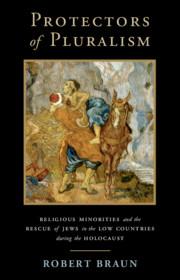
The film is centered on the Vatican, but it employs a distinctly American lens, featuring several American individuals who intersected with this history. The contribution of American Jesuit priest John LaFarge and the so-called “hidden encyclical” drafted in 1938 is explored in detail. Unfortunately, the film does not mention the pre-Vatican II supersessionist and anti-Judaic themes of Humani generis unitas (“The Unity of the Human Race”). Instead, it focuses on LaFarge’s formative experiences ministering in African-American communities, highlighting the transatlantic context in which some people were formulating their critiques of racism in the 1930s and 40s.

Holy Silence concludes with the end of World War II and does not address the postwar entanglements of the Vatican with Nazis fleeing Europe; doing so would require a much longer film than the current 55 minutes. Like any good documentary film, it presents a narrative but asks more questions than it answers. As the debates around the role of the Catholic church and Pope Pius XII in the Holocaust receive new breath due to the opening of the archives, this film provides an entry point for productive discussion about the role of religious leaders, the relationship between large religious institutions and governments, and local dynamics between religious majorities and minorities.

Holy Silence is available to stream through PBS and Amazon Prime. Recordings of multiple panel discussions about the film co-sponsored by the United States Holocaust Memorial Museum are available on YouTube.


Share

Review of Robert Braun, Protectors of Pluralism: Religious Minorities and the Rescue of Jews in the Low Countries during the Holocaust

Contemporary Church History Quarterly

Volume 27, Number 3 (September 2021)

Review of Robert Braun, Protectors of Pluralism: Religious Minorities and the Rescue of Jews in the Low Countries during the Holocaust (Cambridge: Cambridge University Press, 2019).

By Rebecca Carter-Chand, United States Holocaust Memorial Museum*

* The views expressed are those of the author and do not represent those of the United States Holocaust Memorial Museum.

Social scientist Robert Braun has made an important contribution to the study of rescue during the Holocaust, up-ending much of the conventional wisdom and modes of analysis about rescue and rescuers. Braun argues that most studies of rescue are insufficient because they focus too much on motivation, overlook the rescuers’ capacity to effectively carry out the rescue, and do not account for regional variation. This book addresses all three of these factors. Braun is especially skeptical of religious teachings as primary motivating factors, illustrated by a compelling opening anecdote about two Dutch towns in the region of Twente with similar sociocultural profiles but very different responses to the deportation of Jews in 1941. In Almelo many Jews were able to evade deportation with the help of the local Catholic church and 42% of the town’s Jews survived the war. In the nearby town of Borne, the local Catholic churches did not engage in rescue efforts and only 22% of the town’s Jews escaped deportation. Catholic theology and social teaching cannot account for this variation, nor can political or wartime circumstances. Herein lies the guiding question of this study: why are some religious communities willing and able to protect victims of mass persecution and others are not?

Because this is a work of social science, it employs a methodology very different from how historians approach research and thus warrants some explanation. Braun begins with a hypothesis that religious minorities are more likely to assist or rescue persecuted groups from mass violence or genocide. In this framing, religious minorities could hold minority status on a national level because of their small size (e.g., Quakers) or they could be a minority in a given region—Catholics in a majority Protestant region and vice versa. This minority theory is based on the idea that religious minorities recognize a shared vulnerability with other minorities, which triggers empathy. Braun posits that all religious communities seek security and self-preservation. When they cannot achieve this through religious dominance, then pluralism is the next safest option to ensure survival. So, a commitment to pluralism accounts for the willingness factor but minority status also enables capacity. Minority communities are able to engage in clandestine collective action while reducing exposure because of their members’ commitment and their relative isolation (more on isolation below). (40)
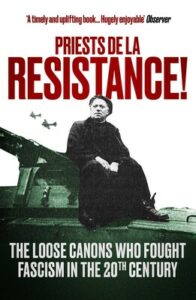
Braun proceeds to test this hypothesis through detailed geocoding of Jewish evasion in the Netherlands and Belgium, combining spatial statistics, archival sources, contemporary newspapers and other published materials, and postwar testimony, including materials from Yad Vashem’s Righteous Among the Nations program. Numerous graphs, charts, and maps are included throughout these chapters, as well as an insert of ten colour figures. The maps help to explain the story yet the technical presentation of the data makes these chapters largely inaccessible to those not familiar with social scientific methodologies.

Compelling as it is, the limitations of Braun’s thesis are just as important to understand as the argument itself and the data that supports it. There are a number of significant qualifications, the most important being that it is not just minority status that motivates and enables rescue but a certain level of isolation. (112) To illustrate this point, Braun offers the case of a Catholic chaplain in a majority Catholic area of Belgium who carried out a successful rescue operation because he used farmers in remote locations to hide Jews. The farmers were not socially isolated but rather geographically isolated. (170-171) Another crucial factor to consider is that Jews were more likely to survive when their individual networks overlapped with those of isolated minority groups—when doctors and patients and business owners and business patrons interacted on regular basis.

The book’s concluding chapter considers the applicability of the minority theory in other countries during the Holocaust. Here we see that the seemingly straightforward thesis posited in the book comes with some significant exceptions and qualifications. In order for Braun’s theory to work, the rescue must be collective and clandestine. He outlines three exceptions that suggest why we do not necessarily find religious minorities rescuing Jews to the same extent in other settings during the Holocaust and other modern genocides. Religious minorities may not engage in higher levels of successful rescue where: 1) majority elites, both secular and religious, openly object to persecution and cooperate to stymie the persecution; 2) the rescue is highly individualized and does not require coordination, as in Poland; and 3) the minority groups are closely aligned with the repressive apparatus undertaking the violence. (236) This third point is paramount to understanding the actions of religious minorities in Nazi Germany, where most Christian minorities responded to their perceived vulnerable status by aligning themselves with the Nazi state rather than responding with empathy for other persecuted minorities. Yet the book’s thesis may shed light on German religious minorities if we consider how the Volksgemeinschaft offered belonging and affirmation for previously marginalized groups in German society, thus eclipsing the recognition of shared vulnerability and the promotion of pluralism.

As the author points out, studying clandestine behaviour is hard. (116) Due to the extensive documentation available for the Netherlands, this book is able to compare situations on a granular level and isolate individual factors. Although its applicability may not be as broad as the author explores, he has offered a sophisticated methodology and way of thinking about rescue that moves far beyond religious motivation.

Share

Review of Fergus Butler-Gallie, Priests de la Resistance! The Loose Canons Who Fought Fascism in the Twentieth Century

Contemporary Church History Quarterly

Volume 27, Number 3 (September 2021)

Review of Fergus Butler-Gallie, Priests de la Resistance! The Loose Canons Who Fought Fascism in the Twentieth Century (London: Oneworld Publications, 2020). 273 pages. ISBN: 9781786078308.

By Beth A. Griech-Polelle, Pacific Lutheran University

As one might see immediately from the title of the above-named work, the Reverend Butler-Gallie is quite clever and creative in wordplay. This is one of the most engaging books written as inspiration for those who have come to believe that Christianity was more than a willing tool of fascist regimes and genocidal projects in the twentieth century. In fact, in the brief introduction to the book, the author notes that Christianity and Fascism have been intertwined and that the complex relationship of Christian institutions with Fascist dictatorships has spawned an enormous number of works. This work is not attempting to delve deeply into the interplay of Christian Church leadership with the monumental devastation produced by fascist projects. Instead, this work serves as an attempt to underscore the rare and therefore more extraordinary acts of Christian men and women who decided that their commitment to the teachings of Christ and their understanding of Christian teaching meant that they had no other choice but to resist destructive fascist actions and the harmful ideology behind them.

The book is divided into five sections, beginning in occupied France, with stories of “resistance par excellence” focusing on the lives of Canon Felix Kir (of blanc de cassis aka “Kir” fame) and Abbe Pierre (born Henri Marie Joseph Groues). Both of these individuals engaged in acts of sabotage, rescue work (especially of persecuted Jews), and generally served as thorns in the sides of the Nazis and their French collaborators.
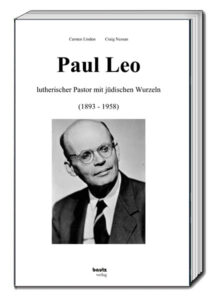
The next section focuses on places where resistance to fascism meant going against one’s own people and one’s own government: Germany and Italy. Here readers encounter a Catholic bishop, Clemens August Graf von Galen; a Protestant minister, Dietrich Bonhoeffer; and finally a Catholic priest, Don Pietro Pappagallo, who engaged in forging new identities for the persecuted in and around Rome. This inspiring story of Don Pietro Pappagallo then leads into the longest section of the book; an examination of Christians resisting while living under occupying powers. This section brings in Czechs, Hungarians, Greeks, Poles, Dutch, and Danes. Some survived their acts of resistance, while others, such as Sister Sara Salkahazi, a former chain-smoking journalist turned nun, did not.

Finally, the two remaining sections of the book focus on two individuals who left the relative safety of Ireland and Scotland, Father Hugh O’Flaherty of Scarlet Pimpernel fame and the much lesser-known but no less inspiring Jane Haining, who traveled to Hungary to help orphaned girls and who died along with her charges in a gas chamber in Auschwitz. The final segment focuses on Pastor Fred Shuttlesworth, who fought for integration in the deep South of the United States, and on a young seminarian from New England, Jonathan Daniels, who took a bullet intended for a young black girl attempting to attend an all-white school. This final segment on civil rights in the United States seems a bit out of sync with the rest of the work. That said, one can see the overlap in racist ideology and understand why the author decided to include these accounts in a work on resistance.

As one can see from this brief overview, the book aims to cover a great deal of ground, using individual life stories as lessons for the reader. Are saints mad? Are they fools? Are martyrs always brave in the face of life-threatening circumstances? And so on. These vignettes are also meant to inspire the reader with a sense that, even in the darkest of times, there are always good, brave people who decide that they would rather give their lives in the name of their principles and beliefs than conform to whatever the majority in society is doing at the time.

The Reverend Fergus Butler-Gallie’s writing style makes for a rollicking read, and, despite the fact that I disagree with his interpretation of my scholarship on Bishop von Galen, I found the work to be one that I did not want to put down. There is much energy, plenty of puns, and some non-scholarly vocabulary in the work (such as saying Father Kir’s actions indicated his “sheer ballsiness,” p.14) yet this type of non-scholarly language is what makes the book so engaging. It breaks through the clutter of stale academic prose, it captures the reader’s imagination with wonderful turns of phrasing, and it radiates some of the energy that this cast of characters must have needed to draw upon in order to maintain their faith and values in the face of death.

I am certain that scholars who have spent years researching each one of these individuals might find errors or misinterpretations of the subjects’ lives, yet, in spite of that fact, many readers might then be led to follow up on the suggested readings at the very end of the book to investigate each person whose bravery and dedication to God reverberates throughout the work. If one takes the book on its face – that is, that it is meant to serve as a source of inspiration and hope for readers of all faiths much like reading a Lives of the Saints collection, I would recommend reading the book. In a time when a person’s decisions could have life-saving or life-threatening consequences, the individuals featured by Rev. Butler-Gallie reveal the power that deep faith in God can serve as a continued source of strength for us all.

Share

Review of Carsten Linden and Craig Nessan, Paul Leo. Lutherischer Pastor mit jüdischen Wurzeln (1893–1958)

Contemporary Church History Quarterly

Volume 27, Number 3 (September 2021)

Review of Carsten Linden and Craig Nessan, Paul Leo. Lutherischer Pastor mit jüdischen Wurzeln (1893–1958) (Nordhausen: Traugott Bautz, 2019). 86 pages. ISBN 978-3-95948-453-4.

By Dirk Schuster, University of Vienna / Danube University Krems

Historian Carsten Linden and Craig Nessan, Professor of Contextual Theology at Wartburg Theological Seminary in Dubuque, Iowa, present the life and work of the Lutheran Evangelical pastor and theologian Paul Leo (1893–1958) in 86 pages. Linden wrote the first part, Nessan the second. Unfortunately, the two parts are not well coordinated, so that there are repetitions in places. The relevance of examining the life of Paul Leo and paying tribute to him with this booklet lies in his family of origin. One of his ancestors was Moses Mendelsohn. Still, like his father, Paul Leo was a baptized Christian. At this point, a great nuisance begins: Carsten Linden writes about Paul Leo, who was baptized in infancy: “The extent to which he was Jewish, however, seems to be a little in the eye of the beholder” (p. 7). Linden is right in referring to interpretations of Jewish theology stating that the descendants of a Jewish mother are Jews. The annoyance, however, is that the author assumes Leo could possibly have a Jewish identity, just as the National Socialists did. For them, the Protestant pastor was a Jew because of his ancestors. Why Linden does not simply accept Leo’s religious self-image as a Protestant Christian at this point, instead of relying on external attributions, remains unclear.

Based on extensive archival source material, Linden describes Paul Leo’s early professional career. When the National Socialists came to power, Leo faced increasing difficulties due to his Jewish ancestors. Why Linden then adopts the racial biological interpretations of the National Socialists in this regard and describes Paul Leo as the “Jewish pastor of the regional church” (p. 19) is disturbing, however. Unfortunately, Linden also makes significant mistakes in terms of content: The Confessing Church did not form due to alleged state and National Socialist (where should a dividing line be drawn here?) interventions in church affairs (p. 18). This apologetic church historiography of the 1950s has been refuted many times in recent years, which should be taken into account when dealing with such a topic.
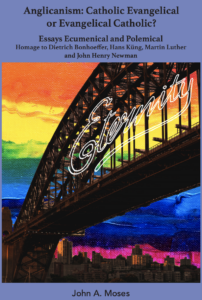
Since Paul Leo was mainly responsible for pastoral care in state institutions, he successively lost all of his responsibilities, as a result of which the church council assigned him the Osnabrück district of Haste for pastoral care. But even there, Paul Leo was increasingly hindered in his work because he was considered a Jew in the National Socialist understanding. The church council therefore decided to suggest ‘temporary retirement’ to Leo in mid-1938. On November 9, 1938, Paul Leo shared the same fate as thousands of Jews throughout the ‘Third Reich’: the SS arrested him and deported him to the Buchenwald concentration camp. Since Paul Leo received a visa for the Netherlands, he was released from the concentration camp at the end of 1938. However, he never spoke about his experiences there. In the Netherlands, he also had to live separated from his daughter (the mother had died during childbirth), which, in addition to the loss of his homeland, was certainly another inhuman burden. From the Netherlands, Leo then came to the USA in 1939, where he held various positions as pastor and theologian until his sudden death in 1958. Craig Nessan describes this second phase of life in Leo’s new home in America. It becomes clear how difficult life could be for exiles in the first few years.

The brief account of the life and work of Paul Leo is a classic descriptive biographical treatise. It conveys very well the depressing circumstances under which people had to live who did not belong to the ideal of the National Socialist ‘Volksgemeinschaft.’ And as a pastor, Leo received no significant protection from the regional church. From the point of view of the reviewer, the description of Leo’s first years in the USA is particularly impressive. Despite his successful escape from Nazi Germany, which ensured Leo’s and his daughter’s survival, the first few years were a struggle for survival in a completely different society. The Lutheran theologian Paul Leo had to work in his early years as a teacher in a Presbyterian church in Pittsburgh, which ensured his and his family’s financial survival.

Embedding the descriptions within the overall context of the ‘Third Reich’ with the help of current research literature would certainly have done the book some good, ­even more so a final editing. The many grammatical errors are unworthy of an appreciation of Paul Leo’s life.

Share

Review of John A. Moses, Anglicanism: Catholic Evangelical or Evangelical Catholic? Essays Ecumenical and Polemical. A Homage to Dietrich Bonhoeffer, Hans Küng, Martin Luther and John Henry Newman

Contemporary Church History Quarterly

Volume 27, Number 3 (September 2021)

Review of John A. Moses, Anglicanism: Catholic Evangelical or Evangelical Catholic? Essays Ecumenical and Polemical. A Homage to Dietrich Bonhoeffer, Hans Küng, Martin Luther and John Henry Newman (Adelaide: ATF Press, 2019), pp.xxxiii + 155.

By Andrew Chandler, University of Chichester

John Moses is a distinguished scholar of German history, not least admired for his standard two-volume study of German trades unions from Bismarck to Hitler, published in 1982, and, more recently, his book The Reluctant Revolutionary: Dietrich Bonhoeffer’s Collision with Prusso-German History (2009). He is also an Anglican priest, and of a kind that is getting harder to find these days. This collection of recent essays finds him entering with gusto into contemporary church debates and bringing with him a good deal of his academic experience and weight. In many respects it is tempting to sense that as a historian and as an Anglican Moses has much in common with John Conway, the founding father of this journal. But here Moses has to confront a number of distinctive giants at large in the landscapes of Australian Anglicanism. In particular, there is the question of the Diocese of Sydney.

In his foreword to the book, Mark Lindsay welcomes Moses warmly into the realm of contemporary theological angst, affirming the proper place of a historian in all such things. This may seem all too obvious, but then the authority of the historical craft, and of historical knowledge altogether, has for some years now become increasingly obscure to those who oversee the life and work of most of our Protestant churches. When a moment of vital significance turns up historians are seldom to be found in the counsels of authority. If anything, they are likely to be deliberately excluded from them, though they might now and then be recruited to write introductory paragraphs. Evidently, we are all expected to return to a vigorous state of primitive Christianity as though nothing of significance has occurred across the intervening centuries. But there may be other reasons to maintain this state of ignorance. The historian of the modern church is not quite a tame creature. The churches prefer a show of loyalty, while those in charge of them care not at all to be criticised. Historians tend to do this rather freely, particularly when provoked. The historian of the Reformation may unhelpfully point out doctrinal contradictions or emphasize acts of violence. The historian of secularization will certainly prove to be bad for morale. As for the historians of the Third Reich, it is much safer to leave them in their university departments than to invite them to observe patterns and parallels. And why should there be any, after all?
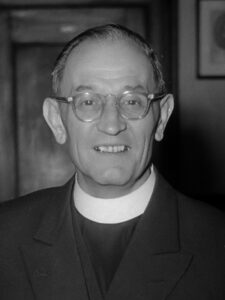
John Moses has certainly not been tamed; nor has he submitted to obscurity or been shunted unprotestingly into the pleasant groves of academe, much as he may enjoy being there. He acknowledges, generously, the influence of those who have taught him across a long and busy life. In this book he is wonderfully adamant that he has a voice for the contemporary Church and that he is, if quite necessary, prepared to raise it. He, like many other unhappy observers, observes that Anglican Sydney is a diocese ‘captured’ by a narrow, rigid – indeed, ideologized – conservative evangelicalism. Moses himself has inevitably been a casualty of this obscurantism. But he has not fallen silent, not least because he has too confident, and too profound, a sense of the traditions in which he has been nurtured. All of the lectures and essays in this volume present these qualities vividly and they make it a book well worth reading.

There are seven chapters – lectures and articles for various audiences – and an Epilogue. There are also appendices, chosen with intent (one is ‘John Henry Newman’s definition of a Gentleman’). It is important to acknowledge that while Moses is clearly eager to set about his principal adversaries, the primary purpose at work is both generous and constructive. He is devoted to pursuing a picture of what Anglicanism can still seek to offer the whole Christian Church, in ecumenical vision and in liberal, reconciling gifts. One essay is ‘The case for a renewed Anglicanism’, and another, ‘The Chaos of Anglicanism: Towards unravelling the Paradox’. There follows an attractive portrait of Father Peter Bennie, a scholar-priest who comes to embody many of the virtues to which Moses is drawn. ‘The real antithesis of the Catholic Church, warns Bennie, ‘is the sect, and sectarianism ever stunts the spirit, binds the mind, and inhibits the imagination.’ (p. 107.)

One of the most attractive qualities of the book is the freedom with which Moses writes of his own life and experiences, and of the many people he has known. This reveals a truth which he plainly acknowledges: that often what divides opinionated people is their formation and education and – above all – their ongoing patterns of reading. As a schoolboy in the far North of Queensland he was impressed by Dr Wilhelm Lorenz Rechnitz, a German Jew who had become an Anglican and was now to be found teaching Latin in St Francis College. (‘The Church of England’, Rechnitz warned the young Moses, ‘is a good thing in bad hands.’) He also encountered the priests of the Brotherhood of St Barnabas, ‘a remarkable group of young men, almost exclusively “Oxbridge” educated priests’, while the bishop, John Oliver Feetham, was a figure formed very much on the same lines.  As a student at the University of Queensland his eyes were opened still wider and then followed the almost-miracle of a period of post-graduate study in Germany. Here, in Munich, Moses was taught by Franz Schnabel, ‘a liberal-minded Roman Catholic scholar of immense erudition and humanity’, (p. 3) who had resisted National Socialism. A spell at the University of Erlangen followed under the benign tutelage of Waldemar Besson, Karl-Heinz Ruffmann and Walther-Peter Fuchs.

After all of this the young John Moses was hardly likely to spend the rest of his days poring over the works of James Innell Packer. Yet, as an honorary assistant curate in a Brisbane suburb for seventeen years, he would have to find a way of collaborating with a rector who had done exactly that – while the rector, for his part, found that he had to cope with his highly educated, internationally-minded curate. Significantly, it was not here that Moses the priest came unstuck, but later, in the diocese of Armidale, where he found he was required to affirm explicitly the inerrancy of the Bible, to repudiate the ordination of women and to disavow the toleration of homosexuals. ‘In an open society such as exists in Australia’, he reflects, ‘one does not expect to encounter people, let alone those calling themselves Anglican, who exhibit a mindset reminiscent of doctrinaire Nazis or Communists.’ (p. 12) Stinging words, no doubt, but words that he is well qualified to justify.

Moses can certainly take comfort in the company of giants from diverse traditions: the writings of Martin Luther, Dietrich Bonhoeffer, Hans Küng and John Henry Newman suffuse the book. For him the conspicuous quality of Anglicanism lies not in the brittle rigidities of denominational existence, still less in acts of intellectual iconoclasm and ‘doctrinal terrorism’ (p. 10), but in the promise of a richly creative ecumenical vision. It is still his church and he will not abandon it. In part this is because he has found too much to love and admire in it, not that there is much sentimentality here. In one essay he observes its various tribes with a caustic eye (indeed, his description of ‘Old-fashioned “Spikes”’ is hilarious). For Moses himself the Christian faith remains unique in offering to the world a radical social ethic, expressive of love, humility, tolerance and understanding – all qualities which might never have found a home there without it. In their strenuous assertions, impositions and proscriptions the fundamentalists of Australian Anglicanism have sought to bury what is essentially true, vital and enduring in it. In this sense the book is a protest, and perhaps a warning. But it is certainly not a work of lamentation, for the general character of it remains perseveringly faithful. It would be a pity to leave it in Australia, not least because we have all come to know, in one way or another, the issues of which it speaks. Moreover, few scholars of history have stepped out of their lecture rooms to deplore, declaim and insist as bravely and cogently as this fine scholar of modern Germany.


Share

Webinar Announcement: The Holocaust-Era Archives of Pope Pius XII: The State of the Question

Contemporary Church History Quarterly

Volume 27, Number 3 (September 2021)

Webinar Announcement: The Holocaust-Era Archives of Pope Pius XII: The State of the Question

The Center for Christian-Jewish Learning at Boston College, the International Institute for Holocaust Research at Yad Vashem, and the United States Holocaust Memorial Museum’s Programs on Ethics, Religion, and the Holocaust are co-presenting a webinar entitled “The Holocaust-Era Archives of Pope Pius XII: The State of the Question.”

This event will take place on October 17, 2021, from 2:00-3:30 EDT (19;00-20:30 UTC).

The webinar will consider the significance of the archives and of the scholarship on this topic for Jewish-Christian relations. Speakers include Drs. Suzanne Brown-Fleming, David Kertzer, and Robert Ventresca.

On its website, the USHMM states, “For decades, the USHMM and many others have called for the opening of the wartime Vatican archives—16 million pages that could shed light on the actions of Pope Pius XII and his fellow church leaders as millions of Jews and other victims were being murdered across Europe. At last, in 2019, Pope Francis announced they would open in 2020, stating ‘The Church is not afraid of history.'”

For more information, and to register, visit https://www.ushmm.org/online-calendar/event/mchvearchvs1021.


Share

Letter from the Editors (June 2021)

Contemporary Church History Quarterly

Volume 27, Number 2 (June 2021)

Letter from the Editors (June 2021)

By Kyle Jantzen, Ambrose University

Dear Friends,

Once again, the editors of Contemporary Church History Quarterly are pleased to present a new issue of book reviews and reports pertaining to the history of twentieth-century German and European Christianity and Christian churches. In this issue, we consider a mix of Catholic and Protestant individuals and institutions.

Martin Niemöller in 1952. By J.D. Noske / Anefo – Nationaal Archief, CC0, https://commons.wikimedia.org/w/index.php?curid=28946076.

Kevin Spicer reviews Jonathan Huener’s “definitive study of the Catholic Church in western Poland under German occupation.” Noting that scholars have long considered “the Warthegau as a blueprint of the Nazi state’s plans of actions for the future of all churches in Germany,” Spicer explains how “Huener situates his analysis of the church’s plight in the Warthegau clearly in the Nazi state’s Kirchenpolitik and Volkstumskampf or ethno-racial struggle.” Still, Spicer concludes (quoting the author) that the Polish church “survived more than five years of Nazi occupation and emerged in 1945 as an institution with significant moral capital.”

Christopher Probst examines Manfred Gailus and Clemens Vollnhals’ edited volume on the famous Tübingen New Testament scholar Gerhard Kittel, who is “as well-known for his anti-Judaic and antisemitic rhetoric in Die Judenfrage (The Jewish Question; 1933) as he is for being the editor until 1945 of the influential Theologisches Wörterbuch zum Neuen Testament (Theological Dictionary of the New Testament).” Topics include the legacy of Kittel in Tübingen; German Protestant reactions to 1933 and the rise of the Nazis; Kittel’s background, education, and early career; Kittel’s works on Jews and Judaism during the Third Reich; the relationship between Judaism and Christianity in German scholarship; the connection between Kittel’s students and the Eisenach Institute for Research into and Elimination of Jewish Influence in German Church Life; Kittel’s international reception; and Kittel’s My Defense (1946).

Beth Griech-Polelle reviews Traude Litzka’s book, The Church’s Help for Persecuted Jews in Nazi Vienna, in which the author examines the work of Father Ludger Born, head of the Aid Office for Non-Aryan Catholics, an agency supported by Cardinal Theodor Innitzer, Archbishop of Vienna. Born and his staff (largely women, some of them “non-Aryan” Catholics themselves) worked to help converted Jews navigate the bureaucracy of emigration. Over time, Born and his colleagues worried less about the nature of conversion, baptizing Jews in large numbers, in order to help them emigrate. After the war made emigration impossible, the Aid Office turned into a social welfare agency, procuring food, clothes, and other supplies for its clients. As Griech-Polelle concludes, Litzka “is to be commended for attempting to uncover the untold stories of assistance given in Vienna by religious men and women.”

Robert Ericksen introduces us to Ian Harker’s short work, Pearls before Swine: The Extraordinary Story of The Reverend Ernst Biberstein, Lutheran Pastor and Murder Squad Commander. Biberstein was tried and convicted at Nuremberg for his role as a commander of a mobile killing unit which murdered 2,000 to 3,000 Jews. But before he became a Holocaust perpetrator, Biberstein had been a Lutheran pastor near Hamburg. Harker outlines Biberstein’s entrance into the Nazi movement and career path that took him into the Sicherheitsdeinst (Security Service, or SD) of the SS, where he worked for Reinhard Heydrich in Berlin, then in Upper Silesia and Ukraine, where he was part of the Einsatzgruppen (mobile killing units). As Ericksen concludes, “The life of Ernst Biberstein reflects a number of important issues involving Christians in Nazi Germany, from the level of their actual enthusiasm for and participation in the regime to the postwar difficulties—persisting for at least a generation—in coming to grips with the realities of that past.”

Doris Bergen examines Alexander Reynolds’ account, To War Without Arms: The Journal of Reverend Alexander Reynolds, May – November 1944: The D-Day Diary of an Army Chaplain, edited by Simon Trew. Bergen offers high praise for this work, noting its relevance for the study of “World War II, the Normandy campaign, military chaplains, or contemporary church history.” Reynolds provides the context for Normandy invasion, the role of British Army chaplains, and the harrowing experience of D-Day. Chaplains played a significant role under British General Bernard Law Montgomery, who, editor Simon Trew writes, “appears to have believed quite sincerely that religious faith provided the underpinnings for success in battle.”

Three fascinating reports round out this issue of CCHQ. Suzanne Brown-Fleming highlights a webinar on the opening of the Pius XII archives and Holocaust research. Björn Krondorfer reports on a webinar comparing various historic and contemporary expressions of Christian nationalism. And Michael Heymel offers a detailed review of a recent German conference on Martin Niemöller and his international reception.

This issue of Contemporary Church History Quarterly also brings with it significant changes to our editorial team. After many years of service, Doris Bergen (University of Toronto) and Heath Spencer (Seattle University) are resigning as editors. Their careful reviews and dedicated support for the work of the journal will be missed, though we hope that they will continue to write for the journal occasionally. In particular, Doris played a key role in the early days of the journal, when several of us decided to reimagine John Conway’s monthly newsletter into an open-source online journal. Doris and Heath, many thanks for your fine work over the years. We will miss you!

In the March issue, we put out a call for new editors and were delighted by the strong interest from a good number of fine scholars. Recently, the editorial team decided to bring five new editors on board: Dr. Benedikt Brunner, Leibniz-Institut für Europäische Geschichte, Germany; Dr. Björn Krondorfer, Northern Arizona University, United States; Dr. Martin Menke, Rivier University, United States; Dr. Dirk Schuster, Universität Potsdam, Germany; and Dr. Sarah Thieme, Westfälische Wilhelms-Universität Münster, Germany. You can find out more about them and their work on the journal’s About page. We appreciate their excitement about the journal and look forward to their regular contributions over the coming years.

And to you, our readers, we offer our thanks for your ongoing interest in the journal.

On behalf of the editorial team,

Kyle Jantzen, Ambrose University


Share

Review of Jonathan Huener, The Polish Catholic Church under German Occupation. The Reichsgau Wartheland 1939-1945

Contemporary Church History Quarterly

Volume 27, Number 2 (June 2021)

Review of Jonathan Huener, The Polish Catholic Church under German Occupation. The Reichsgau Wartheland 1939-1945 (Bloomington, IN: Indiana University Press, 2021). 353 pages. Cloth $90.00, ISBN: 978-025305402-9; Paperback $42.00, ISBN: 978-025305404-3; Ebook $41.99 ISBN: 978-025305406-7.

By Kevin P. Spicer, C.S.C., Stonehill College

Jonathan Huener, professor of history at the University of Vermont, has produced a definitive study of the Catholic Church in western Poland under German occupation. Identified by the Germans as the Reichsgau (district) Wartheland or Warthegau, it encompassed 45,000 square kilometers (“roughly the size of Vermont and New Hampshire,” Huener notes) with a “population of more than 4.9 million, including approximately 4.2 million Poles, 400,000 Jews, and 325,000 Germans.” Of this demographic, 3.8 million were Catholic and ninety percent were ethnic Poles. The German Reich incorporated the territory even though its borders remained guarded and not easily crossed. Ecclesiastically, it was expansive, encompassing the “prewar archdioceses of Poznań (Posen) and Gniezno (Gnesen), nearly all of the Włocławek (Leslau) diocese, the majority of Łodź (Lodsch/Litzmannstadt) diocese, and fractions of the Częstochowa (Tschechenstochau), Warsaw (Warschau) and Płocl (Schröttersburg) dioceses.” It included 1,023 parishes, served by 1,829 diocesan priests, 277 male religious, and 2,666 women religious (2). Before World War II ended, the German occupiers would close more than ninety-seven percent of the churches, dissolve all Catholic organizations, deport or imprison most women religious, and arrest more than 1,500 priests, of whom 815 they murdered directly or indirectly. In eighteen succinct and exceptionally well-written chapters, Huener uncovers the history of the church in the Warthegau, masterfully contextualizing it in the politics of the Nazi occupation. It is the first English language study on this topic, extensively based upon sources from both church and state archives.

Many studies on the existence of churches under National Socialism point to the Warthegau as a blueprint of the Nazi state’s plans of actions for the future of all churches in Germany. Generally, however, historians have drawn such conclusions prematurely, basing them on select archival documents without examining the broader context of Nazi policies for the Warthegau and for Poland as a whole. By setting right these ill-considered assumptions, Huener situates his analysis of the church’s plight in the Warthegau clearly in the Nazi state’s Kirchenpolitik and Volkstumskampf or ethno-racial struggle. Dominating this regional policy was Arthur Greiser, a native of the region and the Warthegau’s long-serving (1939-1945) Gauleiter (district leader) and Reichsstatthalter (Reich governor), and his deputy, August Jäger, whom historian Klaus Scholder had previously identified as instrumental in intensifying state involvement in Protestant Church affairs in the initial years of Nazi rule. Huener mentions but does not explore this connection. Greiser and Jäger did not act alone. From Munich, Martin Bormann, chief of staff in the Office of the Deputy Führer and, after May 1941, head of the party chancellery, and from Berlin, Heinrich Himmler, SS Leader and Reich Commissioner for the Consolidation of German Nationhood, influenced Warthegau church policy while also allowing Greiser freedom to craft and implement it locally. The result revealed competing concerns between the ethno-racial struggle against Poles and an existing distrust of Catholicism. What historians have traditionally interpreted as attacks on Christianity by limiting or prohibiting Masses, Huener explains, were primarily security measures implemented by the occupiers to “prevent Poles from congregating and fomenting dissent or resistance” while they continued their policy of  “undermin[ing] Poles’ sense of national identity and community” (6). Amid such motivations, strong anti-church sentiments also existed.

Despite the multiplicity of motivations for curtailing the church’s freedoms, the German occupiers’ actions against the Polish Catholic Church were drastic. From the outset, the Germans targeted the church and its priests, especially viewing the latter as instigators of Polish nationalism and extremely hostile to Germany. Huener explores the origins of Nazi anti-Polish, bias, tracing it in significant depth. While clergy were not specifically signaled out for imprisonment or execution, he shows how the Einsatzgruppen (operation groups) included them among the more than sixty-thousand Polish citizens that they massacred during Operation Tannenburg, following the invasion of Poland. After the military handed governing to a German civilian administration in late October 1939, clergy continued to be counted among the intelligentsia chosen for execution or imprisonment. In chapter three, Huener delves deeper into the reasons for the Germans’ anticlerical outlook, tracing it back to the 1870s Kulturkampf in Polish regions under Prussian rule. According to Huener, the church “functioned as a vector of Polish nationalism,” with the clergy often supporting right-wing nationalist politics, including the Endecja or National Democracy movement. He describes this movement as “socially conservative, generally antisemitic, hostile to minorities,” and advocating “the Polonization of the German minority in Poland” (47).

Whether the Polish clergy did or did not embody such nationalistic anti-German sentiments, Reichsstaathalter Greiser obsessively believed they did and planned to purge his Mustergau (model Gau) of such unwanted elements. As chapter four reveals, he had a monumental task as the region was predominantly Polish; and even its Jewish minority was larger than its ethnic German inhabitants. Huener recalls that in 1944, despite countless arrests, murders, and deportations, only thirteen percent of the Warthegau’s population was ethnically German. Such percentages did not bode well for Greiser, considering that the neighboring Gau of Danzig-Westpreu­ßen was fifty-eight percent German.

To carry out his purge, Greiser and other Gau authorities initiated a series of actions against the church, becoming more draconian and ruthless over time. Chapter five discusses the 5 October 1939 “invasion” of the Ostrów Tumski island enclave of the Poznań diocesan administration. Popularly known as the “Cathedral Island Action,” the Gestapo and various police units raided the diocesan archive seeking files that might reveal “potentially dangerous clergy and church institutions” and arresting four priests who worked in the diocesan chancery. Although August Hlond, archbishop and primate, left Poland in late September 1939 at the request of the Polish government, his auxiliary, Walter Dymek, remained in Poznań and was placed under house arrest. At first, German officials promised Dymek that the church would be left unharmed. In return, Dymek issued a memorandum calling on diocesan clergy to “care for the poor and to maintain social peace, and also to comply with the orders of the authorities” (78). Huener stresses that this should not be “seen as an expression of sympathy or eager compliance” but rather an “attempt to ensure that Polish Catholics would continue to have access to ‘word and sacrament’” (79). Such promises meant nothing, of course, as the occupiers began to restrict the number and times of Masses and enforce further limitations on the church’s ministries. Huener argues such restrictions were part of a threefold plan to incarcerate and deport a significant number of clergy, restrict Poles’ access to churches and parish facilities, and take “economic and legal measures to undermine the unity, integrity, and structure of the Polish church as an institution” (82).

Chapters six, eleven, and twelve detail the specific actions Nazi authorities took against Polish priests that nearly deprived Warthegau Catholics of the sacraments. These actions took place in four stages: (1) immediately following the fall 1939 invasion; (2) in early 1940 (aimed primarily against priests of the Gniezno and Poznań archdiocese); (3) in August 1940, when the Gestapo and police rounded up two hundred priests and deported them to Sachsenhausen and Buchenwald; and (4) in early October 1941 when more than 500 Warthegau priests were arrested in a move meant to destroy the Polish clergy (86). Priests of religious orders were rounded up and exiled at higher rates than diocesan priests. Before deportation to the General Government (non-incorporated part of occupied Poland) or to a concentration camp, many clergy were held in confiscated monasteries or friaries appointed for such purposes. Life in these transitional sites was not ideal but significantly less harsh than that experienced in camps such as the notorious Fort VII, located on the western outskirts of Poznań. Huener recounts numerous tragic tales of the brutal torture of interned clergy. Such horrible and murderous experiences reached their apex at Dachau, the subject of chapter twelve, where more than 1,700 Polish Catholic priests were incarcerated, of whom 850 perished, accounting for eighty-three percent of all clergy who lost their lives there (185).

As state authorities ended priests’ freedom to minister in a variety of pastoral settings, parish worship was also affected, as chapters seven through nine reveal. Memorandums from Berlin forbade the use of Polish in worship and called for “‘specially selected, German-conscious German clergy’” (104). Huener points out that generally, the implementation of such commands was more radical than initially proposed. Interestingly, he notes that this was not only to curb Polish nationalism, but also, in the Warthegau, to restrain the Catholic Church, which “remained a foreign and hostile element, regardless of whether its clergy were patriotic Germans or allegedly subversive Poles” (105). Evidence of restrictions on religion affecting ethnic Catholic Germans residing in the Warthegau appears at several points in the narrative. Not only were Masses and the sacraments limited, but state authorities also systematically destroyed roadside devotional sites throughout the Warthegau. Vivid photos reproduced alongside the narrative visually document such desecration. Likewise, both the Gestapo and police confiscated churches, cloisters, friaries, and parish buildings, converting them to secular use by organizations such as the National Socialist People’s Welfare (NSV).

Prohibition of the Polish language in worship and parish ministry was intertwined in the Nationalitätenprinzip or national principle calling for racial segregation in church life. Following the National Socialist racial principle, Germans and Poles were strictly separated in all religious contexts, designating separate churches for each demographic. Huener incorporates the memoir of Father Hilarius Breitinger, a German Franciscan who served in Poznań as the apostolic administrator for German Catholics from 1942-1945, to recount the obsession of Nazi authorities to implement this form of segregation. Interestingly, Huener also reveals that such regulations were, at times, challenging to enforce as religious practice appears to have superseded racial segregation. Extremely harsh penalties could be imposed on both Germans and Poles who failed to follow segregational ordinances. An August 1943 report of the Polish underground resistance recounts, German parishioners formed a cordon to prevent Poles from entering their “German” church before an impending search by the Gestapo during Mass (129). Huener clarifies that the guards’ motives were not apparent but appeared to have an altruistic motive of concern for their Polish co-religionists. He concludes, “for some of the population (and some clergy among them), the church could erase, or at least blur, the linguistic, cultural, ethnic, and racial frontiers that the regime so rigorously imposed and defended” (131). Huener here points to the research of James Bjork on Upper Silesia, which draws similar conclusions. Unmentioned is that John J. Delaney previously reached the same conclusion regarding Polish forced laborers living among rural Bavarian Catholics.

Behind the segregation and anti-church policy stood thirteen points articulated in September 1939 by Jäger and Gerhard Klopfer, the latter a representative of Martin Bormann. Huener reconstructs the thirteen points from various primary documents. They include destroying denominational associations, upholding the national principle, prohibiting religious instruction in schools, limiting church offertory collections, forbidding religious organizations to engage in social welfare activities, abolishing religious orders, dismantling theological studies at Posen University, and turning the priesthood into a part-time profession. Without mentioning the thirteen points, Albert Hartl, an SD official and a former priest of the Munich and Freising archdiocese, and a Dr. Fruwirth, incorporated the spirit of the thirteen points into a fourteen-page memorandum to guide future state ecclesiastical policy. Huener argues that this document revealed, “a basic synergy with respect to church policy between the party leadership, SD, and Warthegau administration” (144). Such insights highlight the importance of Huener’s well-grounded argument and his exceptional ability to integrate National Socialism’s political and social history into church history.

Although much of the information In Huener’s work will be new, at least for English-speaking readers, chapter thirteen is especially ground-breaking. In it, Huener describes the persecution of women religious in the Warthegau and their internment in Bojanowo Labor Camp, located near the southern border of the Wartheland. During the occupation, women religious often had to take up the ministry left unfulfilled by the arrested and murdered priests. Though they could not administer the sacraments, women religious still provided essential pastoral care and spiritual enrichment to Catholics throughout Poland. Such activity, coupled with the Nazis’ hatred of religious orders, resulted in more than six hundred women religious being incarcerated in the camp. Conditions in the camp were hard but not as brutal as other concentration camps and prisons in the Warthegau. In Bojanowo, women religious had to engage in labor, including manufacturing munitions. Unlike their male counterparts, they were granted brief furloughs to venture into the local village. In some cases, their captors released them to return to live with their relatives. Huener reports that deaths were rare, with only eight to eleven sisters perishing in the camp.

As with almost any discussion on the Catholic Church under National Socialism, Huener addresses the silence of Pope Pius XII, in this case, his silence toward the persecution of Poles and the Polish Catholic Church. Huener emphasizes that by the fall of 1939, Pius XII had already been well informed about German atrocities against the Poles and the Polish Catholic Church. Huener concludes that the pope “preferred expressions of sympathy and avenues of diplomacy over overt protest, condemnation, or calls for resistance” (273). For him, Pius chose “impartiality” over “neutrality” (283). Still, Huener points out that the Poles and their religious leaders were not cognizant of the extent of intervention exerted on their behalf, for example, by Cesare Orsenigo, the Berlin papal nuncio. He acknowledges such intervention as remarkable, especially considering Orsenigo’s checkered history under National Socialism. At the same time, he also emphasizes the limitations of such an approach.

Huener concludes his study by again recounting the devastating losses among the Polish clergy. Though such emphasis might seem hagiographic, it is far from it. Throughout the work, Huener balances his presentation and judgment, describing the Polish church’s strengths and weaknesses, including its antisemitism, as it sought to exist under German occupation. In the end, he concludes that unlike the German Catholic Church and the papacy that “emerged from the Second World War as institutions compromised,” the Polish Catholic Church “survived more than five years of Nazi occupation and emerged in 1945 as an institution with significant moral capital” (311). Huener has provided excellent documentation of this ecclesiastical and human narrative of survival.


Share