Contemporary Church History Quarterly
Volume 19, Number 4 (December 2013)
Review of John Connelly, From Enemy to Brother. The revolution in Catholic teaching on the Jews 1933-1965 (Cambridge, Mass.: Harvard University Press, 2012), Pp 376. ISNB 978-0-674-05782-1.
By John S. Conway, University of British Columbia
The most significant theological development of the twentieth century was the abandonment of the centuries-old Christian hostility towards the Jews and Judaism. There were two principal causes: the catastrophic annihilation of so many Jews during the Nazi-sponsored Holocaust, and the establishment of the independent State of Israel in 1948. The combination of these two political events, occurring within a few years of each other, profoundly, and it may be hoped permanently, changed the relationship between the Christian churches and the Jewish people. Theologians and scholars were obliged to reassess traditional attitudes that had held sway for many centuries. This revision included the abandonment of the age-long assertion that the Church had replaced the Jews as the Chosen People. Furthermore, the emergence of the State of Israel, where the Jews were again restored to their own homeland, sent a theological shock throughout Christendom, since it questioned the traditional Christian myth about the place of Jews in history.
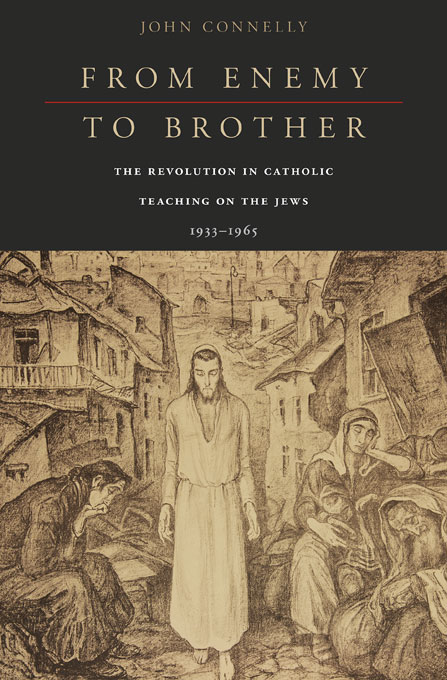 The subsequent alteration of the Catholic Church’s teachings about Jews and Judaism was particularly notable, culminating in the famous declaration, Nostra Aetate, made in the context of the Second Vatican Council in 1965. How this was achieved is the main subject of John Connelly’s excellent account. He gives principal credit to the small group of theologians, most of whom were from Germany or Austria, and all of them converts. By one means or another, they escaped the Nazis’ persecution and were then resolved to challenge the long-standing prejudices about Jews in the Catholic Church, which they were all too well aware had played a significant role in fomenting the Nazi-led Holocaust. Indeed, Connelly is right to stress the fact that the deeply-entrenched anti-Judaic sentiments in the Christian churches only reinforced the wider and more virulent anti-Semitism and racism which had prevailed for many years. As he shows in his opening chapters, there were many prominent Catholics, especially in Germany, in the 1930s who embraced racialist ideas. They assumed that Jews were racially inferior, as well as theologically damned for their putting Christ to death. One noted Catholic professor of Tübingen, Karl Adam, for example, held the view that baptism was powerless to cure Jews of their racial taints. Bishop Alois Hudal was not alone in believing that, on racial-biological grounds, Jews could not have the same values and rights as the German people. Nazi Germany was effecting the will of the Almighty through its racial laws. In fact, apart from the handful of emigres, no one rose to challenge such Catholic racial views, neither in the Catholic press, nor among the Catholic bishops. A further difficulty was that, even if the opponents of Nazism so desired, they lacked the language and concepts with which to attack the popular prejudices. Technically, Jews were supposed to convert for the sake of salvation. But in fact many Christians were suspicious, on racial grounds, of the few who tried to take this course. One of the most difficult experiences for Jewish Christians was their rejection by other Christians because of their Jewish origins. Even after Nazism was overthrown, the vast majority of Christians, both Catholic and Protestant, felt no guilt for what had happened to the Jews.
This inauspicious climate was to continue in the immediate post-1945 years due to the singular lack of reflection amongst Catholics on the significance of the Holocaust. During all of the 1950s, indeed, the Catholic press, from the Vatican to the local diocesan papers, ignored this issue. Only when Israeli historians published irrefutable evidence of the Jewish sufferings, and the trial of Adolf Eichmann gained world-wide attention, did the situation begin to change. It was left to the small band of intrepid advocates for a different and much improved relationship between Catholics and Jews to take up the challenge of the legacy of Auschwitz. Connelly pays particular tribute to several of the leaders of this cause, all of whom were in some sense “outsiders” but ready to tackle the entrenched prejudices of the Catholic hierarchy and indeed laity also. All of them were converts either from Judaism or Protestantism, and all had experienced at first hand persecution from the Nazis.
Johannes (later John) Oesterreicher was a young Jewish student in Vienna who had been converted in 1922, was later ordained and served in various parishes in the Vienna region until forced to flee when the Nazis seized power in 1938. Thereafter he launched a vigorous campaign to combat Catholic anti-Semitism, broadcasting from Paris with a combination of apocalyptic vision and intense political engagement. But when the German army invaded France, he had to make his escape across the Pyrenees and eventually resettled in New Jersey. There he learnt that both his parents had died at the hands of the Nazis. Oesterreicher was greatly assisted by Karl Thieme, an academic and former Protestant, who also had to take refuge in Switzerland, but who returned to Germany after 1945 and provided much of the academic theory for the struggle to improve Catholic relations with Jews. In the south German diocese of Freiburg he linked up with the redoubtable figure of Gertrud Luckner, who served as a courier for the bishop during the war, warning those in danger to move into hiding, and supporting those in need. She was eventually arrested by the Gestapo, and spent eighteen months in the women’s concentration camp of Ravensbrück. After she was liberated, she resumed her work on behalf of the victims of persecution. Indeed she was to continue to do so for the next forty years. But perhaps more significant was her work in publishing, with the editorial assistance of Karl Thieme, the Freiburger Rundbriefe which from 1948 were compilations of sermons, statements, conference reports and other materials relating to Christian-Jewish relations in both the theological and political aspects. These Rundbriefe were an important source of information, and soon achieved an international audience, helping to overcome the embedded silence of many in the Catholic hierarchy. A further ally in this cause was another “outsider”, the Church of England vicar, James Parkes, whose early study The Conflict of the Church and the Synagogue was the first comprehensive analysis of the Christian origins of anti-Semitism. But he was widely shunned by his fellow Anglicans because of his extreme liberal views.
It is to the credit of this group of pioneers that they faced up to the legacy of anti-Judaic hostility in the churches’ record, as well as the Catholics’ continuing indifference to this issue. Talking to Jewish scholars and rabbis made them all well aware that the teaching of contempt had contributed to making Auschwitz possible. They were all the more zealous to change this pattern of Christian witness. For this purpose they organized a series of international meetings. These were small but crucial gatherings, especially one held in Seelisberg, Switzerland in 1946. The ten landmark theses of this conference are now recognized as the first important fruit of this dialogue between Christians and Jews.
But the impact of such statements was very limited for over a decade. Not until Pope Pius XII died and was replaced by John XXIII did a new climate emerge. It was helpful that Pope John had been Nuncio in Turkey during the war, and had assisted many Jews to flee from Nazi persecution. It was also helpful that he was willing to receive a leading French Jewish scholar, Jules Isaac, who urged the adoption of the Seelisberg programme for better relations with Jews, and the overcoming of the teaching of contempt. It was also helpful that by this time Catholics, especially in Germany, were more fully aware of the Catholic Church’s complicity by its silence during the Holocaust. In the shadow of Auschwitz, all ideas of Jewish deficiency or guilt sounded obscene. As a result, Thieme and his colleagues led the way in recognizing that combatting Christian anti-Semitism was not enough. They needed to go further to tackle the equally entrenched anti-Judaism. It was also helpful to this cause that the theological reverberations of the creation of the State of Israel meant that the age-long calumnies about the Jews being condemned to wander the earth could no longer be maintained. Some went so far as to advocate the abandonment of Christian missionary efforts to Jews. Thieme and his friends began to argue that Jews should no longer be regarded as enemies but rather as the Christians;’ elder brothers in faith.
Furthermore, just as they had, as Germans, protested against accusations that all Germans were to be branded as guilty of the Nazis’ crimes, so now the argument could be used against the collective guilt of the Jews for Christ’s crucifixion or the Jewish refusal to be converted to Christianity. It was also helpful that Pope John promoted the German Jesuit, Augustin Bea to be a Cardinal, and made him president of the newly-formed Secretariat for Promoting Christian Unity. In 1961 the Pope charged Bea with the task of formulating a new statement on the Church’s relations to the Jews. As Connelly rightly notes, for this new teaching, Cardinal Bea was the engineer, but Thieme and his friends in Freiburg were the real architects.
Connelly skillfully describes the process by which this declaration came through the preparatory stages and then the actual debates of the Second Vatican Council. To achieve this, Cardinal Bea had recalled Oesterreicher from the United States, who brought with him a talented young priest from Canada, Gregory Baum. Baum had been born in Berlin in a family of Jewish origin, had been evacuated as a teenager to Wales in 1939 on one of the Kindertransporte, but a year later had been interned by the British authorities as a suspect enemy alien and exiled to Canada. After his internment there, he converted to Catholicism and joined an Augustinian monastery in Nova Scotia.
Oesterreicher’s team and Bea’s Secretariat labored intensively to draw up a document which would embody the ideas percolating over the previous decade. But they encountered two major obstacles. They were opposed first by the Catholic conservatives, both in the Vatican bureaucracy and amongst the newly-arrived bishops at the Council, who were reluctant to abandon the language and stereotypes about Jews with which they had been brought up. They therefore made frequent efforts to suppress or water down parts of the document of which they disapproved. This defensive reaction was only intensified by the outrage aroused by the publication in 1963 of the play The Deputy by the young Swiss playwright Rolf Hochhuth This drama was a vitriolic attack on Pope Pius XII for his alleged silence during the Holocaust, and by inference was a striking accusation of the Catholic Church’s intolerance and insensitivity towards the suffering of the Jews. But Oesterreicher came to believe that, after such an onslaught, the need for a strong pro-Jewish statement was all the more urgent. The bishops could have no illusions about the response of world opinion if the Council was silent on the Jews.
The second wave of opposition came from the bishops of the eastern Catholic Churches in Arab states, who were concerned about the future of their flocks, especially Palestinians, if any statement appeared to favour the Jews. They even enlisted the political support of their governments. The government of Syria, for example, protested plans to free Jews from the charge of deicide, and the Premier of Jordan threatened sanctions against any bishop who voted to absolve Jews from guilt for Christ’s crucifixion. But in fact such tactics caused a backlash among the more broad-minded bishops. Luckily in the great debates held over this document in 1964, a consensus rapidly formed that Jews were not to be held collectively responsible for the death of Christ. At the same time, Bea was at pains to make it clear that the document was solely religious in tone and had no political implications at all. The terms Israel and Israeli were avoided wherever possible. Instead Jews were referred to as “the stock of Abraham”. On the other hand, it is clear that great pains were taken to assuage the sensitivities of the numerous Jewish observers, both in Rome and elsewhere.
When the bishops finally and overwhelmingly approved Nostra Aetate in October 1965, Oesterreicher regarded it as a “miracle’. Calling the Jews ‘beloved by God’ put an end to centuries-old harmful teachings of the Church. God’s promises to the Jews were declared irrevocable. The inevitable corollary was to abandon efforts to convert Jews to Christianity but rather to embrace them in an ecumenical fellowship as no longer enemies but elder brothers.
In his concluding chapter Connelly again pays tribute to the handful of outsider pioneers who successfully broke the traditional pattern of Catholic prejudices about the Jews and Judaism. He attributes this success to their personal histories as they mobilized opposition first to Catholic anti-Semitism and then to Christian anti-Judaism. In the end they recognized that it was more opportune to convert Catholics than Jews but to seek to bind both in a more ecumenical relationship which would acknowledge both as God’s chosen people.

 Unlike most of the studies of postwar Germany that focus on the origins of the Cold War and high stakes political maneuvering of the Allies, Schroeder takes a bottom-up approach that illuminates the less conspicuous reconciliation work of German groups such as the Association of the Victim of Nazism (VVN) and religiously-affiliated international groups such as International Fellowship of Reconciliation (IFOR), Moral Re-Armament (MRA), Pax Chrisiti, the International Council of Christians and Jews (ICCJ), and the World Council of Churches (WCC). His study compares and contrasts reconciliation, defined as “the establishment of peaceful – or at least non-hostile – relations between former enemies” in the four zones of occupation in the immediate postwar years and in East and West Germany after 1949.
 Thomas Grossbölting, who teaches at the University of Münster, poses these questions and puts them in the context of faith, church and religion after the catastrophe of National Socialism in Germany. This well researched study can be seen as the first up-to-date history of religion in the Federal Republic of Germany. His basic thesis is clear and hardly surprising. Anyone examining how and what Germans have believed in the past fifty years has to take note of a striking decline in the significance of religious consciousness. Although, in recent years, some observers have claimed that there has been a so-called religious revival, in fact anyone taking a longer view over the past five or six decades must conclude that a far-reaching secularization has taken place. The very idea of Heaven has been lost. As the author crucially points out in his introduction: “A Christian Germany no longer exists”. On the other hand, the elements of faith, church and religion have not disappeared from daily life in Germany. Rather they have been thinned out, pushed to the edge of society, and in many people’s lives they are completely or largely absent.
 Two of the chapters are biographical studies of individual religious educators or professors at teacher training institutions. Thomas Martin Schneider’s “Die Umbrüche 1933 und 1945 und die Religionspädagogik” takes up the story of Georg Maus, a religion teacher at an Oberschule in Idar- Oberstein. Maus, who was associated with the Confessing Church, was accused of undermining the war effort because he failed to properly manage a class discussion of Jesus’ command to love one’s enemies. He received a two-year sentence and died while being transported to Dachau. Schneider contrasts Maus’ story with that of Reinhold Krause, also an educator, but most famous for his address to members of the German Christian Movement at the Berlin Sport Palace Rally in 1933. Schneider finds that Krause both appropriated and violated aspects of liberal Protestant thought. The cases of Maus and Krause, Schneider argues, call into question both the “conservative decadence model” that blames liberal Protestant theology for Nazi conceptions of Christianity and the “progress- optimistic model” that exonerates it of all charges. Theological orientations, including diverse political theologies in the twentieth century, cannot be judged apart from their historical contexts. Likewise, one should not reduce contemporary religious education to the narrow range of options that were present in the Third Reich, nor should one assume that those options will have the same value in all historical settings.
 The workshop was a further attempt to mend frayed relations. Yad Vashem and the Reverend Roberto Spataro (acting “on behalf of the Nuncio”) each chose five scholars for the workshop. The latter: Andrea Tornielli, Matteo Napolitano, Grazia Loparco, Jean-Dominique Durand, and Thomas Brechenmacher; the former: Paul O’Shea, Michael Phayer, Susan Zuccotti, Sergio Minerbi, and Dina Porat. Summing up at the end, the Reverend Spataro commented: “we met in an atmosphere of confidence, trust and mutual respect.”
 A new biography has recently been published in Germany of Nathan Söderblom, the most prominent Protestant church leader in the decade of the 1920s. The author, Dietz Lange, is the emeritus professor of Systematic Theology in Göttingen, and in this laudatory but leisurely account of Söderblom’s career, the emphasis is placed on the evolution of Söderblom’s intellectual ideas and his relations with other scholars and theologians of his time. Lange supplements but does not supplant the standard biography in English, written nearly half a century ago by Bengt Sundkler, which concentrated on Söderblom’s main claims to fame, his championships of the peace endeavours during the first world war, and his leadership of the ecumenical movement in the aftermath.
 Writing with considerable journalistic flair, but of course without any Vatican official documentation, Gawthrop presents us with a highly critical account of Ratzinger’s career. To be sure, he allows that, during the Council’s sessions, Ratzinger, then a theological advisor to one of the German Cardinals, supported many of the reformist ideas. But only a few years later, while he was teaching at Germany’s most prestigious university of Tübingen, he was deeply offended by the virulent student radicalism embracing a “Marxist messianism”. As a result he turned away from his colleagues such as Hans Kung and other progressive theologians. Shortly afterwards he retreated to the rural backwater of Regensburg in his native Bavaria, and began to prepare his theological counter-offensive to Vatican II.
 The work is divided into four “complexes” which Linden has assigned to the years 1907-1910, 1920, 1926-1930 and 1933-1936 respectively. According to the author, these times saw greater changes in inter-pastoral relationships than did the political watersheds of 1914, 1918 and 1933. Linden explains the beginning of the time period considered by referring to comprehensive changes in the churchly life of Osnabrück, especially the increasing passivity of the laymen and therefore the increasing importance of the pastor in the parish. By contrast, why the time period ends in 1936 is not explained. According to the attached short biographies, there was no significant change to church staffing in that year with the exception of Rudolf Detering, who went to Goslar for a better position. However, Linden states at the end that the intensity of the relationships had decreased since 1935, with increasing isolation leading to fewer opportunities for networking or cooperation (p. 793).
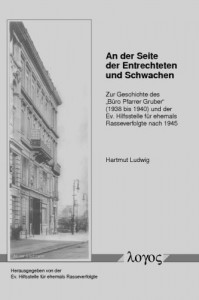 The record of the German Evangelical Churches, including the Confessing Church of Karl Barth and Dietrich Bonhoeffer, in failing to mobilize opposition to the Nazis’ violent attacks on the Jews is a shameful one. It has been excellently researched in the recent book by Robert Ericksen, Complicity in the Holocaust: Churches and Universities in Nazi Germany. In the post-1945 period, when the horrifying facts of the Holocaust were revealed, the Church was overwhelmed with a deep feeling of guilty shame. The subject was to be avoided. It took many years before the details emerged of one of the more significant, if belated, efforts in the Protestant ranks, namely the establishment in 1938 of an office to assist the persecuted Protestant victims of Nazi oppression. Hartmut Ludwig’s contribution in retelling the story of the “Büro Grüber” is therefore much to be welcomed.
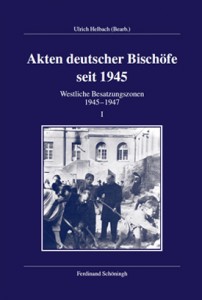 The research behind these editions is tremendous. These three tomes collectively occupy approximately 2400 pages and bring together nearly 725 documents from more than fifty archives, including more than 40 church archives in Germany, German state archives, private papers and two archives from the United States. Before making their final selections, the archivists and research teams assisting them had to wade through thousands of folders of documents and pre-select more than two thousand documents for possible inclusion. The documents themselves include correspondence and addresses not only in German but also in English, French and Latin, as the bishops were in regular correspondence with occupation officials from the Western Allies and the Vatican. Fortunately, the two editors, Dr. Ulrich Helbach, the director of the archive for the archdiocese of Cologne, and Dr. Annette Mertens of the Kommission für Zeitgeschichte, ensured that adept translations into German were provided for the foreign documents.
 Three essays from this collection that focus on the Catholic and Protestant churches in Europe and America will be of particular interest to CCHQ readers. In his essay, “The Western Allies, German Churches, and the Emerging Cold War in Germany, 1948-1952,” JonDavid Wyneken maintains that the political leaders in the US, Britain, the Soviet Union, and in East and West Germany paid close attention to the stance of German church leaders and at times shaped their policies with the churches in mind. At the end of WWII the German churches believed that they deserved a prominent role in postwar reconstruction and promoted themselves to the Allies as offering a faith-based alternative to the appeals of atheistic Communism. Although the Allies, especially the Americans, found this appealing, they refused to grant the churches the comprehensive role they desired and imposed harsh occupation and denazification programs in their zones of occupation. Church leaders voiced strong opposition to what they called “victors’ justice” and bemoaned that the Western Allies were just making Communism more appealing to a desperate and disgruntled population.
 Many of the authors offer inter-denominational (that is, Protestant and Catholic) comparison, with an emphasis on the rise and influence of mass media, and the nature of the discourse about the role of religion and spirituality in the daily lives of individuals, including its participants and changes over time. These reflect the ambitions of the larger Bochum project: to produce a detailed examination of the religious sphere and its gradual change over the years and decades since the last world war, and to evaluate the multiple influences of geography, gender dynamics, political contexts, economic realities, and the fluctuating strengths and weaknesses of ecclesiastical and non-ecclesiastical institutions. Above all, the project highlights the interdependence of the social and the cultural worlds, which are treated as concurrent, overlapping spheres rather than distinct entities. The processes and influences under consideration are situated in a six-point matrix that has a vertical dimension, divided into macro-, meso- and micro-levels, and two broad sociological dimensions, semantics and social structures (a helpful diagram is provided on 23).
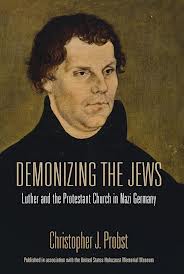 Christopher Probst has written an insightful analysis of the ways in which Protestant reformer Martin Luther’s anti-Jewish writings were used by German Protestants during the Third Reich. Fundamental to Probst’s work is his consistent use of Gavin Langmuir’s distinction between non-rational anti-Judaism (antipathy rooted in theological differences or other symbolic language which stand apart from and not against rational thought) and irrational antisemitism (antagonism rooted in factually untrue and slanderous accusations against Jews). In contrast to the idea that pre-modern anti-Jewish thought was generally religious and therefore anti-Judaic while modern anti-Jewish thought is political or racial and therefore antisemitic, Probst sees both anti-Judaic and antisemitic elements in the language of Luther and the twentieth-century German theologians, church leaders, and pastors who invoked him (3-4, 6, 17-19). In light of this, Demonizing the Jews is a book about historical continuity.
 The interactive website “Evangelischer Widerstand” (
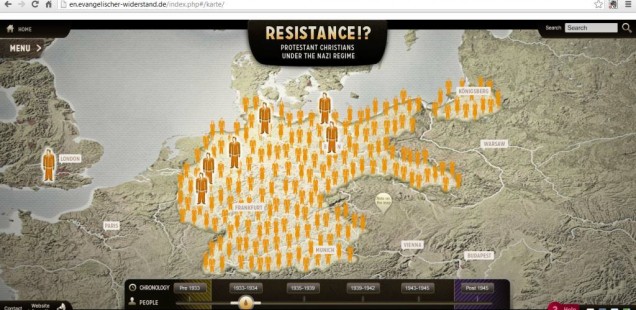 This is the website developed over the past couple of years by the Evangelische Arbeitsgemeinschaft für Kirchliche Zeitgeschichte (Protestant Working Group for Contemporary Church History) in Munich, under the leadership of Dr. Claudia Lepp, along with Drs. Siegfried Hermle, Harry Oelke, and a host of other notable German scholars. It is sponsored by the Evangelical Church in Germany, the Evangelical Lutheran Church in Bavaria, the Protestant Church in Hesse and Nassau, and the Köber Foundation of Hamburg, and supported by a long list of academics, Protestant notables, archives, memorial sites, and other institutions. It contains information on no less than three dozen (as of March 2013) individual or group resisters, along with a timeline, a series of fundamental questions, photos, documents and audio clips. It is a rich and growing set of resources, tied to a substantial bibliography of German-language publications on the topics of resistance and the German churches under Hitler. (Hopefully, over time, the bibliography will grow to include many of the important English-language studies on the German churches in the Nazi era.)
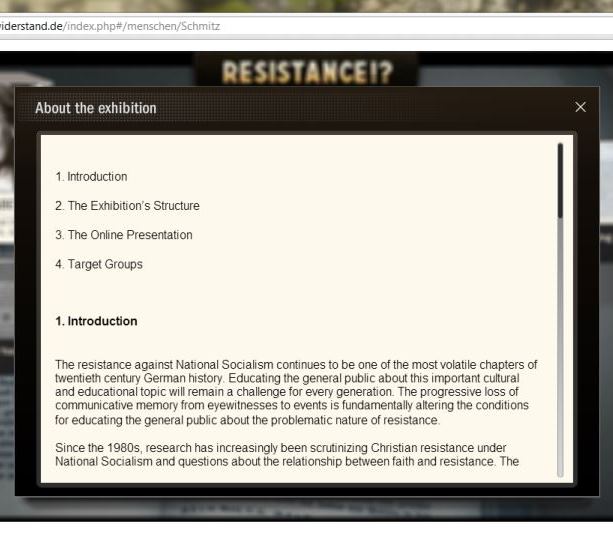 In the “About the exhibition” section of the site, Claudia Lepp and her colleagues explain their historical assumptions and methodology. They argue that the resistance against National Socialism “continues to be one of the most volatile chapters of twentieth century German history,” express their concern about “the progressive loss of communicative memory from eyewitnesses to events,” and note “the problematic nature of resistance.” Delving into the historiography of the German churches under Nazism, they identify a shift during the 1980s away from a focus on the Confessing Church and towards four new issues: 1) the role of resistance in the everyday life of Christian congregations and the question of who was motivated by their Christian faith to aid the victims of persecution; 2) the significance of “less noted” groups like the Religious Socialists, liberal Christians, Christians in the National Committee for Free Germany, conscientious objectors and those who deserted on account of their Christian faith; 3) the personal faith of resistance members and its relationship to their ethical and political thinking; and 4) the proper historical presentation of resistance “detached from forms of heroization.”
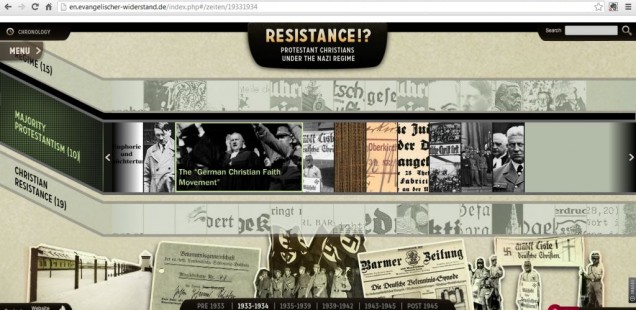 A similar analysis could be made of the timeline. Here the web historians offer up three streams of articles—on the “Regime,” on “Majority Protestantism,” and on “Christian Resistance.” There are entries about Hitler’s misleading pro-Christian statements, the German Christian Faith Movement, and other aspects of the history of Protestant collaboration with the Hitler state. Still, in the crucial 1933-1934 section, the 19 articles devoted to aspects of Christian Resistance are almost double the 10 entries given over to the compromised majority Protestants, once more creating the impression that Christian Resistance was, in fact, the most obvious Christian response to the Nazi dictatorship.
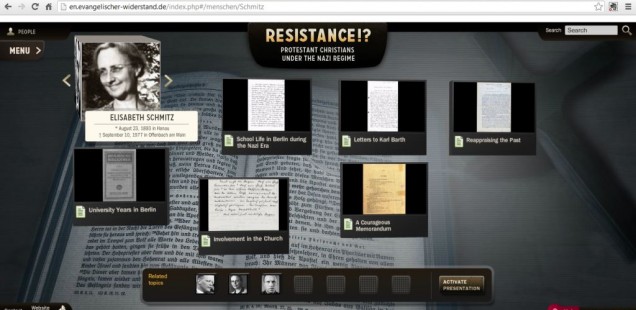 Because of these two weaknesses in the website’s approach to presenting the history of the German churches in the Third Reich, “Evangelischer Widerstand” works best when it tells the stories of the heroic, deeply-principled Christians who acted decisively against the regime and its policies. Elisabeth Schmitz is a good example. Just as Manfred Gailus has recently argued in his fine history
 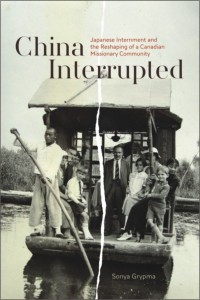 It is surely regrettable that the considerable contributions made by the Canadian churches to the early twentieth century missionary endeavours are now largely forgotten, or in some cases deplored as an example of “imperialist cultural aggression.” In fact, a hundred years ago, in proportion to their size and resources, the churches of Canada sponsored more missionaries at home and abroad than any other nation. The young men and women who volunteered their services were responding to the popular call for “the evangelization of the world in this generation.” China was the preferred destination, and indeed became the flagship of European and North American missionary expansionism.